Author: admin

  • Glaucoma Treatment Dubai: Best Eye Clinics 2026

    Glaucoma Treatment Dubai: Best Eye Clinics 2026

    Here’s a comprehensive, Dubai-focused guide to glaucoma treatment Dubai—designed to help you decide when your symptoms are urgent, what diagnostic tests to expect, how much things cost, and where to find glaucoma specialists in the city.


    Quick Summary

    • What this article covers: warning signs of glaucoma, key diagnostic tests used in Dubai eye clinics (tonometry, OCT, visual field), typical costs (consultations, medications, surgery packages), and top clinics with glaucoma specialists.
    • Why it matters: glaucoma causes irreversible blindness and is often symptom-free until advanced, especially in Dubai’s ageing expat population or those with family history. Early screening can protect vision.
    • What you’ll learn: how to interpret symptoms, what glaucoma treatment involves, how much to expect in AED, how to choose a specialist or clinic in Dubai.
    • Your next step: know whether your symptoms warrant urgent investigation—and how to take action. Book a free consultation at a top eye clinic in Dubai to get a tailored assessment.

    Understanding Glaucoma & Why Early Detection Matters

    Glaucoma refers to a group of eye diseases that damage the optic nerve, often linked to raised intraocular pressure (IOP). It’s one of the leading causes of irreversible blindness worldwide. The tricky part: you may not notice symptoms until damage is advanced.

    That’s why early detection through professional glaucoma treatment Dubai services is essential, especially if you fall into these categories:

    • Expats over 40 years old
    • Those with family history (parents, siblings)
    • Those of African, South Asian, or Middle Eastern origin (higher risk)
    • Anyone with eye trauma, long-term steroid use, or conditions like diabetes or hypertension

    Types treated in Dubai include primary open-angle, angle-closure, normal-tension, and secondary glaucoma (after surgery or inflammation).


    Warning Signs That Warrant Urgent Screening

    Seek an eye examination if you experience any of these symptoms:

    • Sudden eye pain, headache, nausea, and blurred vision (possible acute angle-closure attack)
    • Gradual loss of peripheral vision (“tunnel vision”)
    • Seeing halos around lights or frequent changes in eye prescription
    • One eye with a darker iris ring or red eye
    • Blurred vision or difficulty adjusting to darkness
    • History of steroid eye drops or prolonged oral steroids

    Even without symptoms, screening is recommended if you’re over 40, have family history, or other risk factors.


    Key Diagnostic Tests Used in Dubai Eye Clinics

    Dubai eye clinics use standard diagnostic tools to confirm glaucoma or monitor progression:

    Test What It Measures How It Works Why It Matters
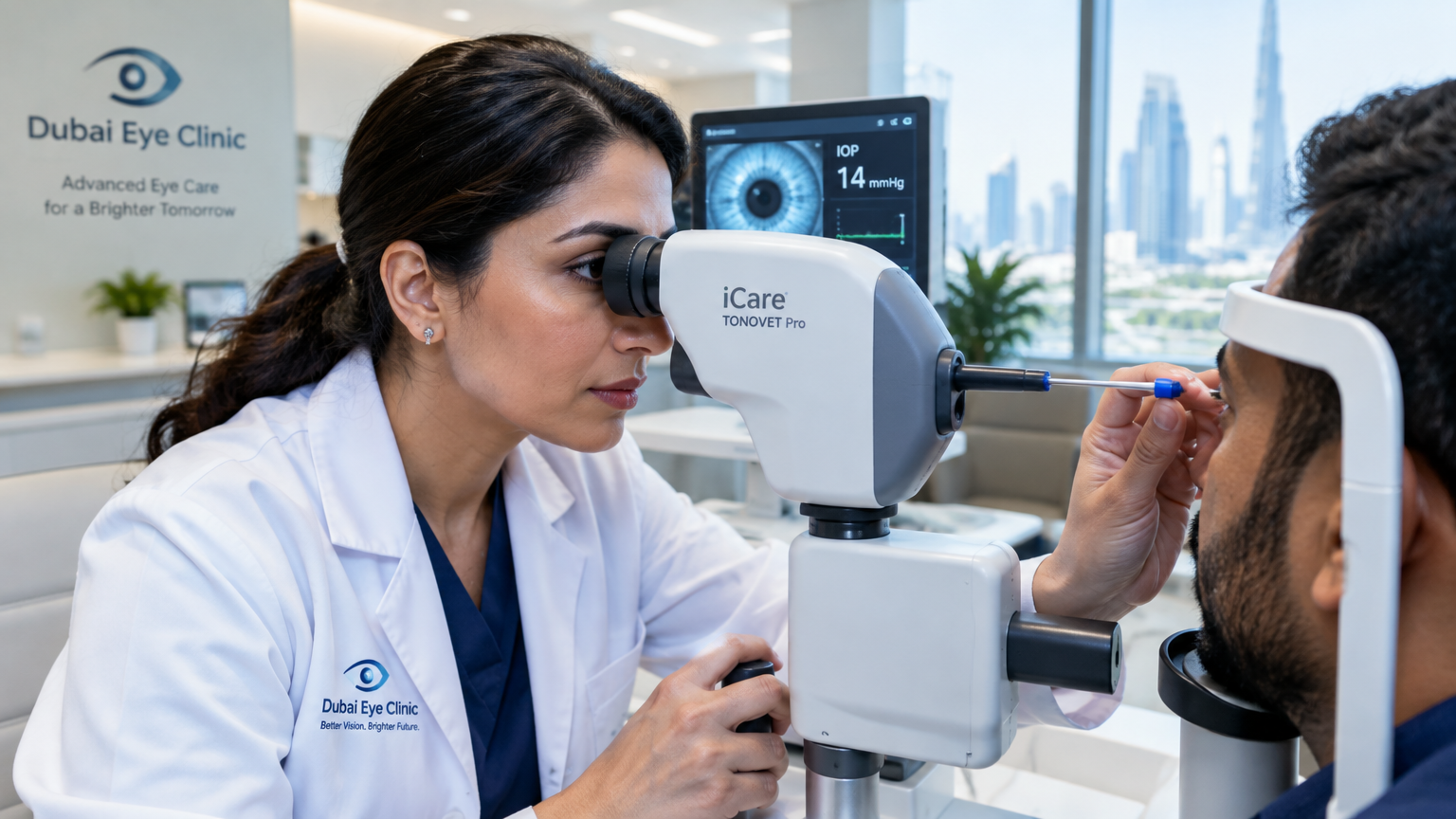
    Tonometry Intraocular pressure (IOP) Air-puff or Goldmann applanation method Elevated IOP is a major risk factor, even before nerve damage appears
    OCT / RNFL Analysis Retinal nerve fibre layer thickness and optic nerve imaging Non-invasive imaging using light wave technology Detects structural damage early, often before vision loss occurs
    Visual Field Testing Peripheral vision and blind spot mapping Humphrey or Octopus field machines test sensitivity Detects functional vision loss and tracks progression
    Gonioscopy Drainage angle structure Slit lamp with special lens to visualise the angle Determines open- versus closed-angle glaucoma type
    Pachymetry Corneal thickness Ultrasonic or optical measurement Affects tonometry accuracy and individual risk assessment

    Facilities like Mediclinic City Hospital’s Glaucoma Unit include automated perimetry, optic nerve imaging, slit lamp photography, gonioscopy, and advanced tools like ultrasound biomicroscopy (UBM) for complex cases.


    How Glaucoma Treatment Works in Dubai

    Once diagnosed, specialists follow a step-wise management approach:

    Medical Management

    Eye drops or systemic medications lower pressure first. Common options include prostaglandin analogs, beta blockers, and carbonic anhydrase inhibitors. According to Dubai Health Authority pricing, a 2.5 mL bottle of Travoprost 0.004% costs around AED 88.

    Laser Therapy

    Procedures like YAG laser iridotomy (for narrow angles) and selective trabeculoplasty (SLT) are outpatient treatments with faster recovery times.

    Surgery

    When medications and lasers aren’t sufficient, surgical options include trabeculectomy, tube-shunt implants, and minimally invasive glaucoma surgery (MIGS). Mediclinic’s Glaucoma Unit offers trabeculectomy with or without Mitomycin-C and valve implants.

    Ongoing Monitoring

    Regular follow-up checks track IOP, visual fields, and OCT scans to ensure treatment effectiveness and adjust therapy as needed.


    Typical Costs in AED: What to Budget

    Costs vary by facility type (public versus private), insurance plan, location (Downtown, Marina, Business Bay), and doctor experience. Here’s what you can expect:

    Service / Treatment Estimated Cost (AED) Notes
    Specialist Consultation AED 400–700 (private); AED 200–300 (mid-range or with insurance) Depends on doctor experience and consultant level
    Basic Screening Package AED 800 Includes tonometry, OCT, and visual field testing
    Comprehensive Glaucoma Screening AED 1,300 Full package with consultation and advanced imaging
    Eye Drop Medications AED 80–100+ per bottle Monthly recurring cost; multiple bottles needed over years
    Laser Trabeculoplasty AED 6,000 per eye One-off treatment; may need repeats
    Trabeculectomy AED 10,000 per eye package Includes surgeon fees, facilities, anaesthesia, and follow-ups
    Tube-Shunt / Valve Implant AED 12,000–16,000 More complex; used when trabeculectomy fails or in pediatric cases
    Emergency Procedures Variable pricing Hospital admission may apply; check emergency coverage with your insurer

    Public hospitals under the Dubai Health Authority (DHA) often offer subsidised screening and surgery for nationals and GCC residents. Non-UAE nationals typically pay around AED 225 for ophthalmology consultations at public facilities.


    Choosing the Right Clinic or Specialist

    When selecting a provider for glaucoma treatment in Dubai, prioritise these factors:

    Specialist Credentials

    Look for doctors with glaucoma certification (FBO, FRCS-Ophth, MRCOphth) and those listed on specialist platforms like Doctify. Dedicated glaucoma units are ideal.

    In-House Diagnostic Equipment

    Ensure the clinic has tonometry, OCT, visual field testing, gonioscopy, and pachymetry available. Without these, you’ll face delays or referrals.

    Cost Transparency

    Request itemised quotes including tests, medications, and surgeries. Ask what’s covered by your insurance plan.

    Regulatory Compliance

    Choose DHA-licensed facilities with specialists graded by DHA and recognised accreditations (e.g. JCI).

    Location & Accessibility

    Clinics in Business Bay, Dubai Healthcare City, and Downtown offer easier access but typically cost more. Locations like Deira and Al Barsha may provide competitive rates.

    Proven Track Record

    Moorfields Eye Hospital Dubai, for example, is highly rated for complex glaucoma cases and accepts most insurance networks.


    Local Regulations, Insurance & Pricing

    The Dubai Health Authority (DHA) regulates fees and licensing for all eye care providers. Here’s what you should know:

    • Specialist consultation and service fees at government hospitals are subsidised for UAE nationals and GCC residents; expats typically pay higher self-pay rates.
    • Public sector package prices are published by DHA, helping insured patients estimate co-pays accurately.
    • Drug pricing is regulated—DHA pharmacies offer fixed prices on glaucoma medications like Travoprost at AED 88 per bottle.
    • Clinics must clearly label premium services; specialist versus consultant pricing may differ for identical procedures.

    When You Should Seek Immediate Care

    Contact an eye clinic urgently if you experience:

    • Sudden eye pain, blurred vision, headache, and nausea (acute angle-closure glaucoma)
    • Rapid vision worsening or new halos around lights
    • Family history of glaucoma with new vision changes
    • Elevated IOP discovered on routine screening
    • OCT showing nerve fibre layer thinning
    • Signs of optic nerve damage or visual field defects in one eye

    Book a free consultation at a top eye clinic in Dubai today. Vision lost to glaucoma cannot be restored, so early action is critical.


    Frequently Asked Questions

    Can glaucoma be cured completely?

    No. Glaucoma damage is permanent. Treatment aims to slow or stop further damage by lowering intraocular pressure and monitoring optic nerve and visual field health.

    How often should I get tested with a family history of glaucoma?

    People over 40 with family history should get tested at least once yearly. Early glaucoma requires testing every 3–6 months for OCT and visual field checks.

    Does insurance cover glaucoma treatment in Dubai?

    Many plans cover consultations, diagnostic tests, and medically necessary surgeries. Coverage varies by plan—cosmetic procedures may not be included, and eye drops have partial coverage depending on the drug formulary.

    What’s the difference between laser treatment and surgery?

    Laser therapies (SLT, YAG iridotomy) are less invasive and used earlier or for specific types like angle-closure. Surgery (trabeculectomy, valve implants) is more invasive and reserved for advanced cases or when other treatments fail.

    Are there affordable screening options in Dubai?

    Public DHA hospitals offer subsidised rates for nationals and GCC residents. Expats can find competitive screening packages at AED 800–1,300. Ask clinics and your insurer for available quotes.


    Take Action Today

    Glaucoma progresses silently. If you’re over 40, have family history, or notice any warning signs, don’t delay.

    Book a free consultation at a top eye clinic in Dubai to have a glaucoma specialist assess your risk, run essential tests, and create a clear, cost-transparent treatment plan. Your vision deserves professional care—get informed, tested, and protected now.

    Related Articles

  • Eye Treatment Health Insurance Dubai: Complete 2026 Guide

    Eye Treatment Health Insurance Dubai: Complete 2026 Guide

    Here’s a detailed guide on eye treatment health insurance Dubai—designed for anyone living here who wants to avoid surprise costs for LASIK, cataracts, glasses, or specialist consultations. Read on to understand how Essential Benefits Plans or enhanced corporate plans work, what’s usually excluded, and how to check your policy and pre-authorise treatments so you can book a free consultation at a top eye clinic in Dubai with confidence.


    Quick Summary

    • How Essential Benefits Plans (EBP) differ from enhanced and corporate plans regarding consultation, eyewear, LASIK, and cataract surgery coverage.
    • List of common exclusions: elective refractive surgery, luxury frames, and non-medically necessary treatments.
    • Local rules: DHA law, ENAYA scheme, EBP, pre-authorization steps, co-payments, and waiting periods.
    • How to check your health insurance documents and insurer portals before booking, to avoid surprises.
    • Actionable tips so you can book a free consultation at a top eye clinic in Dubai with full clarity about costs.

    Overview: Eye Treatment and Health Insurance in Dubai

    Health insurance is mandatory in Dubai under Law No. 11 of 2013. Employers and sponsors must provide coverage at least equivalent to the Basic or Essential Benefits Plan (EBP) as defined by the Dubai Health Authority (DHA). Enhanced corporate plans often build on this minimum.

    For eye health, insurance policies cover different levels of ophthalmology—including medical eye disease, surgery, and emergencies. However, coverage often varies for elective or cosmetic procedures like LASIK and items like frames or lenses. Depending on your plan, you may pay full price for what seems like routine eye care. If you want to compare options, bring your policy documents when you book a free consultation at a top eye clinic in Dubai.


    Essential Benefits Plan vs Enhanced Corporate Plans

    Feature Essential Benefits Plan (EBP) / Basic Plan Enhanced / Corporate Plan
    Annual benefit limit AED 150,000 total limit per person per year under EBP. Often much higher; sometimes unlimited for ophthalmology in top-tier plans.
    Ophthalmologist consultations Covered for medical reasons; GP referral usually required. Out-patient specialist fees may be subject to co-pays. Often lower or no co-pays for specialists; broader network; diagnostic tests sometimes included.
    Cataract surgery Considered medically necessary and included under medical/surgical benefits. Minimum facility classification (“A”) required. Usually covered; often including premium intraocular lenses, hospital stay, and follow-ups. More clinic and hospital choices available.
    LASIK and refractive surgery Usually excluded in EBP and basic plans. If covered, it’s only under enhanced plans with restrictions (waiting periods, co-insurance). May be included as optional benefit or rider. Cost sharing usually applies. Check if your plan explicitly includes refractive error correction.
    Eyewear (frames, prescription lenses, contact lenses) Often not covered under EBP; minimal optical allowances in enhanced plans. ENAYA scheme includes optical benefit with annual limits and sometimes a waiting period after LASIK. Better coverage: higher limits, branded frames or designer options might be allowed; sometimes multiple pairs per year; contact lenses if prescribed.

    Common Exclusions to Watch For

    Even in corporate or enhanced plans, many policies explicitly exclude certain eye-related benefits. Here are typical exclusions under Dubai and UAE policies:

    • Elective refractive surgeries such as LASIK, PRK, and radial keratotomy unless clearly specified otherwise.
    • Non-prescription or high-fashion frames; “luxury” or branded eyewear usually isn’t fully covered or only up to a modest limit.
    • Regular vision screening and routine refraction tests, unless related to disease or immediate medical need.
    • Cosmetic eye treatments, including aesthetic eyelid surgery, tinted lens fashion wear, or cosmetic contact lenses.
    • Waiting periods or lock-out periods after certain treatments like LASIK. Members who undergo LASIK may become ineligible for optical benefits for up to 12 years under certain conditions.

    Local Rules, Co-pays, and Pre-Authorization

    Pre-authorization requirements: Under EBP, prior approval is generally required for all in-patient treatments or surgery—this includes eye surgeries like cataract operations. For elective (non-emergency) procedures, approval must be obtained before booking. Emergency admissions do not require prior authorization immediately but must be reported to your insurer or Third Party Administrator (TPA) within 24 hours.

    Co-payments and deductibles: These vary by plan. For example, under the DNI EBP plan, co-insurance of approximately 20% applies to many interventions. Caps (such as AED 500 per inpatient visit or AED 1,000 per year) may apply, beyond which the insurer covers 100%.

    Policy waiting periods: Chronic and pre-existing conditions sometimes have 6-month waiting periods unless you’re transferring from an existing plan.


    What to Check in Your Policy Before Booking

    To ensure eye treatment doesn’t lead to unexpected bills, review these key areas before booking any appointment:

    1. Table of Benefits (TOB)

    Always read the exact wording. Look for keywords like “optical benefit,” “equipment,” “frames and lenses,” “elective refractive surgery,” and “ophthalmology specialist.”

    2. Inclusions vs Exclusions

    Confirm whether LASIK or other refractive surgeries are “excluded” or “opted in as optional benefit.”

    3. Optical Sub-limits

    If eyewear is covered, how much can you claim annually? Is there a separate limit for frames versus lenses versus contacts? Is it full reimbursement or a fixed benefit?

    4. Pre-authorization Requirements

    Does eye surgery require prior approval? Are there special referral routes (GP to ophthalmologist)? Do emergency and elective procedures differ?

    5. Waiting Periods and Lock-out Periods

    After certain treatments like LASIK, is optical coverage suspended? Are there delays on coverage for pre-existing eye conditions?

    6. Network and Facility Classification

    Ensure your clinic or hospital is in a DHA-licensed facility (class A, B, or C), is in your insurer’s network for direct billing, and understand whether you must pay out-of-pocket first.

    7. Co-payments, Deductibles, and Annual Caps

    Know what you may need to pay yourself per consultation, surgery, and eyewear item.


    Estimated Out-of-Pocket Costs in Dubai

    Here’s a sample comparison in Dubai to help you understand what to expect out of pocket under different policy types. All amounts are approximate as of mid-2026.

    Procedure or Item Estimated Cost (Private Clinic / Hospital) Under EBP / Basic Plan (if covered) Under Enhanced Corporate Plan*
    Ophthalmologist consultation AED 500–800 20-30% co-pay or fixed fee; may include full cost if GP referral required Lower co-pay or waived for direct specialist access
    Cataract surgery with standard IOL (private hospital, 1-night stay) AED 10,000–15,000+ Covered if medically necessary, but expect co-insurance and facility charges Covered; upgraded lenses may cost extra
    LASIK or refractive error surgery AED 6,000–12,000+ Usually excluded—must be explicitly included; expect co-pay if so May be covered as rider; cost sharing likely
    Prescription glasses (frames and lenses) AED 700–2,500 depending on brand Often only basic frames and lenses up to limit (e.g. AED 1,000/year under some plans) Higher limits; designer frames possibly reimbursed
    Contact lenses AED 300–1,200/year Usually only if medically required (e.g. after surgery) or in enhanced plan Broader coverage including cosmetic or convenience lenses

    * Enhanced plans vary widely; some may cover more or less depending on insurer, employer contract, and any riders added.


    Frequently Asked Questions

    Q: Is LASIK ever covered under an Essential Benefits Plan?

    A: Very rarely. Under standard EBP and basic plans, elective refractive surgeries such as LASIK, PRK, and radial keratotomy are generally excluded unless the policy explicitly includes an optical or vision rider.

    Q: If I buy high-end glasses or branded frames, will insurance pay for them?

    A: Usually not in full. Most EBP and basic plans set an optical limit (if optical is included at all), covering basic frames and lenses. If you choose luxury or designer brands, you’ll likely pay the difference out of your own pocket. Enhanced plans may offer better allowance. Check your Table of Benefits.

    Q: Do I need a GP referral before seeing an eye specialist?

    A: In many corporate, basic, and essential plans, yes. The insurer may require a GP referral before a specialist ophthalmologist consultation. If not followed, the insurer may deny or limit reimbursement.

    Q: How do I avoid surprise out-of-pocket costs for cataract surgery?

    A: Follow these steps:

    • Get a surgical plan cost estimate (clinic, hospital, and post-op care).
    • Check that the hospital and surgeon are in your insurer’s network and meet DHA facility classification.
    • Confirm pre-authorization is granted.
    • Know your co-insurance and deductible rates.

    Q: How do I check my policy coverage and whether my ophthalmology treatment will be pre-authorised?

    A: Follow these steps:

    • Use DHA’s Insurance Verification service with your Emirates ID to check your insurer, policy number, and coverage period.
    • Log in to your insurer or TPA app (such as Neuron or NextCare) to view your Table of Benefits, network clinics, and optical riders.
    • Call your insurance provider helpline and request written confirmation about specific procedure or item coverage.
    • Ask your eye clinic to initiate pre-authorization once they have your policy details.

    Get Clarity Before Your Eye Treatment

    Whether you’re preparing for LASIK, a cataract procedure, or new prescription glasses, getting clarity now can save you thousands later. Review your policy documents (Table of Benefits, optical inclusion, exclusions), check your insurer’s network, and obtain any required pre-authorization.

    If you’re uncertain whether your policy covers what you need, we’re here to help. Book a free consultation at a top eye clinic in Dubai. Bring your insurance policy, and we’ll walk you through what’s covered, show you estimates, and ensure you enter your appointment 100-percent prepared.

    Related Articles

  • Children Eye Test Dubai: Guide to Best Clinics

    Quick Summary

    • This post covers when to schedule your child’s eye test in Dubai, and why ages 3 and 5 are critical checkpoints.
    • Learn about the signs of amblyopia (“lazy eye”) and myopia, and what parents should watch for.
    • Understand school vision screening requirements under the Dubai Health Authority (DHA) and how often school clinics must test vision.
    • Get a comparison of top paediatric eye clinics in Dubai, with paediatric ophthalmologists, and indicative consultation fees in AED.
    • By the end, you’ll know where to take your child for an eye test in Dubai and what to expect when you go.

    Why a Children Eye Test Dubai Should Be On Your Parenting Checklist

    As an expat parent in Dubai, deciding when your child needs their first eye exam can feel overwhelming. Between school requirements, health insurance, and not knowing how early vision problems develop, it’s easy to put it off. The truth is simple: catching vision problems early makes a real difference, especially for conditions like amblyopia (lazy eye), which becomes much harder to treat after age 7–8.

    A children eye test Dubai at the right time protects your child’s learning, development, and quality of life. DHA mandates school screening, and preventive care is key. This guide cuts through the confusion and shows you exactly what’s expected, what warning signs to watch for, and which clinics offer the best care.


    When to Schedule Vision Screening: Ages and What to Expect

    International guidelines and Dubai-specific requirements agree on key screening ages. Here’s what happens at each stage:

    Age What’s Screened Typical Tests or Exams
    Birth – 6 months Newborn reflexes; red reflex check; alignment and external structures Infant exam, red reflex test, external inspection, fix and follow behavior
    1 – 3 years Risk factors (family history, premature birth); alignment and basic acuity Photoscreening, corneal light reflex, cover test
    Age 3 Picture-based visual acuity; eye alignment; stereopsis (depth perception) LEA symbols or Allen figures; detect amblyopia risk in both eyes
    Age 5–6 (school entry) Full acuity with letter charts; color vision; alignment check School entry eye exam, DHA documentation often required by schools
    6–18 years Vision screenings every 1–2 years; more frequent if glasses needed or symptoms appear Snellen or LogMAR charts, orthoptics, monitor for myopia progression

    Signs of Amblyopia and Myopia in Children

    Spotting these warning signs early means faster treatment and better outcomes.

    Amblyopia (Lazy Eye)

    • One eye consistently turns inward or outward (strabismus)
    • White or dull reflex in pupil (leukocoria) – needs urgent attention
    • Unequal eyelids or drooping eyelid
    • Your child tilts or turns their head to use one eye more
    • Fails vision screening despite correction

    Myopia (Short-sightedness)

    • Complains of blurred vision at distance (chalkboard, TV)
    • Squinting or closing one eye to see clearly
    • Sitting very close to screens or books
    • Frequent headaches or eye strain
    • Holding phones or reading material very close to face
    • Rapid worsening of prescriptions (if already wearing glasses)

    DHA School Vision Requirements: Dubai-Specific Rules

    The National School Health Screening Guideline 2024 from DHA and MOHAP sets clear vision screening standards for all schools:

    • Annual vision screening by trained school nurse or optometrist for all students, assessing distance visual acuity and detecting signs like squinting or rubbing eyes
    • Testing each eye separately with the other eye covered, both with and without glasses or contact lenses if applicable
    • Color vision screening recommended in Grade 5
    • Any failed screening or positive finding triggers a referral letter to a healthcare provider or paediatric ophthalmologist, with parent notification and documented follow-up

    According to DHA School Clinic Regulation 2014 (updated through the 2024 guideline), health exams including vision screening must be completed for new students, KG1, Grade 4, Grade 7, Grade 10, and students leaving school.


    Choosing a Clinic: Your Essential Checklist

    Clinic Credentials and Services

    • Board-certified paediatric ophthalmologist and orthoptist (for eye alignment issues)
    • DHA licensure and MOHAP approval, with transparent fee structures
    • On-site diagnostic tools: photoscreening, autorefractors, color vision charts
    • Insurance partnerships (Daman, AXA, Bupa) with direct billing options when available

    What Happens During Your Visit

    1. History taking – family history, birth history, and risk factors like prematurity
    2. Screening tests – red reflex, external exam, eye alignment assessment
    3. Visual acuity test – age-appropriate chart using symbols or letters
    4. Refraction if needed to determine glasses prescription
    5. Additional testing – color vision, stereopsis, and binocular vision assessment
    6. Report and referral – written findings and specialist referral if needed

    Expected Costs

    • Basic vision screening bundled in a pediatric checkup: AED 300–350 at mid-level clinics
    • Detailed ophthalmology consults with specialists: AED 400–600
    • Public DHA hospital ophthalmology visits: AED 225 for non-nationals (insurance varies)

    Top Paediatric Eye Clinics in Dubai

    These clinics offer specialist paediatric ophthalmology services with experienced doctors trained to work with children:

    Clinic / Hospital Location Paediatric Specialist Initial Consultation Fee (AED)
    HealthHub Day Surgery Festival City Dr Rakesh Maggon (paediatric ophthalmologist) AED 415
    Dubai Healthcare City Clinics Healthcare City Multiple paediatric specialists available (e.g., Dr Imran Jawaid, Dr Randa Kashif) AED 500 typical initial consultation
    Moorfields Eye Hospital Dubai Downtown Dubai Full paediatric ophthalmology department AED 350–600 for specialist consultations
    Mediclinic Al Sufouh Al Sufouh / Dubai Marina Full-service hospital clinic with paediatric focus Similar to Moorfields; specialist fees higher than standard clinics

    Note: Prices vary based on insurance, diagnostic tests, doctor seniority, and whether dilation or cycloplegia is needed.


    What to Expect When You Visit

    Before Your Appointment

    • Gather paperwork: school health forms, past prescriptions or screening results, and insurance details
    • Tell your child what to expect in simple, friendly terms
    • Avoid making it sound scary—frame it as a “game” or “check-up”

    During Your Visit

    • Testing takes time: Paediatric exams for ages 3–5 use proven methods with pictures and symbols rather than letters
    • Bring comfort items: A favorite toy or stuffed animal helps reduce anxiety
    • Eye drops may be used: Dilation drops cause temporary light sensitivity or blurry vision—this is normal and temporary
    • Be patient: Young children tire easily; doctors are trained to work at their pace

    After Your Visit

    • You’ll receive a written report with findings
    • If glasses are needed, you’ll get a prescription
    • The doctor will explain any follow-up care: patching, exercises, or further visits
    • Ask questions and clarify any instructions before leaving

    Frequently Asked Questions

    What age should I take my child for their first formal eye test in Dubai?

    If no risk factors or visible abnormalities exist, start with a basic screening from your paediatrician around 6–12 months. Schedule a more formal acuity test around age 3, and again just before school starts at ages 5–6. This timeline aligns with DHA recommendations and international best practices.

    Are school vision tests sufficient, or should I see a specialist?

    School screenings are valuable and mandatory under DHA rules. However, they provide basic vision checks only. If results show reduced acuity, squinting, or other concerns—seeing a paediatric ophthalmologist is essential for thorough diagnosis and timely treatment.

    What are the DHA’s exact vision screening requirements for schools?

    The National School Health Screening Guideline 2024 requires annual vision screening for all students, testing each eye separately, recommended color vision screening in Grade 5, and referral to a healthcare provider if issues are found. Schools must document results and notify parents of any findings.

    How much does a children eye test cost in Dubai?

    Paediatric ophthalmologist consultations range from AED 400–600 in most private clinics and hospitals. Basic screenings performed by a paediatrician or optometrist cost AED 300–350. Public DHA facilities charge around AED 225 (rates vary with insurance status).

    Is amblyopia reversible if detected late?

    Best outcomes occur when amblyopia is treated before age 7–8, when the brain is most adaptable. Treatment is still possible after this age but with more limited improvement. This underscores why screening at ages 3 and 5 is so important—early detection means better results.


    Take Action Today

    Your child’s vision affects everything: learning, sports, friendships, and confidence. Scheduling a children eye test Dubai now gives your child the best chance at clear sight and healthy development.

    Whether your child is approaching school age, showing signs of eye strain, or you simply want peace of mind—expert paediatric eye care is just a call away. Book a consultation with a specialist like Dr Rakesh Maggon at HealthHub or visit Moorfields to discuss your child’s needs.

    Let’s make sure your child starts school with clear vision and nothing holding them back.

    Related Articles

  • Dry Eye Treatment Dubai: Best Clinics & Options

    Dry eye treatment in Dubai has become increasingly important as residents face a combination of environmental challenges—from air conditioning and desert climate to extended screen time. Whether you’re experiencing mild irritation or chronic discomfort, understanding your diagnostic options, treatment tiers, and local clinic choices will help you make an informed decision. This guide breaks down everything you need to know about dry eye treatment Dubai, from cutting-edge diagnostic tools to realistic cost ranges at top clinics.


    Quick Summary

    • Diagnostic tools for dry eye include tear osmolarity, TBUT (tear break-up time), and meibography—each plays a crucial role in shaping your treatment plan.
    • Treatment options range from basic eye drops and lifestyle adjustments to advanced interventions like IPL (Intense Pulsed Light) and LipiFlow thermal therapy.
    • Real cost ranges in AED for diagnostics and treatments in Dubai clinics, including IPL sessions and advanced therapies.
    • Key clinic features to prioritize: dry eye-dedicated units, DHA/JCI accreditation, ophthalmologist-led care, and access to modern technology.
    • Comparison of Dubai’s leading clinics offering dry eye care and realistic pricing at each facility.

    Understanding Chronic Dry Eye in Dubai

    Why Dry Eye Is So Common Here

    Many Dubai residents—particularly office workers and contact lens wearers—develop chronic dry eye. The causes are both environmental and lifestyle-related:

    • Air conditioning: Indoor climate control dries the air significantly.
    • Desert climate: Low humidity and high dust levels accelerate tear evaporation.
    • Screen time: Long hours at computers reduce your natural blink rate.
    • Contact lenses: They can interfere with your tear film and increase evaporation.

    The Two Main Types of Dry Eye

    Dry eye disease presents in two primary forms. Aqueous deficiency means your eyes simply don’t produce enough tears. Evaporative dry eye occurs when your meibomian glands—which produce the oil layer of your tear film—become blocked or dysfunctional. Most people experience a combination of both.

    Effective treatment depends entirely on accurate diagnosis using specialized tests like Schirmer tests, tear film break-up time (TBUT), tear osmolarity testing, and meibography imaging. These tools help your eye care provider identify which type of dry eye you have and determine the most appropriate treatment strategy.


    Diagnostic Tests Available in Dubai: What to Expect and What It Costs

    Diagnostic Test What It Measures Typical Cost (AED)
    Initial Consultation with Dry Eye Specialist Review of symptoms, medical history, contact lens use, and visual examination to assess severity. AED 400–700 at specialist centres. Example: Moorfields’ specialist consultation averages AED 550.
    Schirmer Test & TBUT Schirmer test measures tear production; TBUT assesses how long your tear film remains stable. Together, they distinguish between dry eye types. AED 150–400 depending on clinic.
    Tear Osmolarity Measures salt concentration in tears. Higher osmolarity indicates greater severity and helps track how well treatments are working. AED 600–1,000 at clinics equipped with advanced devices like TearLab.
    Meibography (Infrared Imaging) Visualizes your meibomian glands to identify blockages or structural damage—essential for treating evaporative dry eye. AED 600–1,200 depending on clinic and technology.
    Additional Specialized Tests MMP-9 inflammation marker (InflammaDry), lipid layer interferometry, and corneal staining to assess inflammation and surface damage. AED 500–1,200 per test depending on complexity.

    Prices reflect typical rates at clinics in Business Bay, Jumeirah, Dubai Healthcare City, and other major locations. Final costs depend on your condition’s severity and your clinic’s available technology.


    Treatment Options: From Basic Care to Advanced Therapies

    Treatment Tier What It Includes Typical Cost (AED)
    Tier 1: Basic Home Care Over-the-counter preservative-free artificial tears, eyelid hygiene, warm compresses, screen time management, and humidifiers at your workspace. Drops: AED 100–300/month; hygiene kits: AED 150–400 (one-time or recurring).
    Tier 2: Prescription Medications & Plugs Anti-inflammatory prescription drops (cyclosporine), punctal plugs that reduce tear drainage, and omega-3 supplements. Prescription drops: AED 500–1,500 per bottle; punctal plugs: AED 800–2,000 per eye.
    Tier 3: Meibomian Gland Therapies Thermal pulsation treatment (LipiFlow), professional gland expression, and device-based therapy for oil gland function. AED 1,500–4,000 per session. LipiFlow is a popular choice at leading hospitals like Mediclinic Deira.
    Tier 4: IPL (Intense Pulsed Light) Light-based therapy that reduces inflammation, improves meibomian gland function, and enhances tear quality. Usually combined with lid hygiene. Each session: AED 1,500–4,000. Most patients benefit from 3–5 sessions spread over weeks.
    Tier 5: Surgical & Specialized Approaches Amniotic membrane grafts, autologous serum drops, or surgery for eyelid or lacrimal duct issues. Highly variable—typically several thousand AED depending on complexity and hospital.

    What to Look for in a Dubai Dry Eye Clinic

    Not all eye clinics are equal when it comes to dry eye management. Here’s what to prioritize:

    • Dedicated dry eye unit: Look for clinics with separate departments focused specifically on corneal surface and tear film disease.
    • Accreditation: Choose DHA-licensed providers and JCI-accredited hospitals for safety and quality assurance.
    • Specialist leadership: Verify that ophthalmologists with dry eye experience lead the clinic.
    • Modern diagnostic equipment: Ensure they have tear osmolarity testing, meibography, and other advanced tools.
    • Location: Clinics in DHCC (Dubai Healthcare City), Business Bay, and Jumeirah typically offer modern facilities and convenient access.
    • Treatment range: The best clinics offer full treatment tiers—from basic drops to IPL and thermal therapies.

    Top Dubai Clinics for Dry Eye Treatment

    Clinic Key Strengths Estimated Total Cost for Moderate Cases*
    Moorfields Eye Hospital Dubai (DHCC) Dedicated dry eye clinic; specialist cornea and anterior segment team; advanced diagnostics; JCI accreditation; one-stop comprehensive care. Consultation AED ~550 + diagnostics (TBUT, osmolarity, meibography) AED 2,000–3,000 + moderate treatments (drops, plugs) AED 2,000–3,000. With IPL: add AED 1,500–4,000 per session. Total range: AED 5,500–12,000.
    Mediclinic Deira Equipped with cutting-edge therapies including LipiFlow; experienced ophthalmology department; modern facilities. Consultation AED 500–700 + diagnostics AED 1,800–2,500 + LipiFlow session AED 2,000–4,000. Total range: AED 5,000–11,000.
    Ebsaar Eye Surgery Center (Jumeirah) Dedicated ophthalmologists; clear dry eye management services; integrated diagnostics and follow-up care in one location. Slightly lower costs than premium clinics; diagnostic package AED 1,800–2,500. Total range for moderate case: AED 4,500–9,000 including drops, plugs, and one advanced therapy.
    Emirates Hospitals Group – Dry Eye Clinic Focused dry eye clinic; personalized treatment plans; complete range from basic to advanced IPL therapy; comprehensive approach. Diagnostic assessment + basic treatment + one or two advanced therapies ≈ AED 5,000–10,000.

    *A “moderate case” involves chronic dry eye with both evaporative and aqueous deficiency components. Patient typically needs basic care, prescription medications, diagnostics, and possibly one IPL or thermal therapy session.


    Common Questions About Dry Eye Treatment in Dubai

    What Is Tear Osmolarity and Do I Need It?

    Tear osmolarity measures how concentrated—how “salty”—your tears are. When osmolarity is high, it usually indicates moderate to severe dry eye or significant inflammation. This test helps your eye doctor determine whether basic drops will suffice or if you need more aggressive therapy like IPL or thermal treatments. It’s particularly valuable for tracking how well your treatment is working over time.

    Does Insurance Cover IPL and LipiFlow?

    Most insurance plans in Dubai cover basic eye exams and standard prescription drops. However, advanced therapies like IPL and LipiFlow are typically classified as elective procedures and may require out-of-pocket payment or a significant co-payment. Always contact your insurance provider before treatment to confirm coverage and understand your financial responsibility.

    Are Home Remedies Enough?

    For mild or early-stage dry eye, lifestyle modifications work well. Regular use of preservative-free drops, workplace humidifiers, eyelid hygiene, and reduced screen time provide meaningful relief. However, if symptoms persist or worsen—if you experience frequent irritation, contact lens discomfort, or blurred vision—professional medical or device-based treatments deliver significantly better results.

    How Long Until I See Improvement?

    Timeline varies by treatment:

    • Drops and lifestyle changes: 2–4 weeks for noticeable improvement.
    • Punctal plugs or LipiFlow: 1–3 months for lasting effects.
    • IPL therapy: Requires 3–5 sessions; many patients notice relief by the second session.

    Are These Treatments Safe?

    When performed by experienced ophthalmologists at accredited clinics, these treatments are very safe. You may experience temporary mild redness or swelling after IPL, but serious complications are rare. Always choose a clinic with DHA accreditation and/or JCI certification to ensure proper safety protocols and expertise.


    Next Steps: Getting Started with Dry Eye Treatment

    Chronic dry eye doesn’t have to diminish your quality of life. With so many effective treatment options available in Dubai, you can find relief regardless of your condition’s severity. The key is getting an accurate diagnosis early—this clarity prevents unnecessary spending and ensures you receive the right treatment the first time.

    If you suspect you need more than over-the-counter drops, book a consultation with a dry eye specialist who offers comprehensive diagnostics and access to multiple treatment tiers. Once you receive your test results, you’ll have a clear picture of which treatment approach—and which price range—is right for your specific situation.

    Start with a free or low-cost initial consultation at one of Dubai’s leading eye clinics. Bring your symptom history and any relevant medical information. From there, your specialist will recommend the diagnostics and treatments tailored to your needs.


    Related Articles

  • Cataract Surgery Dubai: Best Clinics & Cost 2026

    Cataract Surgery Dubai: Best Clinics & Cost 2026

    Quick Summary

    • Cost Comparison: Cataract surgery Dubai ranges from AED 5,000 to AED 20,000, while private procedures in the UK cost £2,500 to £4,000 per eye.

    • Lens Options: Dubai offers monofocal lenses starting at AED 5,000, with premium multifocal lenses up to AED 20,000.

    • Recovery Time: Post-surgery recovery typically takes 1–2 weeks for most activities, with full recovery in 4–6 weeks.

    • Medical Tourism Considerations: Traveling abroad involves additional costs such as flights, accommodation, and follow-up care, which can offset potential savings.


    Introduction

    Deciding where to undergo cataract surgery is important, especially for expat retirees and long-term Dubai residents. You may consider having the procedure locally or traveling back to your home country—like the UK—to pursue perceived cost savings. This guide compares both options to help you make the right choice for your situation.


    Cataract Surgery Dubai: What You Need to Know

    How the Procedure Works

    Cataract surgery involves removing the clouded natural lens and replacing it with an artificial intraocular lens (IOL). In Dubai, the Dubai Health Authority (DHA) regulates all eye care procedures, ensuring consistently high standards of care.

    Surgery Costs in Dubai

    The cost of cataract surgery Dubai depends on your chosen IOL type and healthcare facility. Typical prices range from AED 5,000 to AED 20,000, with an average of AED 10,000 per eye.

    You’ll find two main lens options:

    • Monofocal Lenses: These provide clear distance vision and represent the most cost-effective choice, starting at AED 5,000.

    • Premium Multifocal Lenses: These lenses offer a broader vision range and reduce your dependence on glasses, costing up to AED 20,000.

    According to the UAE Open Healthcare Directory, these price ranges reflect competitive local rates across Dubai’s accredited facilities. (zavis.ai)

    Recovery Timeline After Surgery

    Most patients experience rapid improvement after cataract surgery. Expect the following timeline:

    • 1–2 Weeks: You can resume most daily activities, including light work and household tasks.

    • 4–6 Weeks: Your vision stabilizes completely, and you’ll achieve optimal results.

    These timelines align with international standards and DHA guidelines for post-operative care.


    Cataract Surgery in the UK: A Comparison

    Private vs. NHS Options

    The UK offers both National Health Service (NHS) and private cataract surgery. Private clinics provide immediate access and a wider range of lens options, from basic monofocal to premium multifocal designs.

    UK Surgery Costs

    Private cataract surgery in the UK typically costs:

    • Monofocal Lenses: £2,500 to £3,500 per eye.

    • Premium Multifocal Lenses: £3,495 to £4,988 per eye.

    These figures come from the UK Laser Eye Surgery Hub and represent current private clinic pricing. (lasereyesurgeryhub.co.uk)

    UK Recovery Timeline

    Recovery in the UK follows the same pattern as Dubai. You’ll resume normal activities within 1–2 weeks and achieve full vision stabilization in 4–6 weeks.


    Hidden Costs: Why Medical Tourism May Cost More

    The initial procedure cost in the UK appears lower than Dubai prices. However, additional expenses add up quickly when you factor in travel and accommodation:

    • Flights: Round-trip airfare from Dubai to the UK ranges from AED 1,500 to AED 3,000 per person.

    • Accommodation: Staying in the UK during your procedure and recovery requires at least AED 2,000 to AED 5,000, depending on how long you stay.

    • Follow-Up Appointments: You may need additional travel for post-operative check-ups, or you could arrange remote consultations with your surgeon.

    When you add these expenses to the surgery cost, the total investment for UK treatment becomes comparable to—or actually exceeds—having the procedure done in Dubai.


    Cost Comparison: Dubai vs. UK

    Aspect Dubai (AED) UK (GBP) UK Total (AED)
    Monofocal Lens Surgery 5,000–10,000 2,500–3,500 11,500–16,500
    Premium Multifocal Surgery 10,000–20,000 3,495–4,988 16,500–23,500
    Flights (Round Trip) — — 1,500–3,000
    Accommodation — — 2,000–5,000
    Total Estimated Cost 5,000–20,000 6,000–8,500 20,000–31,500

    Note: Exchange rate used: 1 GBP = 4.6 AED (approximate).


    Why Choose Local Cataract Surgery in Dubai?

    Beyond cost, several compelling reasons support having your cataract surgery Dubai procedure locally:

    • Convenience: Access your surgeon quickly for post-operative appointments without international travel.

    • Quality Care: DHA-regulated facilities meet rigorous standards comparable to UK private clinics.

    • Competitive Pricing: Dubai’s healthcare market offers excellent value without hidden travel expenses.

    • Familiar Environment: Recover at home with your support network nearby.


    Next Steps: Getting Your Consultation

    If you’re ready to explore your cataract surgery options, schedule a consultation with a Dubai eye clinic. During this appointment, you’ll discuss your vision goals, learn about lens options, and receive a personalized cost estimate.

    A qualified ophthalmologist will evaluate your eyes and help you choose the best approach for your needs and budget. Most consultations are quick and straightforward, requiring minimal time away from your schedule.

    Making an informed decision ensures you receive excellent care tailored to your unique circumstances.

    Related Articles

  • LASIK vs SMILE Dubai: Which Is Best for You?

    LASIK vs SMILE Dubai: Which Is Best for You?

    Quick Summary

    • Comparing LASIK, SMILE, and PRK: Understand the differences between these three laser eye surgery techniques to make an informed decision.
    • Key Criteria: Evaluate candidacy requirements, recovery times, pain levels, long-term outcomes, and costs in AED.
    • Dubai Clinics: Discover which Dubai-based eye clinics specialise in each procedure.
    • UAE Regulations: Learn about DHA guidelines governing pre-operative screening standards.

    Choosing between LASIK vs SMILE Dubai doesn’t have to be confusing. Both procedures deliver excellent vision correction, but they work differently. This guide compares the key differences to help you make an informed choice based on your eye health, recovery timeline, and budget.

    Overview of LASIK, SMILE, and PRK

    LASIK (Laser-Assisted in Situ Keratomileusis)

    LASIK is one of the most widely performed vision correction procedures worldwide. A thin flap is created on the corneal surface, the underlying tissue is reshaped with a laser, and the flap is repositioned. This method effectively corrects myopia (nearsightedness), hyperopia (farsightedness), and astigmatism. (drhc.ae)

    SMILE (Small Incision Lenticule Extraction)

    SMILE is a newer, minimally invasive technique that corrects myopia and astigmatism. A femtosecond laser creates a small, lens-shaped piece of tissue within the cornea, which is then removed through a tiny incision. This procedure preserves more corneal tissue and reduces the risk of dry eye symptoms compared to traditional methods. (drhc.ae)

    PRK (Photorefractive Keratectomy)

    PRK involves removing the outer layer of the cornea (epithelium) to expose the underlying tissue, which is then reshaped with a laser. This technique suits patients with thin corneas or those ineligible for LASIK. The recovery time is longer compared to both LASIK and SMILE procedures. (drhc.ae)

    LASIK vs SMILE Dubai: Key Differences

    Candidacy Requirements

    Each procedure has specific eligibility criteria. Your corneal thickness, refractive error, and overall eye health determine which option suits you best. SMILE requires at least -1.00D of myopia. LASIK works for a broader range of prescriptions. PRK is ideal for patients with thin corneas who don’t qualify for LASIK.

    Recovery Time

    LASIK typically offers the quickest recovery. Most patients resume normal activities within 24 to 48 hours. SMILE also provides rapid recovery with similar timelines. PRK requires a longer healing period—vision may stabilise over several weeks.

    Pain and Discomfort

    SMILE and LASIK cause minimal post-operative discomfort. Patients may experience mild irritation for a few days. PRK involves more significant discomfort during the first week as the epithelium regenerates. Pain management medication is typically prescribed.

    Long-Term Outcomes

    All three procedures deliver excellent long-term results. Success rates exceed 95% for correcting refractive errors. Individual outcomes vary based on prescription strength and eye health. Most patients achieve 20/20 vision or better.

    Cost Comparison in Dubai

    LASIK procedures in Dubai range from AED 2,500 to AED 5,500 per eye. SMILE procedures typically cost between AED 4,500 and AED 7,500 per eye. PRK costs fall within the LASIK range but may vary by clinic. (zavis.ai)

    What to Look for in a Dubai Eye Clinic

    Surgeon Experience and Specialisation

    Ensure the clinic employs experienced ophthalmologists who specialise in your chosen procedure. Ask about the surgeon’s training, credentials, and number of procedures performed.

    Advanced Technology

    Look for clinics equipped with the latest laser technology. ZEISS Visumax systems and Alcon LenSx platforms offer superior precision. Newer technology often translates to better outcomes and faster healing.

    Regulatory Compliance

    Verify that the clinic adheres to standards set by the Dubai Health Authority (DHA). This ensures proper pre-operative screening, patient safety protocols, and post-operative care standards.

    Patient Reviews and Testimonials

    Check independent reviews and patient testimonials. Real experiences reveal clinic quality, staff professionalism, and patient satisfaction levels.

    Dubai Clinics Specialising in Each Procedure

    LASIK Specialists

    Many reputable clinics throughout Dubai offer LASIK procedures with experienced surgeons. DRHC (Dubai Refractive Hospital & Clinic) stands out as a leading provider with state-of-the-art technology. (drhc.ae)

    SMILE Surgery Centres

    The North American Lasik & Eye Surgery Centre was the first clinic in the Middle East to introduce ZEISS SMILE® Pro using ZEISS Visumax 800 technology. This advanced system enables precise vision correction with minimal tissue disruption. (zawya.com)

    PRK Treatment Providers

    DRHC Dubai provides specialised PRK treatments for patients with thin corneas or other contraindications to LASIK. Their experienced team ensures safe outcomes for challenging cases. (drhc.ae)

    Frequently Asked Questions

    What is the main difference between LASIK and SMILE?

    LASIK creates a corneal flap and reshapes underlying tissue. SMILE removes a lenticule through a small incision without creating a flap. SMILE preserves more corneal strength and causes less dry eye.

    Which procedure is right for my prescription?

    Your specific refractive error, corneal thickness, and overall eye health determine the best option. An experienced ophthalmologist will assess your eyes and recommend the most suitable procedure during a consultation.

    How long does recovery take for each procedure?

    LASIK and SMILE offer quick recovery—most patients see improved vision within 24 hours and resume normal activities within 2-3 days. PRK requires longer healing, with vision stabilising over 3-6 weeks.

    Are these procedures safe?

    All three procedures are safe when performed by qualified surgeons at accredited clinics. Serious complications are rare. Possible side effects include temporary dry eyes, glare, or halos. Your surgeon will discuss all potential risks during consultation.

    What are the typical costs in Dubai?

    LASIK costs range from AED 2,500 to AED 5,500 per eye. SMILE procedures cost between AED 4,500 and AED 7,500 per eye. Some clinics offer financing options. (zavis.ai)

    Ready to Get Started?

    Book a free consultation at a top Dubai eye clinic to discuss your options. The right procedure depends on your individual needs. During your consultation, the surgeon will evaluate your eyes and recommend the best vision correction method for your lifestyle and prescription.

    Related Articles

  • Best Ophthalmologist in Dubai 2026 Guide

    Best Ophthalmologist in Dubai 2026 Guide

    Quick Summary

    • Understanding Ophthalmologists in Dubai: Learn the role of ophthalmologists and how they differ from optometrists and opticians.
    • Verifying Credentials: Step-by-step guide to checking a doctor’s DHA license and qualifications.
    • Navigating Health Insurance: Insights into Dubai’s mandatory health insurance, including pre-approvals and referral requirements.
    • Identifying Red Flags: How to spot unaccredited clinics and other warning signs.
    • Local Accessibility Tips: Advice for residents in Dubai Marina, Business Bay, and Al Barsha.

    Introduction

    Selecting the right ophthalmologist Dubai is crucial for maintaining optimal eye health. With numerous options available, it’s essential to ensure the specialist you choose is both competent and trustworthy. This guide provides practical steps to help you find and vet a reputable eye doctor in Dubai.

    Understanding Ophthalmologists

    An ophthalmologist is a medical doctor specializing in eye and vision care. They diagnose and treat all eye diseases. They perform eye surgery and prescribe eyeglasses and contact lenses.

    This role differs significantly from related professions. Optometrists primarily conduct eye exams and prescribe corrective lenses. Opticians are technicians who fit and adjust eyeglasses and contact lenses based on prescriptions.

    When seeking specialized eye care in Dubai, an ophthalmologist is your best choice for complex conditions and surgical interventions.

    Why Choose an Ophthalmologist in Dubai?

    Dubai’s ophthalmologists meet international standards. They have access to advanced diagnostic equipment. Many trained overseas and hold multiple certifications. They can handle everything from routine eye exams to laser surgery and complex treatments.

    Verifying Credentials and Qualifications

    Ensuring your chosen ophthalmologist is properly licensed is paramount. In Dubai, the Dubai Health Authority (DHA) regulates all healthcare professionals. Follow these steps to verify credentials:

    How to Check Your Ophthalmologist’s License

    1. Access the DHA Sheryan Portal: Visit the DHA Sheryan portal to search for healthcare professionals.

    2. Search for the Professional: Enter the ophthalmologist’s full name or license number into the search field.

    3. Review the Details: Confirm the license status reads ‘Active’. Check the specialty and the facility where they practice.

    If the license status shows anything other than ‘Active’, seek another specialist immediately. An active license guarantees the doctor meets Dubai’s healthcare standards. (zavis.ai)

    Additional Credentials to Look For

    Beyond DHA licensing, reputable ophthalmologists hold board certifications. Look for credentials like Fellowship from international ophthalmology colleges. Ask about their training history and years of experience. Don’t hesitate to request references or patient testimonials.

    Navigating Health Insurance in Dubai

    Dubai mandates health insurance for all residents. Most plans cover eye care services, but requirements vary. Here’s how to maximize your coverage:

    Before You Book Your Appointment

    • Check Clinic Network Status: Confirm the clinic and ophthalmologist are within your insurance network. Out-of-network visits cost significantly more.

    • Understand Referral Requirements: Some insurance plans require a referral from a general practitioner before seeing a specialist. Verify this requirement with your provider.

    • Pre-Approval Process: Certain procedures need pre-approval from your insurer. Contact your insurance provider to understand these requirements for treatments like laser surgery or specialized diagnostics. (1health.ae)

    What Typically Covered

    Most health insurance plans in Dubai cover routine eye exams. They cover basic treatments for common eye conditions. However, coverage for elective procedures like LASIK varies. Always confirm what your plan includes before scheduling appointments.

    Identifying Red Flags and Warning Signs

    Be cautious of these warning signs when selecting an ophthalmologist:

    Unaccredited Facilities

    Ensure the clinic holds DHA accreditation. You can verify this through the DHA Sheryan portal. Unaccredited clinics lack proper oversight and may not meet safety standards.

    Lack of Transparency

    A reputable ophthalmologist willingly provides their credentials. They discuss treatment options openly. They explain procedures clearly and answer all your questions. If a doctor avoids transparency, look elsewhere.

    Unusually Low Pricing

    While affordability matters, prices significantly below average suggest compromised quality. Compare pricing across clinics. Unusually cheap treatments may use substandard equipment or lack proper follow-up care.

    Pressure Tactics

    Specialists who pressure you into immediate decisions are concerning. Quality eye care rarely requires rushed decisions. Take time to consider your options and get second opinions if needed.

    Local Accessibility Tips for Dubai Residents

    Finding a conveniently located ophthalmologist improves your ability to attend regular check-ups. Consider accessibility based on your area:

    Dubai Marina

    Dubai Marina clinics are easily accessible via the Dubai Metro and tram system. Many offer online booking and flexible evening hours. The area hosts several reputable eye care facilities within shopping malls and medical centers. Parking can be challenging; public transport is your best option.

    Business Bay

    Business Bay is centrally located with numerous healthcare facilities. The area has many ophthalmology clinics within office complexes. However, parking is limited during business hours. Consider using public transport or ride-sharing services for appointments.

    Al Barsha

    Al Barsha is home to the Mall of the Emirates, which houses several eye clinics. The area is well-served by public transport and has ample parking. It’s convenient for residents across western Dubai. Many clinics here are part of larger hospital networks.

    Making Your Final Decision

    Finding a trustworthy ophthalmologist in Dubai requires thorough research. Start by verifying DHA credentials. Understand your insurance coverage. Be aware of red flags. Check local accessibility options.

    Compile a shortlist of qualified specialists. Schedule consultations to assess their communication style and approach. Trust your instincts about whether you feel comfortable with their care. A good ophthalmologist-patient relationship is essential for long-term eye health.

    Once you’ve selected your ophthalmologist, schedule regular check-ups. Consistent monitoring helps detect eye problems early. Early detection prevents vision loss and complications.

    Related Articles

  • LASIK Dubai Cost 2026: Complete Price Guide

    LASIK Dubai Cost 2026: Complete Price Guide

    Quick Summary

    • Comprehensive LASIK Cost Breakdown: Understand the full expenses of LASIK eye surgery in Dubai, from initial consultations to post-operative care.
    • Technology and Pricing: Explore how different LASIK technologies—blade vs. bladeless, Femto-LASIK, SMILE—affect costs.
    • Regulatory Standards: Learn about Dubai Health Authority (DHA) regulations and what standards to verify before booking.
    • Cost Comparison: Evaluate LASIK expenses against ongoing contact lens costs to determine the best value.

    Understanding LASIK Dubai Cost

    LASIK (Laser-Assisted In Situ Keratomileusis) offers a permanent solution to vision problems. It eliminates the need for glasses or contact lenses. In Dubai, LASIK Dubai cost varies based on several factors. These include the procedure type, technology used, surgeon expertise, and clinic reputation.

    LASIK Procedure Types and Pricing

    Dubai offers multiple LASIK procedures. Each uses distinct technologies and comes with different pricing:

    • Standard LASIK: Uses a microkeratome blade to create a corneal flap. This traditional method is the most affordable option.
    • Femto-LASIK (Bladeless LASIK): Employs a femtosecond laser for flap creation. This technique provides enhanced precision and safety.
    • Contoura Vision LASIK: A topography-guided procedure. It maps your cornea’s unique shape for personalised treatment.
    • SMILE (Small Incision Lenticule Extraction): A minimally invasive, flapless procedure. Recovery time is faster than traditional methods.

    Here’s what you can expect to pay for each procedure in Dubai:

    Procedure Type Cost per Eye (AED)
    Standard LASIK 3,000 – 5,500
    Femto-LASIK 4,000 – 7,000
    Contoura Vision LASIK 5,000 – 8,500
    SMILE 6,000 – 10,000

    Source: Zavis LASIK Cost Guide 2026 (zavis.ai)

    What Affects Your LASIK Surgery Cost

    Several factors influence your total investment in LASIK surgery:

    • Technology Used: Advanced options like Femto-LASIK, Contoura Vision, and SMILE cost more. They offer greater precision and faster recovery.
    • Surgeon Experience: Highly experienced surgeons typically charge more. Their fees reflect their expertise and proven success rates.
    • Clinic Reputation: Established clinics with strong track records often have higher pricing structures.
    • Location: Premium Dubai areas like Downtown, Jumeirah Beach Residence (JBR), and Dubai Marina have higher operating costs. These are reflected in pricing.

    Additional Expenses Beyond Surgery

    The surgical procedure isn’t your only cost. Budget for these additional expenses:

    • Pre-Operative Assessment: A comprehensive eye examination includes corneal mapping. This typically costs between AED 200 and AED 800.
    • Post-Operative Care: Follow-up consultations and medications are essential for proper recovery. Many clinics offer packages that include these services.
    • Unexpected Treatments: In rare cases, additional treatments may be necessary. Plan for potential extra costs.

    LASIK vs. Contact Lens Costs Over Time

    Comparing LASIK expenses to long-term contact lens costs helps you understand the true value:

    • Annual Contact Lens Expenses: Including lenses, solutions, and eye exams, yearly costs range from AED 1,000 to AED 2,000.
    • One-Time LASIK Investment: A single procedure eliminates these recurring expenses. Over 10-15 years, LASIK typically saves money compared to ongoing lens purchases.

    Most patients find that LASIK pays for itself within 5-7 years through savings on contact lens supplies and replacements.

    Dubai Health Authority Regulations

    The Dubai Health Authority (DHA) maintains strict standards for healthcare services. Before choosing a clinic, verify these credentials:

    • Clinic Licensing: Confirm the clinic holds current DHA accreditation.
    • Surgeon Qualifications: Ensure your surgeon is DHA-certified and holds required qualifications.
    • Safety Compliance: Verify the clinic follows DHA clinical guidelines and safety protocols.

    These regulatory checks protect you and ensure you receive care that meets international standards. For detailed information on DHA requirements, visit their official guidelines.

    Make Your LASIK Decision Today

    Choosing LASIK surgery in Dubai is a significant decision. Finding the right clinic matters. Look for one that matches your needs and budget. Understanding the costs, available technologies, and regulatory standards helps you choose wisely.

    Ready to explore your options? Book a free consultation at a top eye clinic in Dubai. Discuss your suitability for LASIK and find the best vision correction solution for your needs.

    Related Articles

  • Best Ophthalmologist in Dubai 2026: Top Eye Clinics

    Best Ophthalmologist in Dubai 2026: Top Eye Clinics

    Quick Summary

    • Direct Access: No referral required to see an ophthalmologist in Dubai.
    • Insurance Coverage: DHA mandatory insurance typically covers eye tests.
    • Consultation Fees: Specialist consultations range from AED 300 to AED 1,200.
    • Tourist Access: Tourists can receive eye treatment in Dubai.
    • Weekend Availability: Many clinics operate on weekends.

    Finding the Best Ophthalmologist in Dubai

    When you need professional eye care, finding a qualified ophthalmologist Dubai is straightforward. Unlike many countries, Dubai doesn’t require referrals for specialist visits. You can book directly with eye care professionals to address your vision concerns quickly and conveniently.

    Dubai’s healthcare system offers numerous options for eye care, from routine examinations to advanced surgical procedures. Whether you’re a resident or visitor, you’ll find world-class ophthalmology services across the emirate.

    Do I Need a Referral to See an Ophthalmologist in Dubai?

    No referral is necessary. You can directly schedule an appointment with any ophthalmologist Dubai has to offer.

    This direct access system means:

    • You choose your preferred clinic and specialist
    • No waiting for referral approvals
    • Faster access to specialized eye care
    • Greater control over your healthcare decisions

    Simply contact the clinic, confirm availability, and book your appointment at a time that suits you.

    Does DHA Mandatory Insurance Cover Eye Tests?

    Yes. The Dubai Health Authority (DHA) mandatory health insurance typically includes coverage for eye tests. This means residents benefit from essential preventive eye care without significant out-of-pocket costs.

    Coverage usually includes:

    • Routine eye examinations
    • Vision screening
    • Basic diagnostic tests

    Check with your insurance provider about specific coverage limits and any copay requirements.

    What Is the Average Consultation Fee?

    Specialist consultation fees vary across Dubai’s eye clinics. Several factors influence pricing:

    • Clinic reputation and accreditation
    • Ophthalmologist’s experience and qualifications
    • Consultation complexity
    • Location within Dubai

    On average, expect consultation fees between AED 300 to AED 1,200. A general consultation at a DHA-affiliated health center might cost AED 60, while premium clinics in Dubai Marina charge AED 400 or more. (healthfinder.ae)

    Can Tourists Get Eye Treatment in Dubai?

    Absolutely. Dubai welcomes international visitors seeking eye care. The city’s modern healthcare facilities provide comprehensive ophthalmology services to both residents and tourists.

    Tourists can access:

    • Routine eye examinations
    • Contact lens fittings
    • Specialized treatments
    • Emergency eye care

    Simply visit a clinic with your passport or travel documents. Many facilities accept international payment methods and provide multilingual staff.

    Which Clinics Are Open on Weekends?

    Several excellent eye clinics operate on weekends, making it easier to fit appointments into busy schedules:

    Imperial Healthcare Institute

    Rating: 4.8/5 (374 reviews)

    Ibn Sina 4 – 1st Floor, Building 27, Block A – 26th St – Umm Hurair Second – Dubai Healthcare City

    Located in Dubai Healthcare City, Imperial Healthcare operates Saturday and Sunday from 10:00 AM to 7:00 PM. The clinic provides comprehensive eye care services with experienced specialists.

    Orbit Eye Center

    Rating: 4.9/5 (310 reviews)

    Building No. 52, Dubai Healthcare City

    Situated in Dubai Healthcare City, Orbit Eye Center opens Saturday and Sunday from 9:00 AM to 7:00 PM. The center specializes in advanced ophthalmology treatments and diagnostic procedures.

    Vista Healthcare Clinic

    Rating: 4.5/5 (29 reviews)

    3, Sultan Business Centre, Next to Lamcy Plaza, Oud Metha

    Located in Oud Metha, Vista Healthcare offers Sunday appointments from 8:00 AM to 5:30 PM. The clinic delivers comprehensive eye care in a convenient location.

    Start Your Eye Care Journey Today

    Choosing the right eye clinic is important for your vision health. Many top clinics offer free initial consultations, giving you the chance to meet the specialists and explore their services before committing.

    Take the first step toward better eye health. Book a consultation with a reputable clinic and experience the professional care Dubai’s ophthalmology clinics are known for.

    Related Articles

  • Cataract Surgery Dubai: Best Clinics & Costs 2026

    Cataract Surgery Dubai: Best Clinics & Costs 2026

    Quick Summary

    • Cataract Surgery Options in Dubai: Explore the differences between monofocal and premium intraocular lenses (IOLs), including their benefits and costs.
    • Pricing Details: Understand the typical price ranges for each lens type in AED.
    • Clinic Information: Learn about DHA-approved clinics, their wait times, and post-operative care expectations.
    • Insurance Coverage: Find out if cataract surgery is covered under UAE health insurance.
    • Specialized Facilities: Discover hospitals with dedicated ophthalmology day-surgery centres in Dubai.

    Understanding Cataract Surgery in Dubai

    Cataract surgery Dubai residents choose is a common procedure that restores clear vision by replacing your eye’s clouded natural lens with an artificial intraocular lens (IOL). In Dubai, you have the option to choose between standard monofocal IOLs and premium IOLs, each offering distinct benefits and considerations. The choice depends on your vision goals, lifestyle, and budget.

    Monofocal IOLs: Standard Solutions

    Monofocal IOLs provide clear vision at a single focal point, typically for distance vision. They restore clarity for distant objects effectively. However, you may still need reading glasses for close-up tasks.

    These lenses are the most commonly implanted option. Most insurance plans, including those in the UAE, cover them. They offer reliable, predictable results for patients prioritizing distance vision.

    Cost in Dubai: Cataract surgery with a monofocal IOL costs between AED 11,500 and AED 15,000 per eye. The exact price depends on your chosen clinic and the specific lens used. (policybazaar.ae)

    Premium IOLs: Advanced Vision Correction

    Premium IOLs are advanced lenses designed to correct vision at multiple distances. They reduce or eliminate your need for glasses. These specialized lenses include:

    • Multifocal IOLs: Provide clear vision at near, intermediate, and far distances simultaneously.
    • Extended Depth of Focus (EDoF) IOLs: Offer a continuous range of vision with fewer visual disturbances.
    • Toric IOLs: Correct astigmatism in addition to presbyopia for comprehensive vision correction.

    Cost in Dubai: Premium IOL surgery costs between AED 16,000 and AED 23,676 per eye. The final price varies based on the lens type and your selected clinic. (policybazaar.ae)

    Key Considerations: Premium IOLs offer enhanced visual outcomes and reduced dependence on glasses. However, insurance plans typically don’t cover them. You’ll pay the full cost out-of-pocket. Assess your visual needs, daily activities, and budget carefully before deciding.

    Choosing the Right Clinic for Cataract Surgery in Dubai

    Selecting a reputable clinic is crucial for a successful outcome. Consider these important factors:

    • DHA Approval: Verify the clinic holds Dubai Health Authority (DHA) approval, ensuring high medical standards.
    • Surgeon Expertise: Choose clinics with experienced ophthalmologists specializing in cataract procedures.
    • Facility Standards: Evaluate the quality of operating rooms, anesthesia services, and post-operative care.
    • Patient Reviews: Read patient testimonials to assess satisfaction and surgical outcomes.

    DHA-Approved Clinics in Dubai

    Clinic Name Location Contact Information
    Vasan Eye Multispeciality Day Surgical Center Al Karama 04 357 9444
    Emirates Hospital Day Surgery – Motor City Motor City +971 4 277 7777
    Dr. Rami Hamed Center Dubai Healthcare City +971 4 279 8200

    Contact information may change. Verify details before reaching out to clinics.

    Post-Operative Care and Recovery

    Post-operative care directly impacts your recovery and visual outcomes. Dubai’s unique climate presents specific considerations for eye care after surgery.

    Recovery Timeline and Milestones

    Most patients experience rapid recovery. Many resume normal activities within a few days. Your vision stabilizes gradually over the first few weeks. Regular follow-up appointments are essential to monitor your healing progress and address any concerns immediately.

    Managing Dubai’s Climate During Recovery

    Dubai’s hot and dry climate affects post-operative eye comfort. The intense heat and low humidity can cause dryness and irritation during your recovery period. Protect your eyes from dust, direct sunlight, and air conditioning during the first week.

    Essential Recovery Tips

    • Use prescribed eye drops exactly as directed to prevent infection and reduce inflammation.
    • Avoid strenuous activities and heavy lifting for at least one week after surgery.
    • Wear quality sunglasses to shield your eyes from UV rays and glare.
    • Stay well-hydrated to maintain overall eye health.
    • Sleep with your head elevated to reduce swelling.
    • Keep your eyes clean and avoid touching or rubbing them.

    Insurance Coverage and Cost Breakdown

    Understanding your insurance coverage helps you plan for cataract surgery costs. UAE health insurance policies handle cataract surgery coverage differently based on the lens type you choose.

    What Insurance Typically Covers

    Standard Monofocal IOLs are usually covered under most UAE insurance plans. Your insurer often covers the full surgery cost with these basic lenses.

    Premium IOLs are typically not covered by standard insurance. You’ll pay the complete cost out-of-pocket for these advanced options.

    Cost Summary for Dubai Procedures

    Procedure Type Average Cost (AED)
    Cataract Surgery with Monofocal IOL 11,500 – 15,000
    Cataract Surgery with Premium IOL 16,000 – 23,676

    These prices are approximate and vary based on the clinic and specific lens selected.

    Specialized Ophthalmology Day-Surgery Centres

    Dubai offers several dedicated ophthalmology day-surgery centres providing specialized cataract care. These facilities focus exclusively on eye surgeries with state-of-the-art equipment.

    Leading Eye Surgery Facilities

    Vasan Eye Multispeciality Day Surgical Center operates in Al Karama and specializes in comprehensive eye surgeries. The centre holds DHA approval and maintains high surgical standards. Their experienced surgeons perform numerous cataract procedures monthly. (healthfinder.ae)

    Emirates Hospital Day Surgery in Motor City offers dedicated ophthalmology services with modern facilities and experienced eye specialists. Their day-surgery approach minimizes hospital stays and allows quick recovery at home.

    Dr. Rami Hamed Center in Dubai Healthcare City provides comprehensive eye care including advanced cataract surgery with both standard and premium IOL options.

    Related Articles