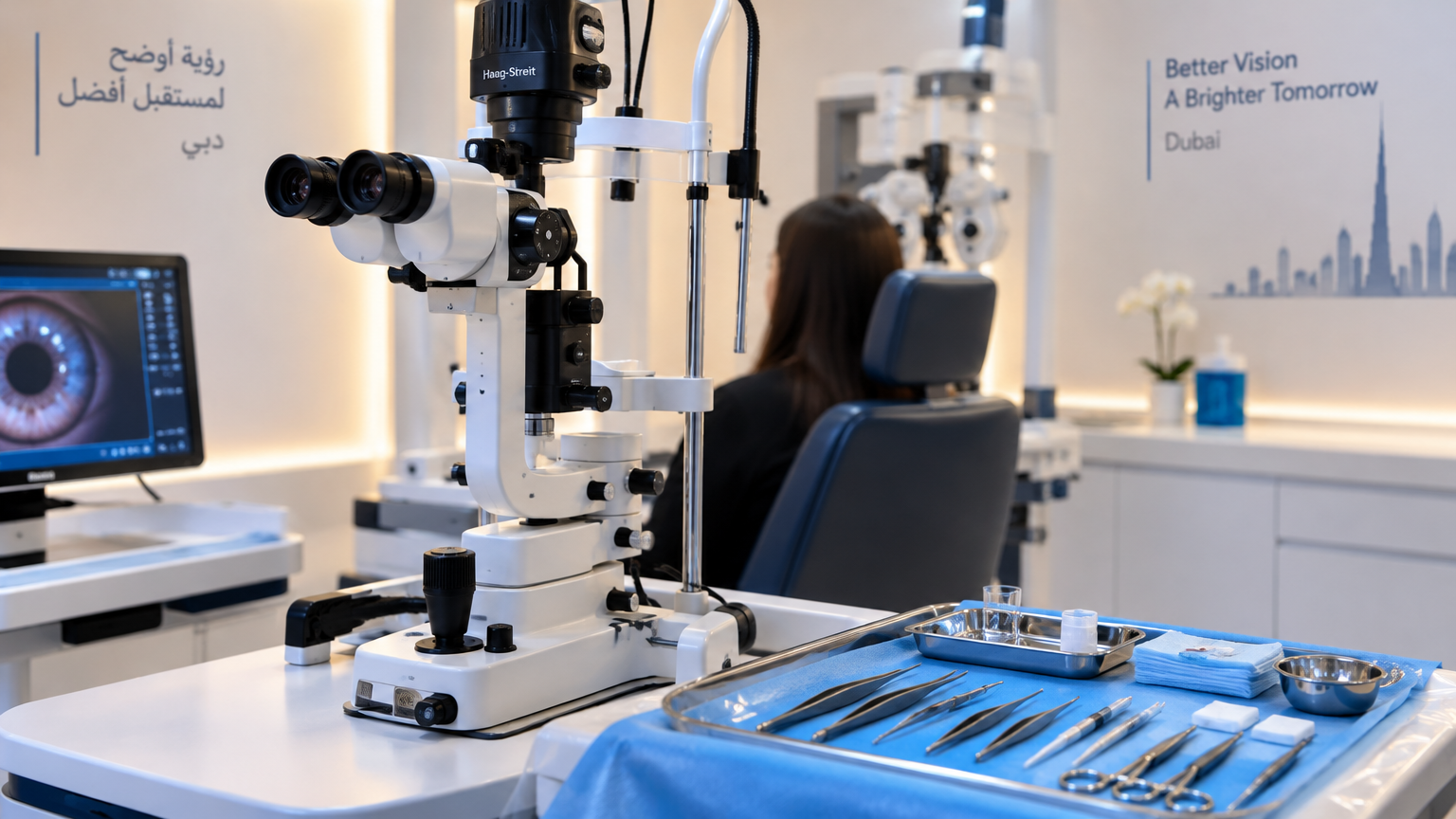
Pterygium is a common eye condition in Dubai, particularly among outdoor workers and sun-exposed individuals. This guide covers pterygium removal Dubai in detail—from diagnosis to recovery, costs in 2026, and how DHA-licensed clinics handle this procedure. Whether you’re considering surgery for medical reasons or cosmetic concerns, you’ll find practical advice tailored to Dubai’s climate and healthcare system.
Quick Summary
- Pterygium is a benign growth driven by UV exposure, dust, and Dubai’s intense climate. Outdoor workers face the highest risk.
- DHA-licensed clinics use advanced techniques like conjunctival autograft, limbal grafts, and amniotic membrane grafts to minimize recurrence.
- Surgery costs typically range from AED 9,200 to AED 73,400, depending on technique and complexity.
- Most patients return to light work within days; full recovery takes 3–6 months.
- Recurrence rates vary: autograft techniques show ~5–15% recurrence, while older bare sclera methods reach 24–80%.
- Sun protection is essential in Dubai. Most mandatory health insurance covers medically necessary removal, but cosmetic procedures may require out-of-pocket payment.
What Is Pterygium & Why It’s Common in Dubai
Definition, Causes, and Symptoms
Pterygium (sometimes called “surfer’s eye”) is a benign, fleshy growth that starts on the conjunctiva and extends over the cornea. It typically grows from the inner side of the eye toward the center. UV light, wind, dry air, and dust are the primary triggers.
Common symptoms include:
- Redness and persistent irritation
- Foreign-body sensation
- Visible growth on the white of the eye
- Induced astigmatism (blurred or distorted vision)
- In advanced cases, obstruction of the visual axis
Who’s at Risk in Dubai
Pterygium prevalence is high among specific groups in Dubai:
- Outdoor workers: construction laborers, road maintenance staff, landscapers, and agricultural workers face the greatest risk due to prolonged sun and dust exposure.
- Long-term expats: residents who spend time outdoors without consistent UV protection are susceptible, even if not regularly exposed for work.
- Geographic hotspots: Beach areas (JBR, Marina), outdoor construction zones, desert areas, and sunny rooftop environments see higher incidence rates.
Dubai’s location near the equator and intense year-round UV levels (often 10–12 on the UV Index) create ideal conditions for pterygium development.
Medical Necessity vs. Cosmetic Removal
| Situation | Medical Necessity | Cosmetic Only |
|---|---|---|
| Growth threatening vision (extending over pupil) | ✔️ Yes | No |
| Causing astigmatism or visual blur | ✔️ Yes | Possibly, depending on severity |
| Persistent discomfort unrelieved by lubricants | ✔️ Yes | If appearance is the only concern |
| Recurrent pterygium after prior surgery | ✔️ Yes | Less commonly cosmetic-only |
DHA-licensed clinics assess medical necessity based on how far the growth extends onto the cornea, whether it enters the visual axis, and whether it causes significant discomfort. A detailed topography scan reveals corneal distortion. Cosmetic removal is elective and influences insurance coverage decisions.
How DHA-Licensed Clinics Remove Pterygium
Surgical Techniques
Modern pterygium surgery combines removal with tissue grafting to prevent regrowth. The approach your surgeon chooses depends on the size and characteristics of your pterygium.
Bare Sclera Excision
The surgeon removes the growth and leaves the underlying tissue (sclera) uncovered. This older approach is rarely used today because recurrence rates reach 24–80%.
Conjunctival Autograft (Including Limbal Grafts)
This is the preferred method in most Dubai clinics. The surgeon removes the pterygium and covers the defect with healthy tissue from the patient’s own eye. The graft is secured with sutures or tissue adhesive (fibrin glue). Autograft techniques significantly reduce recurrence to approximately 5–15% in primary cases.
Amniotic Membrane Grafting
For large lesions or cases with limited conjunctival tissue, surgeons use amniotic membrane. This technique offers recurrence rates slightly higher than autografts (~9%) but much lower than bare sclera methods.
Adjunctive Mitomycin C (MMC)
Some surgeons apply this anti-scarring agent intraoperatively, especially for thick, aggressive growths or recurrent cases. MMC further reduces recurrence risk.
Typical Surgical Process at a DHA-Licensed Clinic
- Comprehensive examination: Measurement of growth size, corneal involvement assessment, topography scan to detect astigmatism, and clinical photography.
- Treatment planning: Small, stable pterygium may warrant conservative monitoring. Larger or progressive growth typically requires surgery.
- Outpatient surgery: Performed under local anesthesia. The procedure takes 30–60 minutes. Most clinics offer same-day discharge.
- Graft fixation: Surgeons secure the graft using either sutures (traditional) or tissue adhesive/fibrin glue (reduces post-op discomfort).
- Post-operative care: Antibiotic and steroid eye drops, protective shielding from sun and dust.
Cost & Pricing in Dubai (2026 AED Estimates)
Pterygium removal costs in Dubai vary based on clinic reputation, surgical technique, surgeon experience, and graft type. Below is a realistic breakdown:
| Procedure / Technique | Approx. Price Range (USD) | Equivalent (AED) | What’s Included |
|---|---|---|---|
| Conjunctival Autograft (standard) | USD 2,500–6,600 | AED 9,200–24,300 | Surgery, graft placement, standard medications, outpatient care |
| Premium clinics or complex cases (large lesions, limbal grafts, MMC) | USD 11,000–20,000 | AED 40,400–73,400 | Advanced graft techniques, premium surgeon, extended follow-up care |
| Amniotic membrane graft | USD 3,000–9,000 | AED 12,000–35,000 | Varies with surgeon expertise and case complexity |
*Conversion based on the fixed AED-USD peg: 1 USD = 3.67 AED
Most primary pterygium cases with standard autograft surgery in well-established Dubai clinics (Downtown, Marina, Business Bay) cost between AED 10,000 and AED 25,000. Recurrent cases or those requiring advanced techniques may exceed AED 70,000. Premium facilities or surgeons with international credentials charge at the upper end of the range.
Recovery Timeline and Downtime
Day of Surgery
Local anesthesia means no pain during the procedure. Surgery typically lasts 30–60 minutes. You’ll return home the same day with protective eyewear.
Week 1
Expect mild scratchiness, redness, and watering. Avoid dusty or bright environments. Do not swim or expose the eye to pool water. Most people manage light indoor work or remote duties.
Weeks 2–4
Redness fades gradually. Comfort improves significantly. Light outdoor activities are possible with strong UV-blocking sunglasses. Construction or dust-exposed work should wait until week 3–4 at minimum, with doctor approval.
Months 2–6
Full cosmetic improvement occurs as the graft settles. The corneal surface stabilizes. This is the critical window for monitoring recurrence, which typically appears within 3–6 months if it will occur at all.
Recurrence Risks by Technique
| Technique | Recurrence Rate (Primary Pterygium) | Key Risk Factors |
|---|---|---|
| Bare Sclera | 24–80%+ | Large size, thick growth, younger age, ongoing sun exposure, no adjunctive therapy |
| Conjunctival Autograft (sutures or glue) | ~5–15% | Graft quality, residual Tenon’s tissue, fixation method (glue typically lower than sutures) |
| Amniotic Membrane Graft | ~9% (primary), higher for recurrent cases | Best for cases with limited conjunctival tissue or extensive lesions |
| With Adjunctive Mitomycin C | Further reduction, especially for high-risk cases | Particularly effective for thick, extensive, or recurrent pterygium |
Conjunctival autograft with tissue adhesive offers the best balance of efficacy and safety for most patients. Recurrent pterygium (surgery performed previously) carries inherently higher recurrence risk regardless of technique, making rigorous sun protection even more critical after revision surgery.
Dubai-Specific Factors & Sun Protection
Dubai’s UV and Climate Challenges
Dubai’s equatorial location means UV Index values frequently reach 10–12 during summer months. Even winter months see strong midday UV. Ambient temperature, sand, and dry air compound eye irritation and slow healing.
Essential Sun Protection
- Wraparound sunglasses: Choose polarized lenses with 100% UVA/UVB blocking. Wrap-around designs prevent side exposure.
- Hats and visors: Wide-brim hats reduce direct and reflected UV.
- Protective clothing: Light long sleeves or scarves worn during outdoor work minimize exposure.
- Artificial tears: Keep the eye surface moist. Dry eyes increase irritation and pterygium risk.
- Post-operative shielding: For at least 4 weeks after surgery, combine sunglasses with a protective eye patch during peak sun hours (10 AM–4 PM).
Dubai Health Authority (DHA) summer guidelines emphasize maximum UV protection, particularly for outdoor workers and post-surgical patients.
Health Insurance & Coverage
Under Dubai Law No. 11 of 2013, mandatory health insurance covers most residents and many visitors. Employers or sponsors provide at least basic-benefits coverage.
Coverage for Pterygium Removal
Insurance approval depends on the indication:
- Medically necessary removal (vision threat, astigmatism, persistent discomfort) is typically covered after pre-authorization from your insurer’s Health Regulation Sector.
- Purely cosmetic removal is often not covered and requires out-of-pocket payment.
Always review your policy’s schedule of benefits to confirm coverage for “conjunctival autograft pterygium surgery.” Request pre-authorization from your insurer before scheduling surgery to avoid unexpected costs.
How to Choose a Clinic in Dubai
Essential Criteria
- DHA licensing: Verify registration through the Sheryan system. Only licensed facilities can legally perform surgery in Dubai.
- Surgeon credentials: Look for ophthalmologists with cornea and anterior segment surgery training, preferably with specific autograft or amniotic graft experience.
- Modern techniques: Clinics using fibrin glue, limbal-stem grafts, and adjunctive mitomycin C typically report lower recurrence.
- Convenient location: Choose a clinic where follow-up visits are accessible (Downtown Dubai, Business Bay, Garhoud areas have multiple options).
Key Questions to Ask
- What is your estimated recurrence rate for my specific case?
- Which graft technique will you use, and will fixation be with sutures or tissue adhesive?
- What is the total cost, and what does it include (surgery, medications, follow-ups)?
- How much downtime should I expect? When can I safely return to outdoor work?
- Do you use adjunctive therapy (mitomycin C) for high-risk cases?
Frequently Asked Questions
Q: Is pterygium surgery painful?
A: Local anesthesia eliminates pain during surgery. Post-operative discomfort—mild scratchiness, redness, or watering—is normal. Tissue adhesive typically causes less discomfort than sutures.
Q: When can I return to construction work or outdoor labor?
A: Light indoor tasks are possible within days 2–7. Full outdoor work with direct sun and dust exposure should wait until week 3–4 minimum, pending your surgeon’s approval. Strict sun protection is mandatory during this transition.
Q: Can I prevent pterygium or recurrence without surgery?
A: Yes. Consistent use of UV-blocking sunglasses, wide-brim hats, lubricating drops, and avoidance of prolonged sun/dust exposure significantly reduce risk. After surgery, rigorous sun protection dramatically lowers recurrence.
Q: Will my insurance automatically cover this procedure?
A: No. Coverage depends on medical necessity. Medically necessary removal is more likely approved after pre-authorization. Cosmetic-only procedures often require self-payment. Always verify