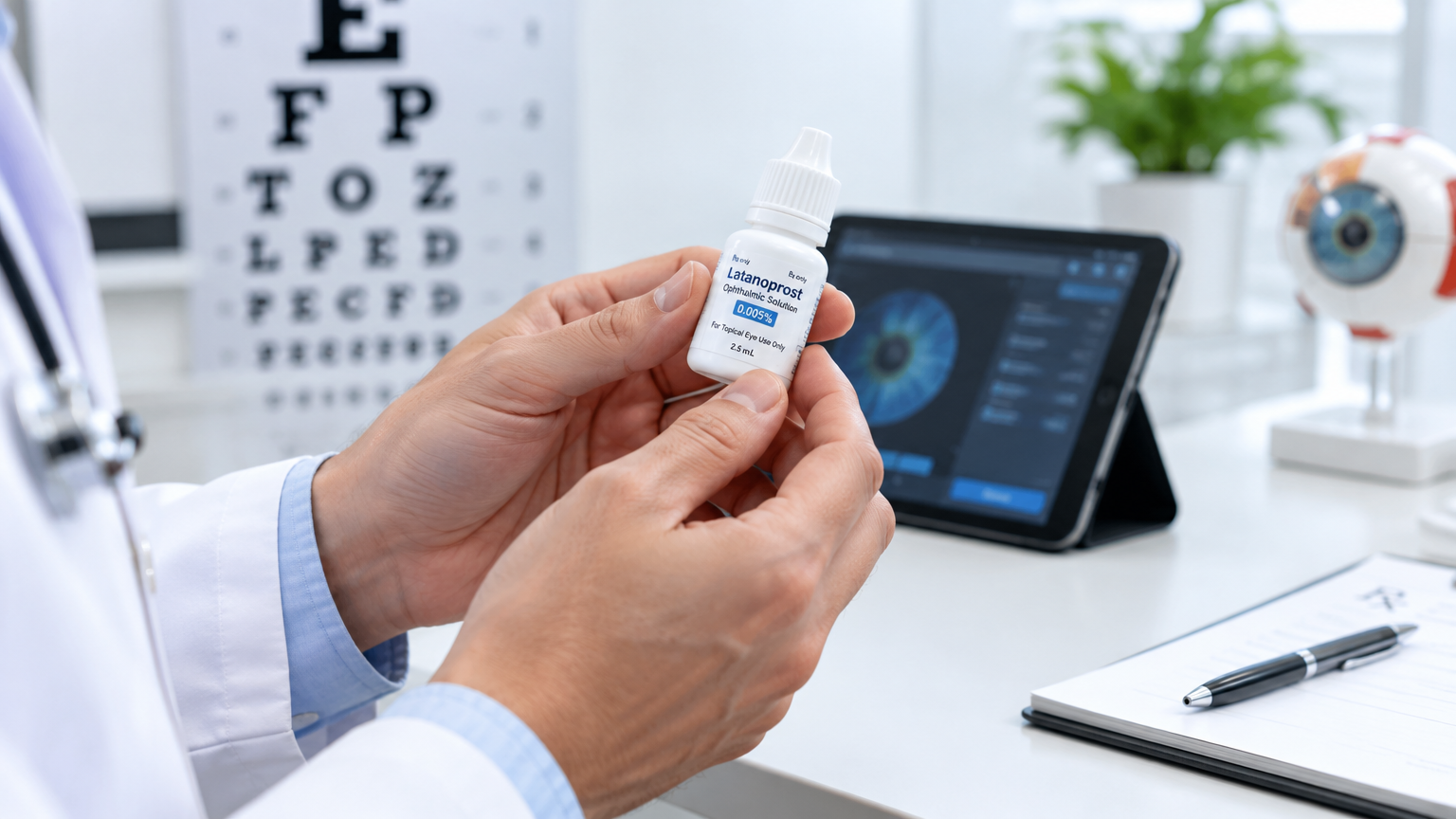
This article explains what eye drops prescription Dubai regulations require versus over-the-counter (OTC) eye drops, according to UAE health laws.
You’ll learn which types of drops (steroids, antibiotics, glaucoma treatments, redness, allergies, dry eye) need a licensed doctor’s prescription.
We compare consultation fees in Dubai for a quick eye exam and prescription visit, especially for expats and tourists.
We explore telemedicine platforms legally allowed to prescribe eye drops in Dubai, with pros, cons, and things to watch out for.
You’ll finish knowing when self-medicating is risky, what to check in a clinic, and how to proceed safely.
Understanding Eye Drop Regulations in Dubai & the UAE
Getting the right eye drops prescription Dubai requires understanding local regulations. UAE law places many medically active eye drops under prescription control. This protects your eye health and prevents serious complications from self-medication.
What’s classified as prescription-only eye drops?
According to the Drug Formulary (United Arab Emirates, 12th edition), these drops require a prescription:
These are typically available at major pharmacy chains without needing a UAE-issued prescription. Expats and tourists can purchase them freely.
Legal framework & pharmacy policy
Federal Decree-Law No. 2751 (2024) and its executive regulations clearly define what medical products require a prescription. Key points:
Pharmacists must not dispense prescription medicines without a valid prescription from a licensed UAE healthcare practitioner.
Foreign prescriptions (from abroad) are generally not accepted at UAE pharmacies. Only prescriptions from UAE-licensed doctors are valid.
Telemedicine rules: Prescribing controlled, semi-controlled, or narcotic medications via telemedicine is prohibited. Only non-controlled prescription medicines may be prescribed remotely.
Risks of Self-Medication Without Professional Diagnosis
Self-treating eye problems is dangerous. Here’s why you need professional guidance:
Wrong treatment of serious conditions: Using OTC drops for bacterial conjunctivitis, uveitis, glaucoma, or herpes simplex infection delays proper care.
Steroid misuse complications: Improper use leads to elevated intraocular pressure, cataract formation, glaucoma, or worsened infection.
Antibiotic resistance: Inappropriate use of antibiotics contributes to antimicrobial resistance. Decongestants used long-term can worsen redness.
Delayed diagnosis risks: Acute glaucoma or retinal disease need immediate attention. Self-medication delays may risk your vision permanently.
How to Choose an Eye Clinic & What to Expect
What to check in an eye clinic in Dubai
Before booking, verify these important details:
Clinic must be licensed by Dubai Health Authority (DHA) or the relevant Emirate health authority.
The ophthalmologist or optometrist should display valid licenses and registration numbers.
Equipment for eye exams includes slit lamp, tonometry (pressure measurement), and fluorescein staining capabilities.
Ask about transparent pricing for consultations, tests, and prescriptions.
Typical consultation fees in Dubai
Service Type
Location
Approximate Cost
Quick prescription eye exam (no insurance)
Business Bay, Dubai Marina, JBR
AED 250–500
Government DHA Primary Health Centre visit
Al Mizhar, Um Suqeim
AED 187.50
Specialist consultation (cornea, glaucoma)
Downtown, Sheikh Zayed Road
AED 600–900+
For visits focused on getting a prescription, general ophthalmologists typically charge AED 300–500 depending on location and reputation.
Telemedicine Platforms: Who Can Legally Prescribe Eye Drops?
Several licensed platforms in Dubai can prescribe non-controlled eye drops remotely. Here are your options:
Platform
Services Offered
Eye-Drop Prescription Available?
Limitations
Mediclinic Virtual Health
Primary care, dermatology, specialist referrals via virtual consultation
Yes, for non-controlled prescription drops
Physical exams, scans, or specialist evaluation may require in-person visits. Controlled medications excluded.
Medcare / teleMEDCARE
Live telemedicine, virtual clinics, home-health services
Yes, for prescription medications under regulation
Controlled and narcotic medications cannot be prescribed. Requires valid DHA license.
TruDoc
24×7 telemedicine with DHA-licensed doctors
Yes, including antibiotics and chronic-use medications
May require diagnostic tests. No delivery of controlled medicines. Insurance coverage varies.
Doctor for Every Citizen (DHA app)
Voice/video consultations with DHA-certified physicians and electronic prescriptions
Yes, for non-controlled prescriptions
Excludes controlled medications. In-person referral may be needed for diagnostics.
Key telemedicine rules to remember
Before using any telemedicine service for eye drops:
Verify that both the platform and doctor are licensed by DHA (if based in Dubai).
Remember: no controlled, semi-controlled, or narcotic eye drops can be prescribed via telehealth.
Electronic prescriptions must include the doctor’s name, licence number, drug name, dosage, and duration, as per MOHAP law.
Prescription vs OTC Eye Drops: Quick Reference
Type of Eye Drop
Common Use
Prescription Required?
Key Notes
Steroid drops (prednisolone, dexamethasone)
Inflammation, post-surgery, allergies
Yes
Specialist assessment required. Misuse causes serious side effects.
Use according to label. Avoid decongestants for more than a few days.
Lubricating/artificial tears
Dry eye and screen fatigue
No
Choose preservative-free if sensitive. Consult a doctor if symptoms persist.
Step-by-Step Process: Getting Your Prescription
In-clinic visit
Step 1: Initial assessment
The doctor checks your symptoms: redness, pain, discharge, or vision changes. An eye pressure check occurs if glaucoma is suspected.
Step 2: Diagnosis
Your eye receives examination using a slit lamp. Fluorescein staining and IOP measurement help confirm the diagnosis.
Step 3: Prescription
The doctor writes a valid prescription containing their name, licence number, drug name, dosage, and duration.
Step 4: Pharmacy fill
Major chains like Aster, Life, and Boots require valid UAE prescriptions for controlled medications. OTC items require no prescription. Delivery is usually available for non-controlled medications.
Step 5: Follow-up
For steroid or glaucoma drops, the doctor schedules follow-up to check for side-effects or pressure changes.
Telemedicine consultation
The process is similar, but limited physical examination occurs. Your doctor may ask for photos or videos. If in-person evaluation is necessary, they will refer you to a clinic.
Frequently Asked Questions
Q: Can I buy antibiotic eye drops without a doctor’s prescription in Dubai?
A: No. Antibiotic eye drops are prescription-only in the UAE. Pharmacies require a valid UAE prescription from a licensed doctor before dispensing.
Q: Do I need a specialist for steroid eye drops?
A: Yes. Steroid drops are prescription-only and usually require an ophthalmologist’s in-person assessment. Misuse causes serious side effects like elevated eye pressure and cataracts.
Q: Can I use my foreign prescription in Dubai?
A: Generally not. Pharmacies require prescriptions issued by UAE-licensed healthcare practitioners in most cases.
Q: Can telemedicine doctors prescribe glaucoma medication?
A: Yes, but only non-controlled medications from DHA-licensed platforms. Follow-ups and in-person exams may be necessary. Controlled and narcotic medications are excluded.
Q: What’s the typical cost for a quick prescription visit?
A: Private clinics in Marina, Business Bay, or Downtown charge AED 300–500. DHA Primary Health Centres charge approximately AED 187.50 for ophthalmology services.
Take Action Today
If you’re unsure whether your eye drops need a prescription, get professional guidance. Don’t guess with your vision at stake.
Your options are clear:
Book an in-clinic visit at a top Dubai eye clinic for thorough evaluation
Use telemedicine with a DHA-licensed platform for quick consultations
Visit a government health centre for affordable, quality care
Taking action now protects your vision, prevents complications, and gives you peace of mind. Reach out to a qualified eye care professional today.
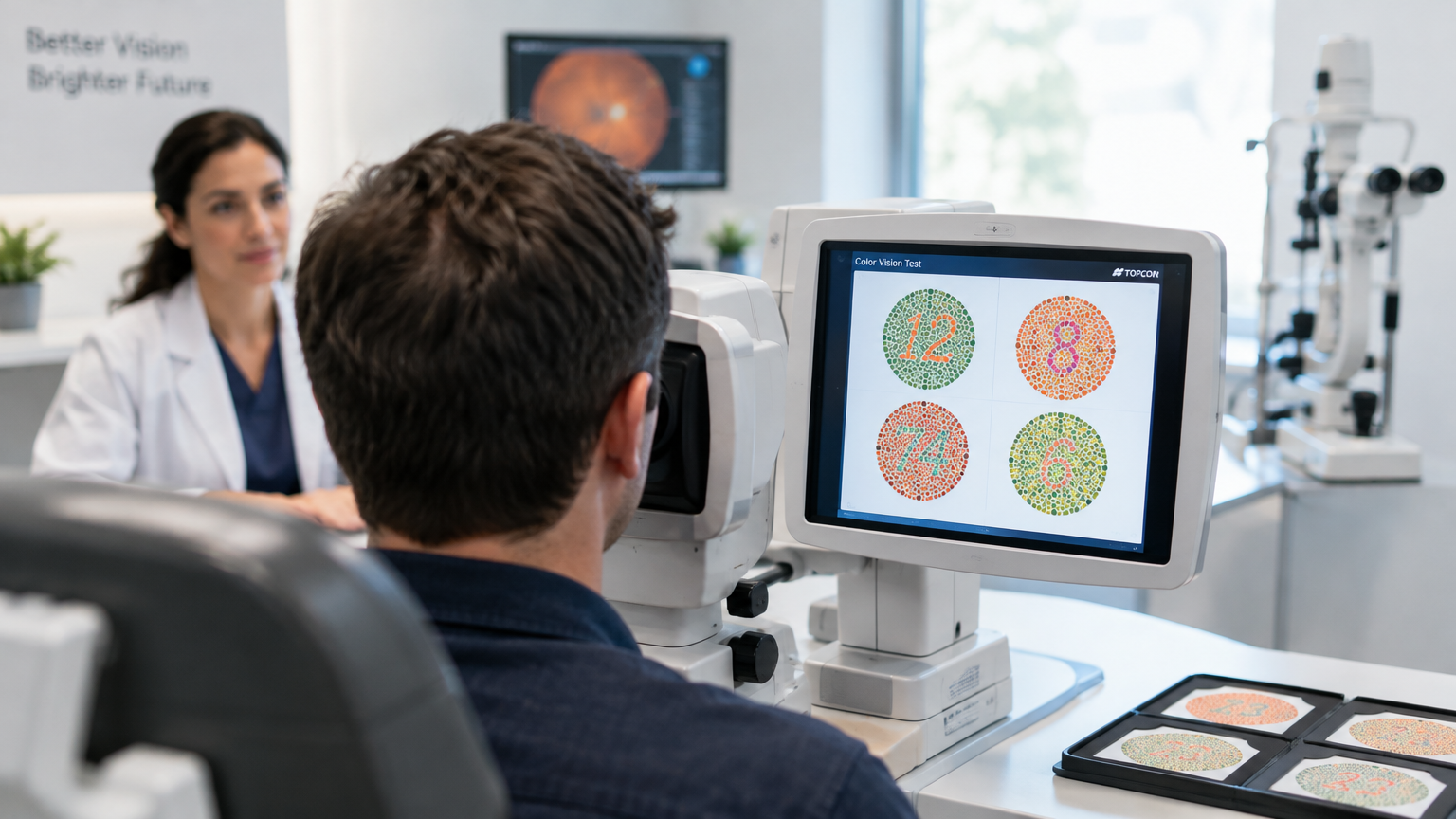
This guide explains the rules and requirements for a colour blindness test Dubai—including mandatory tests (Ishihara and sometimes Farnsworth D-15 or advanced perception tests) required for driving licences, visas, and certain jobs.
It identifies certified clinics and centres in Dubai where you can take these tests and discusses costs in AED, average fees, and what to expect.
The post covers how colour vision test results affect RTA driving licence eligibility, including for standard licences, heavy vehicles, and conversions.
Also looks at labour law and job categories under UAE law (aviation, public safety, diagnostics) that require proof of colour vision and what happens if you fail or partially pass.
Includes a checklist of documents, steps you need, and what to do if you fail the test—so you’re ready for your medical fitness exam or employment application.
What Is a Colour Vision Test and Why It Matters in Dubai
A colour blindness test Dubai screens for colour vision deficiencies. The most common types are red-green and blue-yellow vision problems. Clinics use standard tools like the Ishihara plates for initial screening. For advanced roles like aviation or signal-critical work, additional tests such as the Farnsworth D-15 or CAD (Colour Assessment & Diagnosis) provide more precise evaluation.
These tests assess how well you distinguish between colours and colour-coded signals. Dubai’s regulations require medical fitness assessments for driving licences, visas, and certain professional positions. Colour vision testing is especially important for public safety, commercial driving, aviation, and signalling work.
Important to know: there is no cure for inherited colour deficiency. Management focuses on recognition, adaptation, and—when required—limiting specific duties.
Certified Clinics in Dubai Offering Colour Vision Tests
Clinic / Facility
Colour Vision Tests Offered
Notes / Specialties
Emirates Driving Institute (Al Qouz Branch)
Certified Ishihara test plates plus visual acuity testing per RTA standards
Ideal for driving licences. Authorised by DHA and RTA.
Moorfields Eye Hospital UAE
Ishihara plates and advanced aviation-grade assessments for pilots, cabin crew, and air traffic controllers
Required facility for aviation roles. Staffed by ophthalmologists and GCAA-approved examiners.
Mediclinic (Multiple Branches)
Colour vision screening included in comprehensive eye exams and Ishihara testing
Best for general eye health. May refer for further testing when needed. Not all branches offer Farnsworth D-15 or CAD tests.
If your employer or regulator requires the Farnsworth D-15 specifically, confirm the clinic has this test before booking. Many clinics offer only Ishihara plates.
Costs and Pricing for Colour Vision Tests in Dubai
RTA Driving Licence Eye Tests
Authorised optical centres charge AED 140 to AED 180 for RTA eye tests. This includes standard vision checks and colour vision screening per RTA requirements.
Pre-Employment and Visa Medical Tests
Colour vision screening as part of pre-employment medicals ranges from AED 250 (basic screening) to AED 1,500+ (comprehensive executive packages). Costs depend on the clinic and whether additional tests like Farnsworth D-15 are needed.
Aviation Medical Tests
GCAA-approved facilities like Moorfields charge higher fees for advanced testing (Ishihara plus additional perception or CAD tests). Always request a quote in advance.
How Colour Vision Results Affect RTA Driving Licence Eligibility
Dubai’s RTA and DHA standards distinguish between colour vision deficiency and driving eligibility.
Standard Driving Licences
Being colour-blind does not automatically disqualify you from obtaining a standard licence. What matters is meeting RTA’s visual acuity thresholds (such as 6/18 in each eye, or 6/12 and 6/24 combinations). If you pass the acuity test, you can obtain a standard licence—even with colour deficiency.
Heavy Vehicles and Commercial Driving
Standards become stricter for buses, trucks, and commercial roles. You must demonstrate colour safety by recognising signals and colour-coded warning panels. RTA may require additional medical fitness exams at accredited hospitals to assess your ability to distinguish colours safely.
Jobs Requiring Colour Vision Certification in Dubai and the UAE
Several occupations require proof of accurate colour vision under employer contracts or regulatory standards:
Occupation / Role
Why Colour Vision Matters
Aviation: Pilots, cabin crew, air traffic controllers
Identifying cockpit indicators, control signals, and navigation lighting. GCAA standards require Ishihara testing and advanced colour perception for some licence classes.
Professional Drivers: Taxi, truck, bus, and heavy machinery operators
Recognising traffic lights, signal lights, and colour-coded warning panels. OSHAD-SF occupational health screening includes visual acuity and colour vision requirements.
Electrical and Signal Work: Electricians, signalling technicians, rail and maritime roles
Identifying cable colours and signal lights correctly. Employers typically include colour vision as a contractual requirement.
Public Safety and Healthcare: Emergency responders, laboratory technicians, quality control staff
Interpreting colour-based test results, medical alerts, and safety indicators. Some contracts explicitly require “normal colour vision.”
While UAE Federal Labour Law (Decree 33/2021) does not specify a fixed list of jobs, employers and regulatory bodies—including GCAA, DHA, and MOHRE—often set requirements independently.
Documents and Checklist for Colour Vision Tests
To ensure your test runs smoothly, bring the following documents:
Valid Emirates ID
Passport copy (if applicable)
Driving licence or traffic file number (if renewing or converting a licence)
Previous vision or medical certificates (for aviation or job-specific roles)
Prescription glasses or contact lenses (wear them during the test if you use them)
Employer letter or logbook (required for aviation, heavy-vehicle, or signalling work)
GCAA or regulatory forms (for pilots and aviation roles)
What Happens If You Fail the Colour Vision Test
Initial Failure at Basic Screening
If you fail an Ishihara test at a basic screening clinic, you’ll be referred for an advanced colour perception test—such as Farnsworth D-15, lantern test, or CAD. This is especially true for aviation or signal-critical roles.
Driving Licence Applications
Failing colour vision alone does not automatically block approval for a standard driving licence if your visual acuity meets RTA thresholds. You may receive approval with annotations on your medical fitness certificate.
Employment and Regulated Roles
For jobs that explicitly require “normal colour vision,” failure may result in disqualification or restricted duties. Your employer may limit you to daylight work or non-signal-critical roles.
Options After Failure
Request re-testing at a specialised facility, especially if poor lighting or test conditions affected your result
Seek an ophthalmologist’s assessment if colour deficiency resulted from disease or injury (some conditions are reversible with treatment)
Explore job roles that don’t require colour vision certification
Remember: inherited colour deficiency has no cure. Management depends on understanding your condition and adapting your work accordingly.
Frequently Asked Questions
Q: Is the Farnsworth D-15 test required for every driving licence application?
No. Most RTA-approved eye-test centres use Ishihara colour plate screening. The Farnsworth D-15 or other advanced tests apply in specific cases—such as aviation medicals, signal-critical jobs, or borderline Ishihara results. Check with your employer or regulatory body about your specific requirements.
Q: Can someone who is colour-blind still get a driving licence in Dubai?
Yes. Dubai’s RTA regulations allow colour-blind applicants to obtain a licence or learning permit if they meet standard visual acuity and eye health requirements. Colour vision deficiency alone does not automatically disqualify drivers.
Q: What is the difference between a regular eye test and a medical fitness exam?
A regular eye test includes visual acuity, possibly peripheral vision, and colour screening using Ishihara plates. Medical fitness exams—for aviation or commercial driving—may demand advanced colour perception tests, stricter standards, and more frequent re-assessments. Advanced tests like Farnsworth D-15 or CAD may be required.
Q: How long is a colour vision test result valid for?
For RTA-linked eye tests tied to driving licence issuance or renewal, results remain valid for 3 years. For aviation or regulated jobs, validity depends on the licensing body—often annual or upon each renewal.
Q: Can special glasses or filters help correct colour blindness?
Ordinary glasses or contact lenses do not correct inherited colour vision deficiency. Some special filters or tints may improve contrast, but regulatory bodies usually require documentation and may not accept these aids. For jobs demanding “colour safe” vision, you’ll still need to pass advanced perception testing.
Get Your Colour Vision Test Today
If you need a colour blindness test Dubai for a driving licence, visa, job application, or aviation medical, follow these steps:
Determine whether you need Ishihara screening only, or also advanced testing like Farnsworth D-15 or CAD
Select a certified clinic authorised by DHA, GCAA, or MOHRE (such as Emirates Driving Institute, Moorfields, or Mediclinic)
Gather all required documents from the checklist above and wear corrective lenses if you use them
Contact a top eye clinic in Dubai today for a free consultation. Understanding your specific test requirements—and how they apply to your driving licence or job—gives you the confidence to move forward with clarity.
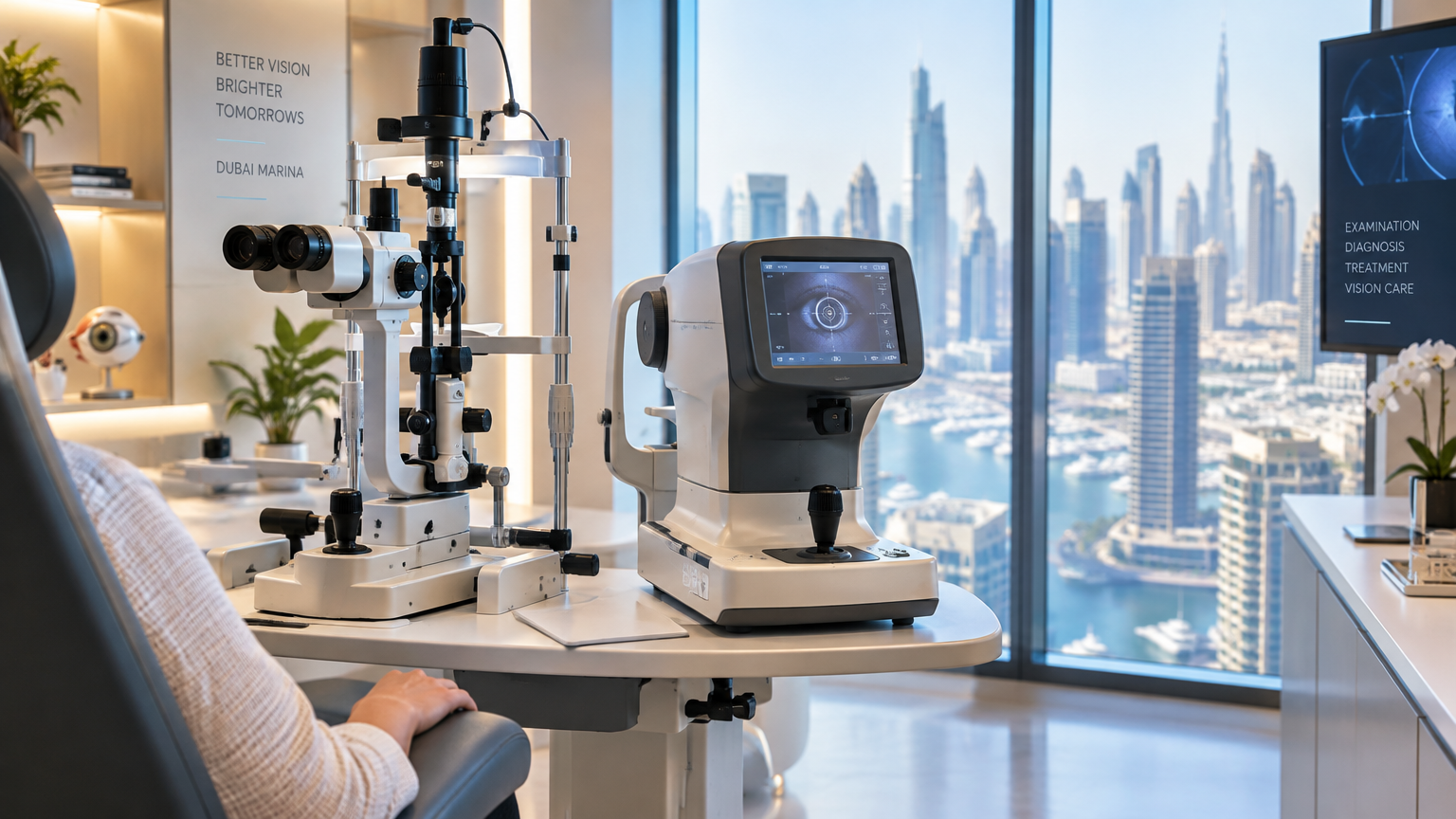
What this article offers: a detailed comparison of eye clinics in Dubai Marina, JLT, Downtown, and Business Bay, including specialities, access, weekend hours, and pricing for eye tests and LASIK.
Why it matters: your neighbourhood influences travel time, cost, and quality—important when choosing a high-quality, high-convenience eye clinic Dubai Marina or nearby area.
Key factors explained: how to evaluate clinics based on your profile (young professional, family, tourist) with a decision matrix.
Actionable next steps: understand rates in AED, see which clinics match your needs, and compare local options before you decide.
Ready to move forward? You’ll be able to book a free consultation at a top eye clinic in Dubai with confidence after reading.
Choosing the Right Eye Clinic Near You
Finding the right eye clinic Dubai Marina or elsewhere in the emirate means looking beyond location alone. Your choice affects your vision care quality, convenience, and cost. Let’s explore what matters most when selecting a clinic.
What to Look For
Specialisation & Quality
Routine eye tests and optical prescriptions (optometry)
Medical ophthalmology (cataracts, glaucoma, retina)
Refractive surgery (LASIK, SMILE, PRK)
Pediatric eye care
Regulatory Compliance
Licensed by the Dubai Health Authority (DHA) or equivalent
For driving-licence vision checks, accredited optical centres connected to RTA
Dubai Marina (many hotels, sea view), Downtown Dubai (hotel central through Burj Khalifa / Dubai Mall); clinics in malls
Costs & Pricing Guide (Self-Pay)
Understanding typical costs helps you budget and avoid surprises. Here’s what you’ll likely pay for common eye care services.
Service
Range in AED
Notes
RTA driving-licence vision test (optical chain)
AED 130-180
Optical shops like Magrabi and Al Jaber have accredited branches that submit to RTA directly
Basic optometry & prescription exam
AED 150-300
Standalone optical shops; less in residential districts; higher in premium areas
Ophthalmologist consultation (specialist)
AED 350-600
For medical eye problems—red eye, glaucoma, etc. In hospital or specialised clinics
Comprehensive exam + imaging
AED 500-900+
Includes OCT, retina scan, visual field tests. Premium locations cost more
LASIK surgery (both eyes)
AED 8,000 ‒ 18,000
Depends on technique (bladeless, SMILE etc.), pre-op, follow-ups included
Free or nominal consultation promotions
Varies by clinic
“Free” offers often require follow-up paid diagnostic tests. Always verify what’s included
Local Specifics & Rules
Dubai’s healthcare system has specific regulations. Knowing them prevents frustration when booking appointments or getting prescriptions filled.
Clinics must be DHA-licensed. Optical services follow DHA Standards for Optical Centers and Optometry Services.
Driving-licence eye tests require centres that directly submit results to RTA. Home tests won’t work for official licence renewals.
Insurance: many employer plans cover basic ophthalmology and emergencies, but LASIK and premium refractive surgeries are often excluded, requiring full self-pay.
Side-by-Side Clinic Comparison: Why You Might Choose One Over Another
Clinic
Best for
Trade-Offs
Medcare Medical Centre – Marina
Marina residents; high-quality ophthalmology close to home; LASIK offers nearby
Limited weekend and Friday hours; parking can get tight during peak times
Less convenient for late evenings; advance booking required on Fridays
Prime Medical Center / Optical Chains – Downtown
Tourists or Downtown workers; late-night service; mall locations; optometry focused
Medical ophthalmology or advanced tests may require hospital visits; downtown cost premium applies
Emirates Hospital Clinic – Business Bay
Business Bay workers; hospital-level care; glaucoma or cataract concerns; evening appointments
Car access helpful; parking may add time or cost; early closures on Saturdays
Frequently Asked Questions
How much does an eye test cost in Dubai Marina vs Downtown?
Basic optometry tests in Dubai Marina range AED 150-300, while Downtown locations expect AED 200-400+, especially with imaging or specialist involvement.
Is LASIK consultation free?
Not always. Some clinics offer free LASIK pre-screening, but many charge a specialist consultation fee (AED 350-800), especially if diagnostic tests like corneal topography or OCT are needed.
Can I do the driving license eye test at home or my hotel?
Only if the vendor is from an RTA-accredited optical centre that submits results electronically. Most home or mobile services are not accredited for official RTA licence purposes.
What’s the cheapest way to get an eye test if I have insurance?
Use your insurance network. Many plans cover one routine eye exam per year at in-network optical chains. Verify whether imaging or specialist care is covered.
For LASIK surgery, how far ahead should I plan?
Plan 1-2 weeks ahead for pre-screening. Surgery typically includes 1-2 follow-up appointments. Hidden costs may include premium lenses, advanced imaging, protective eyewear, or upgrades to femtosecond or SMILE techniques. Always check what’s “all-in” with the quoted price.
Ready to Get Started?
Compare options in your neighbourhood—whether you’re in Dubai Marina, JLT, Downtown, or Business Bay. Start by narrowing your priorities: Do you need LASIK or a routine exam? Prefer afternoon or evening hours? Want family-friendly clinics or tourist convenience?
When ready, book a free consultation at a top eye clinic in Dubai. Many clinics offer these for LASIK or general eye care. Use consultations to test services, meet doctors, and see equipment. An informed decision ensures you get great vision care where you live, work, and rest.
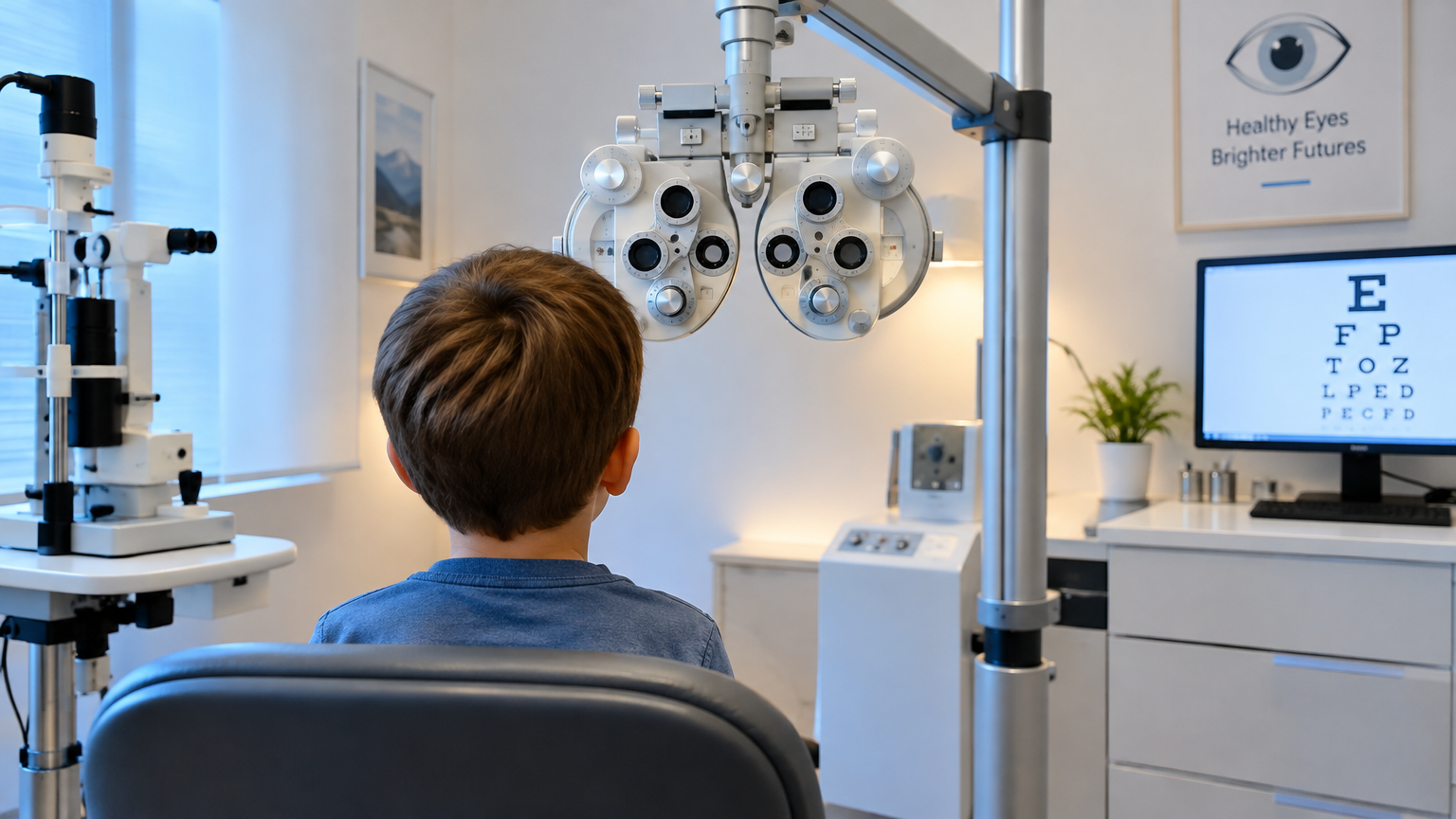
This guide explains what medical paediatric ophthalmology involves in Dubai, focusing on serious children’s eye conditions like amblyopia (lazy eye), childhood glaucoma, retinopathy of prematurity (ROP), and strabismus (squint), and why standard eye tests aren’t always enough.
You’ll learn red-flag symptoms that require prompt specialist care—not just a routine optometrist visit.
We clarify the difference between a DHA-licensed paediatric ophthalmologist, optometrist, and orthoptist.
We list Dubai hospitals with dedicated paediatric ophthalmology departments, what they offer, and typical fees in AED.
The aim: to help you decide when to see a specialist so you can book a free consultation at a top eye clinic in Dubai without delay.
What is a Paediatric Ophthalmologist Dubai Professional?
A paediatric ophthalmologist Dubai is a medical doctor who specializes in diagnosing and treating eye diseases in children. This goes far beyond prescribing glasses. These specialists manage complex medical and surgical conditions that standard eye tests often miss. Early intervention—before age 7 or 8—is critical for many childhood eye disorders, as delayed treatment can cause permanent vision loss.
Beyond the Standard Eye Test
A standard eye test usually checks:
how well your child sees (refractive error for glasses),
sometimes eye alignment,
and general eye health from the front.
But serious eye disorders in children require deeper medical and surgical evaluation. Key conditions include:
Lazy eye (Amblyopia): Poor development of vision in one eye that the brain ignores if untreated early.
Childhood glaucoma (congenital or juvenile): High eye pressure that can damage the optic nerve and vision permanently.
Retinopathy of Prematurity (ROP): Abnormal retinal blood vessel development in pre-term infants.
Strabismus (Squint): Eye misalignment that can harm vision or cause double vision.
Timely treatment is essential—often before age 7–8 for many conditions—otherwise changes may become irreversible.
Red-Flag Symptoms: When Standard Tests Are Not Enough
If your child shows any of the following, consult a paediatric ophthalmologist right away:
Symptom
Why It’s Important
Eye turned in or out, delaying alignment or “wandering eye”
Could be strabismus—brain may ignore one eye (amblyopia)
One eye appears white or pupil reflects white in photos
Potential sign of cataract or retinoblastoma
Eye size looks larger or cloudy cornea
Possible congenital glaucoma
Light sensitivity, watery discharge, eyelid droop
May suggest severe infection, ptosis, or neurological issue
Premature birth (under ~32 weeks), oxygen therapy
Risk of retinopathy of prematurity (ROP)
Even if only one symptom is present, it’s safer to get specialist input than wait. Early diagnosis and treatment prevent irreversible vision damage.
DHA-Licensed Paediatric Ophthalmologist vs Optometrist vs Orthoptist
Understanding who does what is crucial for choosing the right care:
Paediatric Ophthalmologist: A medical doctor with specialist training in diagnosing and treating disease in children’s eyes. Can perform surgery and prescribe medical therapies. DHA-licensed for full scope of practice.
Optometrist: A licensed healthcare professional (allied health) who performs vision testing and prescribes glasses or contact lenses. Under DHCA and DHA rules, cannot perform surgery or surgical treatment. (dhcc.ae)
Orthoptist: Trained in assessment and non-surgical management of eye alignment and binocular vision (squint, lazy eye). They work alongside ophthalmologists to perform specialized tests and therapy. (dha.gov.ae)
In summary: For routine refractive errors, glasses, or early-stage lazy eye management, optometrists and orthoptists can help. For amblyopia that’s not responding to treatment, glaucoma, ROP, or conditions requiring surgery, you need a paediatric ophthalmologist.
Common Childhood Eye Disorders and Their Treatment
Amblyopia (Lazy Eye)
Lazy eye often develops when one eye has a much different prescription than the other, or when strabismus (misalignment) causes the brain to ignore one eye’s input. The brain learns to rely on the stronger eye, and the weaker eye never develops proper vision.
Treatment options include glasses, patching (occluding) the stronger eye, or penalisation drops.
Early treatment by age 4–7 yields significantly better outcomes.
Once the critical window closes (around age 8), vision improvement becomes much more difficult.
Childhood Glaucoma
Glaucoma in children is rare but serious. It can be present at birth (congenital) or develop later (juvenile).
High intraocular pressure damages the optic nerve and causes permanent vision loss.
Treatment involves medical management (pressure-lowering drops) or surgical intervention (trabeculotomy, goniotomy).
Early detection and treatment prevent irreversible optic nerve damage.
Retinopathy of Prematurity (ROP)
ROP affects premature infants, particularly those born before 32 weeks gestation or with very low birth weight. Abnormal blood vessel development in the retina can lead to blindness if untreated.
Screening is required for at-risk infants.
Treatment includes laser therapy or anti-VEGF injections to halt abnormal vessel growth.
SKMC provides weekly ROP screening at Corniche Hospital. (skmc.seha.ae)
Strabismus (Squint)
Strabismus is a misalignment of the eyes. It can be constant or intermittent, and the eyes may turn inward (esotropia), outward (exotropia), upward, or downward.
Non-surgical options include glasses or vision therapy exercises.
Surgery is considered if alignment doesn’t improve with conservative measures or if the misalignment is large.
Left untreated, strabismus often leads to lazy eye (amblyopia) in the misaligned eye.
Top Hospitals & Clinics in Dubai with Paediatric Ophthalmology Departments
Understand what vitreous floaters are and learn to spot warning signs of retinal detachment.
See how eye clinics in Dubai assess sudden floaters and flashes—what requires immediate care versus routine appointments.
Compare two main treatments: laser vitreolysis and vitrectomy, including costs in AED and which clinics offer them.
A practical checklist for expats: when to act immediately, what to expect with insurance, and how to navigate the UAE health system.
Tips to compare options and book a free consultation at a top eye clinic in Dubai with confidence.
What’s Going On: Floaters, Flashes & Retinal Health
If you’ve noticed floaters drifting across your vision, you’re not alone. Many people in Dubai experience eye floaters, especially as they age. Understanding what they are and when they signal a problem is crucial. Eye floaters treatment Dubai options range from simple monitoring to advanced laser therapy, depending on your specific condition.
What are benign vitreous floaters?
Your eye is filled with clear gel called vitreous. As you age—particularly after 40—this gel naturally shrinks or liquefies. Collagen fibers clump together and cast shadows on your retina. These shadows are floaters.
You might also notice brief “flashes” of light (photopsias) when the vitreous tugs gently on the retina’s surface. These can be unsettling, but they’re often harmless if they appear gradually and come without other symptoms.
When warning signs suggest a retinal tear or detachment
A retinal detachment is serious and requires emergency care. Watch for these warning signs:
Sudden appearance of many new floaters (a “shower” of floaters)
Flashes of light, especially at the edge of your peripheral vision
A shadow, curtain, or veil spreading across part of your vision—especially side vision that gradually moves inward
Sudden blurring, distortion, or rapid vision loss in one eye without pain
If you experience any of these symptoms, seek immediate medical attention.
How Dubai eye clinics triage your symptoms
When you visit an ophthalmologist or retina specialist in Dubai, expect a thorough assessment process:
Step
What’s Done
Goal
History & visual symptoms
When did floaters or flashes start? Did they appear suddenly or gradually? Do you see them in one eye or both? Have you had previous eye surgery, high myopia, or eye trauma?
Clarify your risk of retinal tear or detachment.
Dilated eye exam
Your pupils are dilated so the specialist can examine your retina thoroughly using a slit-lamp and indirect ophthalmoscopy.
Spot any tears or early retinal damage.
Imaging if needed
OCT (optical coherence tomography), fundus photography, or B-scan ultrasound if the view is blocked.
Detect hidden detachments or injuries.
Urgent vs routine scheduling
Signs of tear or detachment result in same-day care. Floaters without other risk factors allow routine follow-up scheduling.
Prioritize emergent cases to protect your vision.
Eye Floaters Treatment Dubai: Laser Vitreolysis vs Vitrectomy
Laser Vitreolysis
Laser vitreolysis is a non-invasive treatment using laser pulses to break up floaters or vaporize collagen clumps. This approach works best for floaters that are mobile, not densely opaque, away from your retina and lens, and significantly bothersome.
The procedure involves minimal downtime and requires no surgical incisions. However, effectiveness varies from patient to patient. Some floaters may not be completely removed, and there’s a small risk of retinal injury if not performed carefully by an experienced specialist.
Cost in Dubai: Laser vitreolysis sessions typically cost between AED 2,000–4,000 per session at specialized clinics.
Where available:
Clinic
Location
Treatment Details
Spanish Center Dubai
Jumeirah 2
Offers vitreolysis using nanosecond pulsed low-energy laser to treat floaters and opacities.
American Hospital Dubai
Dubai Healthcare City / Al Safa
Their Ophthalmology Department treats floaters and flashes with laser options among available treatments.
Vitrectomy (Surgical Removal)
Vitrectomy is a surgical procedure that removes the vitreous gel and floating debris, replacing it with clear fluid or saline. Specialists recommend this approach for severe floaters, dense vitreous hemorrhage, or when laser treatment hasn’t worked. It’s also used for retinal detachment repair.
This procedure requires an operating theatre and local or general anesthesia. Recovery is longer than laser treatment, and there are greater risks of cataract formation and infection.
Cost in Dubai: Retinal surgery packages start around AED 20,000 at specialized facilities. Complex cases cost more.
Clinics with vitreoretinal surgery units include Moorfields Eye Hospitals UAE, Mediclinic City Hospital, IMH, and Eye Consultants—all equipped to handle severe floaters and retinal detachments.
How to Choose: What to Look for in a Clinic & Doctor
Retina specialist credentials: Seek ophthalmologists with fellowship training in vitreoretinal surgery. Verify they’re registered with Dubai Health Authority (DHA) or Ministry of Health & Prevention (MOHAP).
Advanced diagnostic equipment: Look for clinics equipped with OCT, wide-field retinal imaging, B-scan ultrasound, and fundus photography. Moorfields, Mediclinic City Hospital, and Eye Consultants publish their equipment lists.
Emergency availability: For retinal detachment symptoms, you need same-day assessment. Ebsaar Eye Surgery Center (Jumeirah) advertises emergency retina evaluation on the same day.
Transparent pricing: Ensure the clinic provides a clear breakdown—consultation, imaging, procedure, anesthesia, and follow-ups. Ask what your insurance covers.
Patient reviews and outcomes: Established centres like Moorfields Eye Hospitals UAE, Barraquer, Spanish Center, and IMH have proven track records and peer-reviewed outcomes.
Local Specifics: Costs, Insurance, Regulations
Costs in Dubai: Retina specialist consultations range from AED 800–1,500 depending on experience level. Diagnostic imaging adds AED 500–1,500. Laser vitreolysis costs AED 2,000–4,000 per session. Vitrectomy starts around AED 20,000 for straightforward cases; complex procedures cost more.
Insurance coverage: Most expats have private health insurance covering retinal treatments, both surgical and laser-based. Clinics require pre-authorization for surgical retina care. If uninsured, many offer payment plans or direct billing options.
Clinic regulation: All clinics must be licensed by DHA (for Dubai) or MOHAP. Verify that your chosen eye doctor appears in the Dubai Health Authority Medical Registry. Accredited clinics like Moorfields, Spanish Center, and IMH maintain transparency about their credentials and regulatory compliance.
When to Go Today vs Book a Routine Appointment
Use this checklist to decide whether you need urgent care or can schedule a routine visit:
Symptom or Risk
Action
Notes on UAE Healthcare
Sudden shower of floaters plus flashes
Go today—seek same-day emergency appointment or hospital care
Many clinics and hospitals (Ebsaar, Mediclinic) offer retina emergency services. Tell reception “urgent retinal symptoms.”
Shadow or curtain across vision (even if partial)
Go today
Delay increases risk of permanent vision loss.
Blurred vision or distortion in one eye, sudden onset
Floaters gradually increasing without flashes or shadows
Book a routine appointment within one week
Contact a specialist clinic or hospital outpatient retina unit.
Floaters more noticeable after trauma or cataract surgery
Urgent or same-day review
Previous surgery, high myopia, or injury increase your risk.
Routine screening if you have diabetes or high myopia
Schedule follow-up every 6–12 months
Preventive retina screening through specialists.
Frequently Asked Questions
Q: Can floaters go away on their own?
A: Yes. Most benign floaters from posterior vitreous detachment or age-related changes settle over weeks to months, drifting downward or becoming less noticeable. They don’t always disappear completely, especially if they’re large or close to the retina.
Q: What is the success rate of laser vitreolysis?
A: When performed correctly on suitable floaters, many patients report significant symptom reduction. However, results vary. Laser is less effective for dense, centrally located floaters or those close to the retina. Discuss your specific case with your retina specialist.
Q: How long is recovery after vitrectomy?
A: Recovery depends on complexity. Expect blurred vision for 1–6 weeks. Returning to work and physical activity depends on the type of tamponade gas or oil used. Avoid heavy lifting and sports during the recovery period.
Q: Is laser vitreolysis covered by insurance?
A: Coverage varies by insurer. Some cover laser photocoagulation and retinal procedures, while others consider vitreolysis “cosmetic” if floaters are mild. Always verify with your insurance provider and obtain written pre-authorization before treatment.
Q: Can I go directly to hospital emergency?
A: Yes. If you suspect retinal detachment (experiencing flashes, shadows, or sudden vision loss), private hospital emergency departments in Dubai accept ophthalmic emergencies. For routine issues, visit outpatient clinics with retina specialists.
Ready to Get Started?
If you’ve suddenly noticed new floaters or flashes, don’t delay—find out whether your condition is benign or requires urgent care. Speaking with a specialist today protects your vision and gives you peace of mind.
Book a free consultation at a top eye clinic in Dubai to compare your options, understand your treatment choices, and learn about costs upfront. An experienced retina specialist will review your symptoms, examine your imaging, and help you make a confident decision about laser vitreolysis versus vitrectomy—or whether simple monitoring is best for you.
Your vision is precious. Schedule your appointment today and take the next step toward clarity.
Pterygium is a common eye condition in Dubai, particularly among outdoor workers and sun-exposed individuals. This guide covers pterygium removal Dubai in detail—from diagnosis to recovery, costs in 2026, and how DHA-licensed clinics handle this procedure. Whether you’re considering surgery for medical reasons or cosmetic concerns, you’ll find practical advice tailored to Dubai’s climate and healthcare system.
Quick Summary
Pterygium is a benign growth driven by UV exposure, dust, and Dubai’s intense climate. Outdoor workers face the highest risk.
DHA-licensed clinics use advanced techniques like conjunctival autograft, limbal grafts, and amniotic membrane grafts to minimize recurrence.
Surgery costs typically range from AED 9,200 to AED 73,400, depending on technique and complexity.
Most patients return to light work within days; full recovery takes 3–6 months.
Recurrence rates vary: autograft techniques show ~5–15% recurrence, while older bare sclera methods reach 24–80%.
Sun protection is essential in Dubai. Most mandatory health insurance covers medically necessary removal, but cosmetic procedures may require out-of-pocket payment.
What Is Pterygium & Why It’s Common in Dubai
Definition, Causes, and Symptoms
Pterygium (sometimes called “surfer’s eye”) is a benign, fleshy growth that starts on the conjunctiva and extends over the cornea. It typically grows from the inner side of the eye toward the center. UV light, wind, dry air, and dust are the primary triggers.
Common symptoms include:
Redness and persistent irritation
Foreign-body sensation
Visible growth on the white of the eye
Induced astigmatism (blurred or distorted vision)
In advanced cases, obstruction of the visual axis
Who’s at Risk in Dubai
Pterygium prevalence is high among specific groups in Dubai:
Outdoor workers: construction laborers, road maintenance staff, landscapers, and agricultural workers face the greatest risk due to prolonged sun and dust exposure.
Long-term expats: residents who spend time outdoors without consistent UV protection are susceptible, even if not regularly exposed for work.
Geographic hotspots: Beach areas (JBR, Marina), outdoor construction zones, desert areas, and sunny rooftop environments see higher incidence rates.
Dubai’s location near the equator and intense year-round UV levels (often 10–12 on the UV Index) create ideal conditions for pterygium development.
Medical Necessity vs. Cosmetic Removal
Situation
Medical Necessity
Cosmetic Only
Growth threatening vision (extending over pupil)
✔️ Yes
No
Causing astigmatism or visual blur
✔️ Yes
Possibly, depending on severity
Persistent discomfort unrelieved by lubricants
✔️ Yes
If appearance is the only concern
Recurrent pterygium after prior surgery
✔️ Yes
Less commonly cosmetic-only
DHA-licensed clinics assess medical necessity based on how far the growth extends onto the cornea, whether it enters the visual axis, and whether it causes significant discomfort. A detailed topography scan reveals corneal distortion. Cosmetic removal is elective and influences insurance coverage decisions.
How DHA-Licensed Clinics Remove Pterygium
Surgical Techniques
Modern pterygium surgery combines removal with tissue grafting to prevent regrowth. The approach your surgeon chooses depends on the size and characteristics of your pterygium.
Bare Sclera Excision
The surgeon removes the growth and leaves the underlying tissue (sclera) uncovered. This older approach is rarely used today because recurrence rates reach 24–80%.
Conjunctival Autograft (Including Limbal Grafts)
This is the preferred method in most Dubai clinics. The surgeon removes the pterygium and covers the defect with healthy tissue from the patient’s own eye. The graft is secured with sutures or tissue adhesive (fibrin glue). Autograft techniques significantly reduce recurrence to approximately 5–15% in primary cases.
Amniotic Membrane Grafting
For large lesions or cases with limited conjunctival tissue, surgeons use amniotic membrane. This technique offers recurrence rates slightly higher than autografts (~9%) but much lower than bare sclera methods.
Adjunctive Mitomycin C (MMC)
Some surgeons apply this anti-scarring agent intraoperatively, especially for thick, aggressive growths or recurrent cases. MMC further reduces recurrence risk.
Typical Surgical Process at a DHA-Licensed Clinic
Comprehensive examination: Measurement of growth size, corneal involvement assessment, topography scan to detect astigmatism, and clinical photography.
Treatment planning: Small, stable pterygium may warrant conservative monitoring. Larger or progressive growth typically requires surgery.
Outpatient surgery: Performed under local anesthesia. The procedure takes 30–60 minutes. Most clinics offer same-day discharge.
Graft fixation: Surgeons secure the graft using either sutures (traditional) or tissue adhesive/fibrin glue (reduces post-op discomfort).
Post-operative care: Antibiotic and steroid eye drops, protective shielding from sun and dust.
Cost & Pricing in Dubai (2026 AED Estimates)
Pterygium removal costs in Dubai vary based on clinic reputation, surgical technique, surgeon experience, and graft type. Below is a realistic breakdown:
Procedure / Technique
Approx. Price Range (USD)
Equivalent (AED)
What’s Included
Conjunctival Autograft (standard)
USD 2,500–6,600
AED 9,200–24,300
Surgery, graft placement, standard medications, outpatient care
Premium clinics or complex cases (large lesions, limbal grafts, MMC)
USD 11,000–20,000
AED 40,400–73,400
Advanced graft techniques, premium surgeon, extended follow-up care
Amniotic membrane graft
USD 3,000–9,000
AED 12,000–35,000
Varies with surgeon expertise and case complexity
*Conversion based on the fixed AED-USD peg: 1 USD = 3.67 AED
Most primary pterygium cases with standard autograft surgery in well-established Dubai clinics (Downtown, Marina, Business Bay) cost between AED 10,000 and AED 25,000. Recurrent cases or those requiring advanced techniques may exceed AED 70,000. Premium facilities or surgeons with international credentials charge at the upper end of the range.
Recovery Timeline and Downtime
Day of Surgery
Local anesthesia means no pain during the procedure. Surgery typically lasts 30–60 minutes. You’ll return home the same day with protective eyewear.
Week 1
Expect mild scratchiness, redness, and watering. Avoid dusty or bright environments. Do not swim or expose the eye to pool water. Most people manage light indoor work or remote duties.
Weeks 2–4
Redness fades gradually. Comfort improves significantly. Light outdoor activities are possible with strong UV-blocking sunglasses. Construction or dust-exposed work should wait until week 3–4 at minimum, with doctor approval.
Months 2–6
Full cosmetic improvement occurs as the graft settles. The corneal surface stabilizes. This is the critical window for monitoring recurrence, which typically appears within 3–6 months if it will occur at all.
Recurrence Risks by Technique
Technique
Recurrence Rate (Primary Pterygium)
Key Risk Factors
Bare Sclera
24–80%+
Large size, thick growth, younger age, ongoing sun exposure, no adjunctive therapy
Conjunctival Autograft (sutures or glue)
~5–15%
Graft quality, residual Tenon’s tissue, fixation method (glue typically lower than sutures)
Amniotic Membrane Graft
~9% (primary), higher for recurrent cases
Best for cases with limited conjunctival tissue or extensive lesions
With Adjunctive Mitomycin C
Further reduction, especially for high-risk cases
Particularly effective for thick, extensive, or recurrent pterygium
Conjunctival autograft with tissue adhesive offers the best balance of efficacy and safety for most patients. Recurrent pterygium (surgery performed previously) carries inherently higher recurrence risk regardless of technique, making rigorous sun protection even more critical after revision surgery.
Dubai-Specific Factors & Sun Protection
Dubai’s UV and Climate Challenges
Dubai’s equatorial location means UV Index values frequently reach 10–12 during summer months. Even winter months see strong midday UV. Ambient temperature, sand, and dry air compound eye irritation and slow healing.
Essential Sun Protection
Wraparound sunglasses: Choose polarized lenses with 100% UVA/UVB blocking. Wrap-around designs prevent side exposure.
Hats and visors: Wide-brim hats reduce direct and reflected UV.
Protective clothing: Light long sleeves or scarves worn during outdoor work minimize exposure.
Artificial tears: Keep the eye surface moist. Dry eyes increase irritation and pterygium risk.
Post-operative shielding: For at least 4 weeks after surgery, combine sunglasses with a protective eye patch during peak sun hours (10 AM–4 PM).
Dubai Health Authority (DHA) summer guidelines emphasize maximum UV protection, particularly for outdoor workers and post-surgical patients.
Health Insurance & Coverage
Under Dubai Law No. 11 of 2013, mandatory health insurance covers most residents and many visitors. Employers or sponsors provide at least basic-benefits coverage.
Coverage for Pterygium Removal
Insurance approval depends on the indication:
Medically necessary removal (vision threat, astigmatism, persistent discomfort) is typically covered after pre-authorization from your insurer’s Health Regulation Sector.
Purely cosmetic removal is often not covered and requires out-of-pocket payment.
Always review your policy’s schedule of benefits to confirm coverage for “conjunctival autograft pterygium surgery.” Request pre-authorization from your insurer before scheduling surgery to avoid unexpected costs.
How to Choose a Clinic in Dubai
Essential Criteria
DHA licensing: Verify registration through the Sheryan system. Only licensed facilities can legally perform surgery in Dubai.
Surgeon credentials: Look for ophthalmologists with cornea and anterior segment surgery training, preferably with specific autograft or amniotic graft experience.
Modern techniques: Clinics using fibrin glue, limbal-stem grafts, and adjunctive mitomycin C typically report lower recurrence.
Convenient location: Choose a clinic where follow-up visits are accessible (Downtown Dubai, Business Bay, Garhoud areas have multiple options).
Key Questions to Ask
What is your estimated recurrence rate for my specific case?
Which graft technique will you use, and will fixation be with sutures or tissue adhesive?
What is the total cost, and what does it include (surgery, medications, follow-ups)?
How much downtime should I expect? When can I safely return to outdoor work?
Do you use adjunctive therapy (mitomycin C) for high-risk cases?
Frequently Asked Questions
Q: Is pterygium surgery painful?
A: Local anesthesia eliminates pain during surgery. Post-operative discomfort—mild scratchiness, redness, or watering—is normal. Tissue adhesive typically causes less discomfort than sutures.
Q: When can I return to construction work or outdoor labor?
A: Light indoor tasks are possible within days 2–7. Full outdoor work with direct sun and dust exposure should wait until week 3–4 minimum, pending your surgeon’s approval. Strict sun protection is mandatory during this transition.
Q: Can I prevent pterygium or recurrence without surgery?
A: Yes. Consistent use of UV-blocking sunglasses, wide-brim hats, lubricating drops, and avoidance of prolonged sun/dust exposure significantly reduce risk. After surgery, rigorous sun protection dramatically lowers recurrence.
Q: Will my insurance automatically cover this procedure?
A: No. Coverage depends on medical necessity. Medically necessary removal is more likely approved after pre-authorization. Cosmetic-only procedures often require self-payment. Always verify
What this article covers:
• What refractive lens exchange (RLE) is and how it differs from LASIK
• How to choose a clinic in Dubai, including cost, regulations (especially DHA informed consent), and candidacy criteria for ages 45–60
• Typical AED pricing ranges for RLE and intraocular lenses (IOLs) in Dubai, and what affects these prices
• What recovery looks like and whether UAE health insurance covers RLE
Why it matters:
• If you’re 45–60 and not a LASIK candidate—due to thin corneas, early lens ageing, or high prescription—RLE may be a safer long-term option.
• Making the right decision now minimizes risk, maximizes vision outcomes, and avoids unexpected costs.
• Dubai’s healthcare regulation (especially DHA) has specific requirements for consent and clinic standards—knowing these ensures you choose a trustworthy clinic.
What Is Refractive Lens Exchange?
Refractive lens exchange Dubai has become a popular vision correction option for people aged 45–60 who aren’t suitable candidates for LASIK. Here’s what you need to know about this procedure.
How RLE works and compares to LASIK
Refractive lens exchange (RLE) involves removing your natural eye lens before it becomes cloudy and replacing it with an artificial intraocular lens (IOL). It corrects refractive errors like myopia (nearsightedness), hyperopia (farsightedness), astigmatism, and presbyopia (loss of near focus with age).
LASIK reshapes the cornea using lasers. It works well for younger people with stable vision. However, it has limitations: corneal thickness requirements, risk of dry eye, and no correction of age-related lens changes.
Why people aged 45–60 often choose RLE
At this age, presbyopia begins. Your natural lens loses flexibility, making close-up work harder. LASIK cannot restore that flexibility. RLE replaces the lens entirely, offering permanent correction for both near and distance vision with the right IOL choice.
If you’re not a LASIK candidate due to thin corneas, high prescription (beyond −8.00 D or +4.00 D), or existing corneal irregularities, RLE can correct far larger refractive errors. This is because it doesn’t depend on corneal reshaping.
How to Choose an RLE Clinic in Dubai
Selecting the right clinic is crucial for a successful outcome. Here’s what to evaluate:
Key evaluation criteria
What to Check
Why It Matters
Regulatory Licences & Standards
Clinic and surgeon licensed by Dubai Health Authority (DHA) or Dubai Healthcare City Authority (DHCA). JCI or international accreditation is a plus.
Ensures compliance with high safety, hygiene, and patient rights standards—including informed consent requirements.
Informed Consent Process
Written consent forms explaining risks, benefits, and alternatives. Time to decide. Separate pre-op and day-of-surgery forms. Plain-language explanations.
Protects your rights and ensures you understand potential outcomes and complications before proceeding.
Surgeon Expertise & Lens Options
Experience in RLE and cataract surgery. Multiple IOL types available: monofocal, multifocal, toric, extended-depth-of-focus (EDoF).
Matching the lens to your visual priorities—reading, distance, night driving—affects long-term satisfaction.
Identifies risk factors and ensures accurate lens power calculation, reducing complications—especially important for ages 50+.
Local Regulatory Requirements: Informed Consent and Licensing
Dubai has strict healthcare regulations designed to protect patients. Understanding these requirements helps you choose a trustworthy clinic.
Dubai Health Authority (DHA) mandates all health facilities follow “Guidelines for Patient Consent Version 1.1,” which came into effect in mid-2024. These require:
Written consent for invasive or surgical procedures like RLE
Clear explanations of risks, benefits, and alternatives
Sufficient time to make your decision
A second consent signature on the day of surgery
Dubai Healthcare City (DHCC) applies similar standards. Healthcare operators must have a written informed consent policy for all procedures requiring consent, complying with Federal Law No. 4 of 2016 (Medical Liability).
Before you proceed: Ensure the clinic provides all consent documents in English (or your preferred language) and in Arabic if you’re a UAE national. Don’t sign anything until you’re satisfied you understand potential risks, including visual distortions and permanent changes.
Costs and Pricing for RLE in Dubai
Pricing varies based on the lens type, clinic location, and included services. Here’s a breakdown of typical costs:
Lens Type
Typical Range (per eye) in AED
What Affects the Price
Standard Monofocal IOL
AED 20,000 – AED 30,000
Basic lens without near-vision correction. Lower surgeon and facility fees.
Premium IOLs
(multifocal, toric, EDoF)
AED 30,000 – AED 45,000+
Advanced lens technology. Premium features like glare reduction. Surgeon’s reputation and expertise.
Clinic-to-clinic variation
±10-20%
Location (Downtown, Business Bay, JBR versus less central areas). Theatre fees. Included follow-up visits.
According to industry sources, RLE in the UAE ranges from approximately AED 34,000 to AED 85,000 depending on the hospital, lens type, and case complexity. Mediclinic Middle East lists standard cataract removal with a regular IOL at AED 20,489, with costs increasing significantly for multifocal or toric premium lenses.
When comparing quotes, verify these details:
Which IOL brand and model is included
Surgeon’s fee separately stated
Facility and hospital fees
Post-operative medications and follow-up visits
Whether lens upgrades are included or extra
Bundle pricing for both eyes
Recovery Timeline and What to Expect
Understanding the recovery process helps you plan time off work and manage expectations. Here’s what typically happens:
Phase-by-phase recovery
When
Vision Changes
Activity Restrictions
Surgery day
Blurry vision. Possible glare. Minor discomfort or watery eyes.
Light activities only. Arrange someone to drive you home. Avoid rubbing your eye. Use prescribed antibiotic and anti-inflammatory drops.
Days 1–3
Significant improvement in distance vision. Near vision may remain blurred if you chose multifocal or EDoF lenses.
Rest and avoid heavy lifting, swimming, or dusty environments. Follow-up appointment within the first few days.
First week
Continued clarity. Normal daily activities like reading and screen work possible. Driving may be approved depending on vision clarity.
Some glare or halos at night are normal—more common with premium lenses. Continue prescribed drops.
Weeks 2–4
Further clarity as the eye settles. Lens power stabilizes. Longer tasks and light sports become feasible.
Maintain full hygiene protocols. Continue eye drops as directed.
Weeks 6–8
Final vision typically achieved. Near and reading vision clarity depends on your lens choice. Second eye (if surgery on both) fully adjusted.
Most restrictions lifted. Long-term risks reassessed. Any posterior capsule opacification (if it occurs) can be treated with laser capsulotomy.
Is RLE a Safer Long-Term Option for Ages 45–60?
Safety considerations for your age group
As people age, corneal flexibility, healing speed, and tissue resilience decline. For patients 50 and older with presbyopia and refractive errors, many ophthalmologists prefer RLE over LASIK. Here’s why:
LASIK delivers good distance vision but cannot stop presbyopia (near-vision decline)
RLE permanently corrects both distance and near vision with appropriate lens selection
Studies show better long-term satisfaction in this age group with RLE
Comparing risks: RLE versus LASIK
RLE risks (serious but rare): retinal detachment, infection (endophthalmitis), lens mis-positioning. In people aged 45–60 without existing retinal problems or extreme prescription, these risks are substantially reduced.
LASIK risks: corneal ectasia (weakening), dry eyes, irregular healing, and regression of vision correction over time.
Long-term outlook
Once you choose RLE with a premium IOL, you won’t develop cataracts in that eye. This eliminates future cataract surgeries or additional vision corrections. With LASIK, patients often face regression over years and still develop cataracts, potentially requiring subsequent procedures.
For Dubai specifically: Top clinics in Downtown, Dubai Healthcare City, Business Bay, and the Marina have access to the latest IOL technologies and high surgical volumes, which typically improves safety and outcomes. DHA’s rigorous consent and licensing requirements mean reputable clinics must fully disclose long-term risks.
Bottom line: For someone aged 45–60 with high prescription or lens changes, RLE is generally a safer long-term option than LASIK—provided you’re carefully screened and choose a clinic with high standards.
Does UAE Health Insurance Cover RLE?
Insurance coverage for refractive lens exchange depends on whether it’s classified as elective or medically necessary.
Coverage details
Elective RLE (clear lens): Standard health insurance policies classify this as an elective refractive procedure and typically don’t cover it.
Medically necessary RLE: If performed for a documented cataract, standard IOL cataract surgery may be covered. Premium lenses are often treated as upgrades, and you pay the difference.
Enaya scheme: Dubai’s public employee insurance provides broad coverage but tends to exclude purely elective lens replacement. It usually covers emergency vision care, diagnostics, and standard cataract surgery in medical necessity cases.
Steps to take
Review your policy schedule for “refractive surgery,” “IOL,” and “ophthalmology – elective” in benefits
Contact your insurer: ask specifically about RLE coverage on a clear lens versus premium IOL coverage
Ask your clinic what documentation they can provide to support a medical necessity case
Frequently Asked Questions
Can LASIK and RLE be combined?
Generally no. LASIK reshapes the cornea permanently, while RLE replaces the lens. If you’ve already had LASIK, RLE is still possible, but accurate measurements are more challenging. Clinics use historical corneal data and topography to plan premium IOLs precisely.
How do I choose between monofocal, multifocal, toric, and EDoF IOLs?
Your choice depends on your lifestyle and visual priorities:
Monofocal: Excellent distance vision, but you’ll need reading glasses
Multifocal: Aims to cover multiple distances but may cause glare or reduced contrast
Toric: Addresses astigmatism
EDoF: Extended depth of focus for improved intermediate and near vision
Your surgeon should discuss all options and show comparative outcomes.
After RLE, can cataracts develop again?
No. Cataract is clouding of the natural lens, which has been removed. The IOL won’t develop a true cataract. However, posterior capsule opacification (PCO)—clouding of the membrane behind the lens—can occur years later and is easily treated with a quick laser procedure.
Will I regain the accommodation (focusing ability) I had when younger?
No. Natural lens flexibility is lost with RLE. Current IOLs can mimic multiple focus ranges but don’t truly restore accommodation. People under 45 often use LASIK or phakic lenses when accommodation is still active.
What warning signs should I watch for after surgery?
Contact your surgeon immediately if you experience:
Sudden eye pain
Flashes or new floaters in your vision
Increasing redness or discharge
Significant vision loss
These could indicate retinal detachment or infection. Scheduled follow-ups at day 1, week 1, and 1 month allow your surgeon to monitor healing, eye pressure, and lens positioning.
Ready to Move Forward?
If you’re aged 45–60 and considering refractive lens exchange Dubai because LASIK doesn’t seem right for you, here’s your next step:
Schedule a comprehensive eye exam with a refractive surgeon at a DHA-licensed clinic with JCI or international credentials
Ask detailed questions about IOL choices, long-term vision expectations, cost transparency, and insurance possibilities
Take your time before signing consent. Ensure you understand all risks and that everything is documented in writing
Choosing the right lens implants Dubai comparison can be overwhelming, especially if you’re 45+ and considering cataract surgery or refractive lens exchange. This guide walks you through each IOL (intraocular lens) type, real costs in AED, and which clinics offer the widest portfolios. By the end, you’ll know exactly which lens delivers the best long-term value for your lifestyle and budget.
Quick Summary
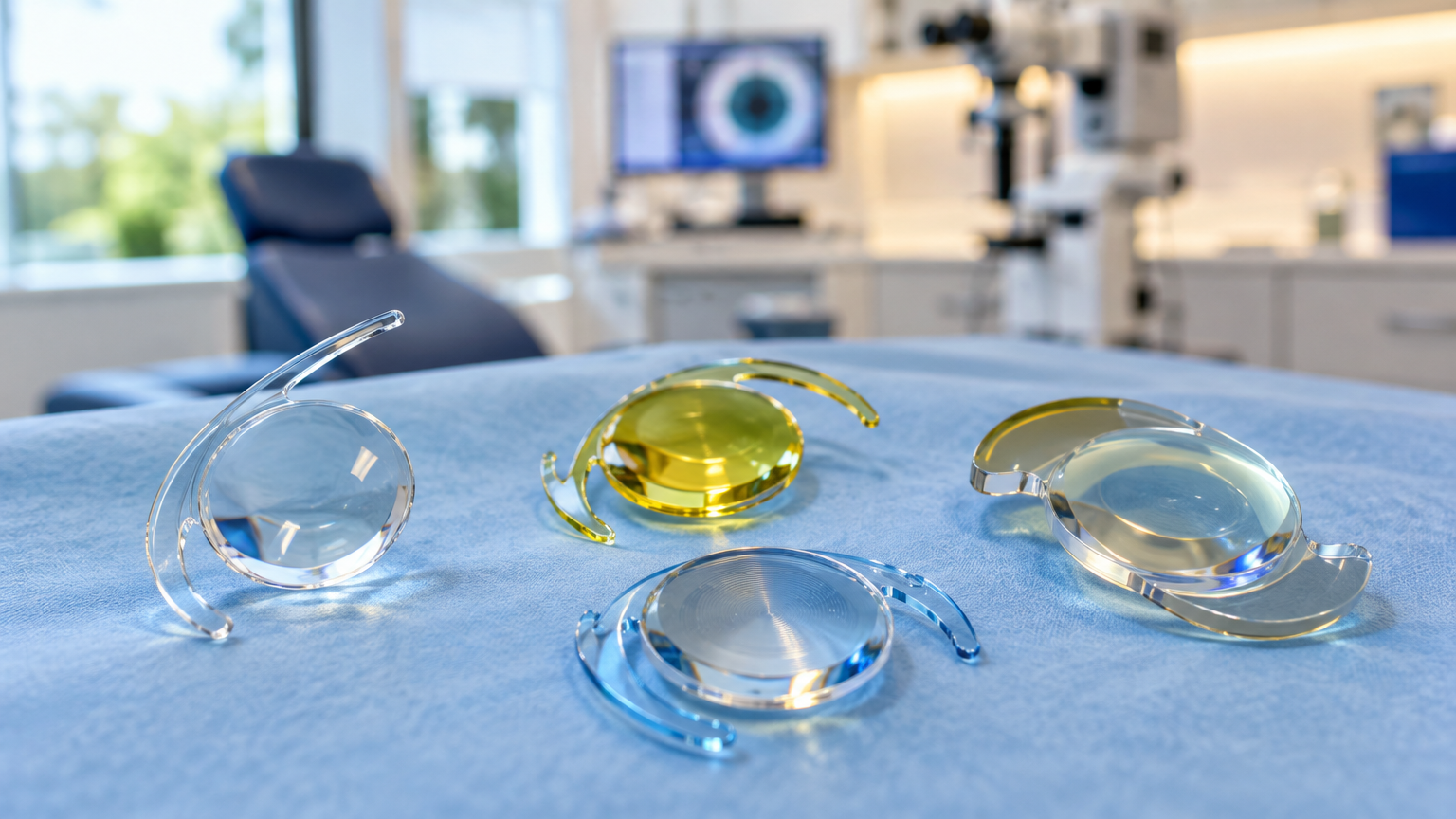
Overview of lens implant types (monofocal, toric, multifocal, EDOF) and what each delivers for driving, reading, screens, and night vision.
Cost comparison in Dubai, showing how premiums increase with advanced lens options.
What to look for: DHA-licensed clinics, surgeon experience, and verified IOL brands.
Top clinics in Dubai offering the widest IOL portfolios and transparent pricing.
Which lens type offers best long-term value for those over 45, based on lifestyle and total cost.
What Is an Intraocular Lens (IOL)?
When your natural lens becomes cloudy (cataract) or you choose to exchange it for vision correction (refractive lens exchange), an IOL replaces it permanently. Your choice of lens type determines how well you see at all distances—far, near, intermediate (screens)—and how your eyes perform in low light.
The Main IOL Types Explained
Lens Type
Vision Without Glasses
Best For / Trade-Offs
Monofocal
One distance (usually far)
Sharp driving and outdoor vision. Near reading still needs glasses. Lowest risk of halos or glare. (aao.org)
Enhanced Monofocal
Distance + improved intermediate
Better for screens and dashboards. Still requires reading glasses. Moderate cost increase. (drfouadelsayyad.com)
Toric (monofocal or premium)
Corrects astigmatism plus distance
Essential if your cornea is irregular. Improves clarity, especially for night driving. Adds cost. (aao.org)
EDOF (Extended Depth of Focus)
Strong distance + good intermediate; functional near
Ideal for computer work and digital device use. Some reading may still need glasses. Fewer halos than multifocal. (drfouadelsayyad.com)
Multifocal / Trifocal
Near, intermediate, and far all clear
Best for reducing glasses dependence completely. Trade-offs include higher cost, more glare and halos, reduced contrast at night. (drhc.ae)
Accommodative / Light-Adjustable
Changes focus dynamically or custom-tuned after surgery
Closest to natural eye behavior. More expensive and complex. Available at fewer clinics. (drfouadelsayyad.com)
Lens Performance for Daily Activities
Driving (Day and Night)
Monofocal or toric-monofocal lenses give the sharpest clarity and best contrast. Premium multifocal or trifocal options can cause halos around bright lights, especially at night. If night driving is frequent, distance-optimized lenses perform best.
Reading and Near Work
Multifocal or trifocal lenses offer the best glasses-free reading. Some people also benefit from “monovision”—optimizing one eye for near vision and the other for distance. Monofocal lenses require reading glasses for close work.
Screens and Intermediate Tasks
EDOF and enhanced monofocal lenses excel here. Multifocal lenses can work, but may reduce smooth focus transitions between distances.
Long-Term Durability
All modern IOLs last a lifetime. Your main concern is eye health conditions like macular degeneration, glaucoma, or previous eye surgeries—these can limit how well premium lenses perform. Monofocal lenses work reliably in almost all cases. (drhc.ae)
Lens Implants Dubai Comparison: 2026 Pricing in AED
Here’s what you’ll pay per eye at private hospitals and clinics in Dubai. Prices include surgery and the implant itself.
Lens Package
Clinic Type
Cost (per eye) AED
Additional Notes
Monofocal Standard
Basic or mid-range clinic
~14,000 AED
Most affordable option
Toric Monofocal
Mid-range clinics
16,000–20,000 AED
Corrects astigmatism; varies by brand and complexity
EDOF
Premium clinics
18,000–22,000 AED
Good middle ground between monofocal and multifocal
Multifocal / Trifocal
Top clinics (Clemenceau, Mediclinic, Moorfields)
18,000–24,000 AED
Premium option; highest cost but best glasses-free vision
Optional add-ons (femtosecond-assisted surgery, advanced imaging, surgeon experience) can increase costs further. Standard monofocals are more likely covered by insurance; premium lenses often require out-of-pocket payment. Always ask your clinic what insurance covers. (mediclinic.ae)
Top DHA-Licensed Clinics with Wide IOL Portfolios
Choose a Dubai Health Authority (DHA) licensed facility with broad lens options, experienced surgeons, and clear cost breakdowns. Here are the leading clinics:
Moorfields Eye Hospital UAE
Location: Dubai Healthcare City (DHC)
Offers monofocal, multifocal, toric, and EDOF lenses. Surgeons like Dr. Osama Giledi and Dr. Salman Waqar bring extensive experience. Strong reputation for refractive lens exchange. (moorfields.ae)
Mediclinic Middle East
Location: Multiple locations (Deira, City, and others)
Offers regular and premium IOLs, including multifocal and toric options. Publishes separate package pricing for standard versus multifocal lenses. Femtosecond-assisted surgery available at select locations. (mediclinic.ae)
Clemenceau Medical Center (CMC)
Location: Business Bay
Specializes in premium IOL options including multifocal, toric, and combined lens types. Comprehensive cataract surgery packages with premium options range from AED 20,000–24,000. (cmcdubai.ae)
DRHC (Dr Rami Hamed Center)
Location: Dubai Healthcare City and Majan
Offers EDOF, multifocal, and toric lenses. Mid-range premium costs (roughly AED 14,000–18,000 for monofocal versus multifocal options). (drhc.ae)
All are DHA licensed. Verify licenses through the Dubai Medical Registry (Sheryan). (dha.gov.ae)
Finding Best Long-Term Value for Your Needs
Start With Your Lifestyle
Do you drive long distances at night? Then monofocal or toric-monofocal lenses offer the sharpest contrast and least glare. Spend most time on screens or reading? EDOF or premium multifocal may deliver better convenience.
Consider Your Eye Health
Existing macular degeneration, glaucoma, or corneal disease can limit how well premium lenses perform. In these cases, standard monofocal is the safer choice. If astigmatism is present, add a toric option to improve distance clarity and sharpness.
Weigh Total Cost Against Glasses Expenses
Premium lenses cost AED 4,000–10,000 more per eye now. However, you’ll spend less on reading glasses, computer glasses, and other eyewear over 10–20 years. Quality reading glasses in Dubai cost several hundred to over one thousand AED every few years. Over a decade, a premium lens investment may pay for itself in convenience and saved accessories.
Choose a Clinic With Options and Transparency
Work with a clinic like Moorfields, Mediclinic, CMC, or DRHC that offers multiple lens choices and clear pricing. Meet your surgeon before committing. Ask about brands they use, surgical technology (femtosecond-assisted, image-guided alignment for toric), and post-operative care quality.
Frequently Asked Questions
Are premium lenses worth it at age 45–55?
It depends on your priorities. Premium lenses reduce dependence on glasses for near, intermediate, and distance vision. But they cost more upfront and carry trade-offs: potential halos, glare, and adaptation time. If reading and near tasks are frequent and glasses-free vision matters to you, they may be worth the extra cost. Otherwise, enhanced monofocal or EDOF often deliver most benefits with fewer compromises. (aao.org)
Will insurance cover premium IOLs in Dubai?
Standard monofocal cataract surgery is more likely partially or fully covered. Premium, trifocal, and EDOF lenses are typically viewed as elective upgrades and require out-of-pocket payment. Read your policy carefully and ask each clinic what portion they cover. (mediclinic.ae)
Which lens type works best for reading fine print?
Multifocal or trifocal lenses offer the sharpest near vision. EDOF can help, but not as sharply for detailed close work. Some people benefit from monovision (one eye optimized for near, one for distance), though this requires adaptation. (drfouadelsayyad.com)
How do premium lenses affect night driving?
Premium lenses often cause more glare or halos around lights, especially in low-contrast conditions like nighttime driving. Monofocal lenses preserve contrast best in dim light. If night driving is important, many surgeons recommend monofocal (possibly toric) for your dominant eye. If you choose premium lenses, accept some trade-offs in night vision. (aao.org)
How long before premium lenses “pay for themselves”?
This depends on your annual eyewear spending. Quality reading glasses or prescription computer glasses in Dubai can cost hundreds to over one thousand AED every few years. Over 10–15 years, the extra AED 4,000–10,000 per eye for a premium lens may be justified if you use near tasks daily. For casual near use, the financial benefit is less clear.
The Best Long-Term Value: Final Recommendation
For most expats and retirees in Dubai over 45, the best value lies in one of these options:
Best “sweet spot”: Toric monofocal or EDOF + toric. This gives excellent distance vision and intermediate (screen) performance with minimal glare and strong night vision.
Budget-conscious choice: Standard monofocal at a reputable DHA-licensed clinic. Delivers excellent lifetime vision with minimal risk and lowest upfront cost.
Maximum convenience: Premium multifocal only if you have healthy eyes, stable prescription, frequent screen and reading use, and don’t mind higher cost and adaptation time.
Ready to Explore Your Options?
Book a free consultation at a top eye clinic in Dubai to compare options for your specific needs. Bring your current prescription and recent eye scans so the surgeon can map which lens types work best for you and provide exact cost-benefit analysis.
When you schedule, ask these three questions:
Which IOL types and brands does your clinic have available?
Who may need corneal cross-linking (CXL): individuals with keratoconus or corneal ectasia whose disease is progressing, particularly young patients or those with thinner corneas.
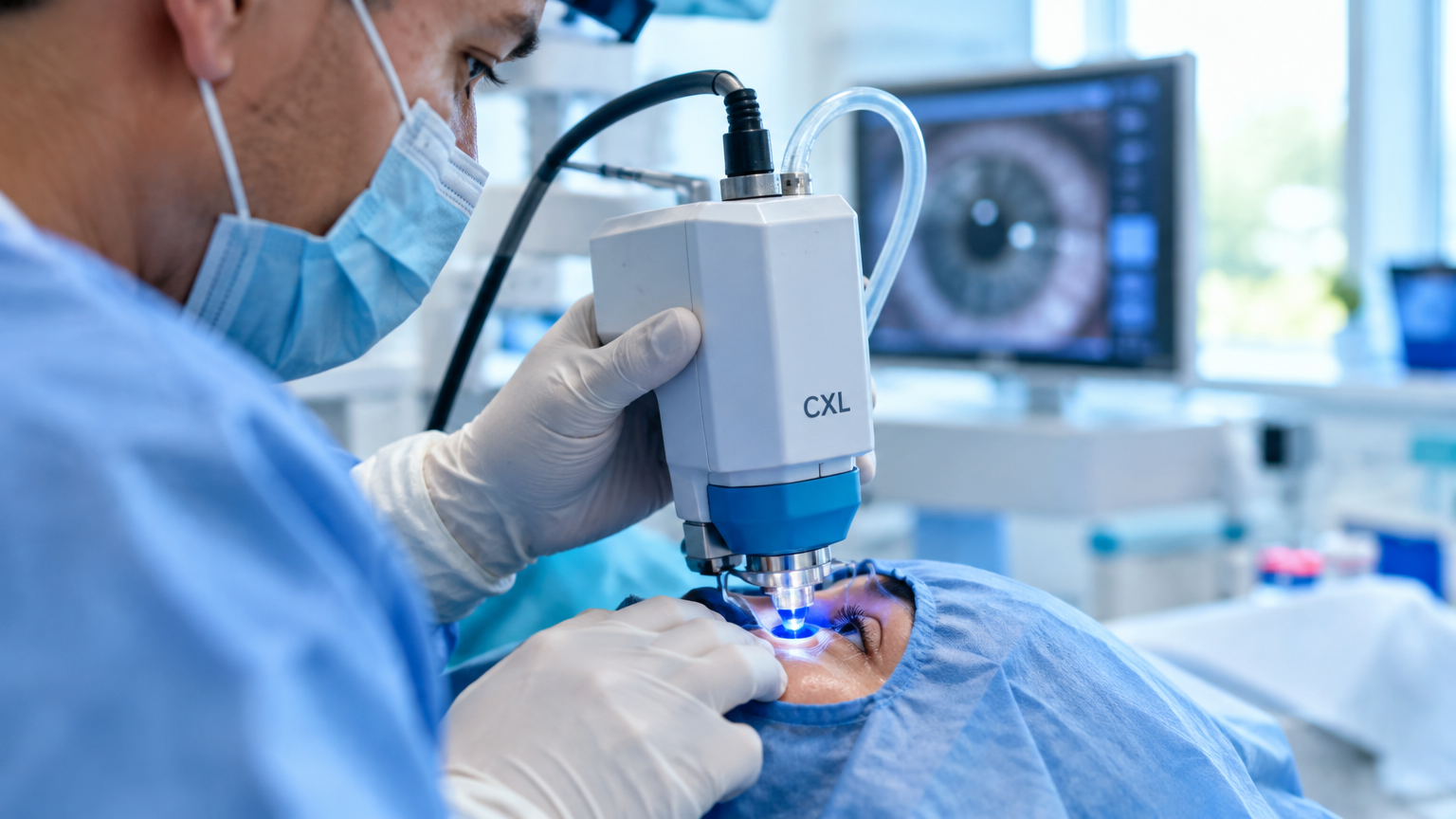
Two protocols—epithelium-off (standard) and epithelium-on (transepithelial or accelerated)—differ in how the outer layer of the cornea is handled, impacting recovery time, risk, and effectiveness.
Key eligibility criteria: minimum age, documented progression in keratometry or tomography, corneal thickness (usually ≥ 400 µm), minimal scarring, and patients post-LASIK showing early signs of ectasia.
Costs in Dubai vary by clinic and protocol: from approximately AED 6,000 for epithelium-on treatments up to AED 12,000+ per eye for full standard epithelium-off procedures.
Recovery timeline: epithelium-off requires longer healing (5–7 days for surface healing, months for vision stabilization). Epithelium-on offers faster initial recovery but may have slightly less consistent long-term outcomes.
What is Corneal Cross-Linking Dubai Treatment?
Corneal cross-linking Dubai is a minimally invasive procedure that halts the progression of keratoconus and corneal ectasia by strengthening the cornea’s collagen fibres. If you have progressive keratoconus or worry about vision loss, this treatment can stabilize your cornea and prevent the need for corneal transplantation.
Who Qualifies for Cross-Linking?
According to global consensus, CXL addresses keratoconus or ectasia when there is definitive progression. This includes measurable increases in maximum keratometry (Kmax), steeper corneal curvatures, worsening astigmatism, loss of corrected vision, or thinning of the cornea. Pediatric patients under 18 are often treated earlier due to higher progression risk.
Age and Disease Stage
Late teens through early 30s: the typical active disease phase. Many patients develop keratoconus in adolescence, with progression often slowing after the mid-30s. CXL is more urgent in younger patients with severe disease.
In older patients with slow progression, corneal stabilization without intervention may be acceptable, though close monitoring remains essential.
Corneal Thickness Requirements
Standard epithelium-off CXL typically requires a minimum stromal thickness of approximately 400 µm to protect the inner corneal layers and endothelium.
For corneas thinner than 400 µm, modified methods exist: hypoosmolar riboflavin, specialized “sub-400” protocols, or certain epithelium-on techniques. These require extra caution for safety.
Other Eligibility Factors
Bilateral disease or steep K readings greater than 55 diopters signal more aggressive disease.
Good general ocular health with no active infection or severe scarring. Patients must avoid contact lens use before imaging and commit to rigorous follow-up.
Patients who have had LASIK, PRK, or other refractive surgery need evaluation for post-LASIK ectasia. If ectasia is occurring, CXL can be preventive or therapeutic.
Epithelium-Off vs. Epithelium-On Protocols
Feature
Epithelium-Off (Standard)
Epithelium-On (Transepithelial)
Epithelium removal
Entire central epithelium removed (8–9 mm)
Epithelium left intact or partially disrupted
Riboflavin penetration
Better absorption into stroma
More barrier; slower, more complex delivery (iontophoresis)
UV exposure time
Usually 30 minutes (standard); accelerated forms available
Shorter or varied, depending on method
Pain and discomfort
Significant pain; higher risk of haze and infection; slower healing
Less pain early on; lower complication risk with mild disease
Long-term effectiveness
Stronger, more consistent flattening and stabilization of cornea
Comparable in mild-to-moderate cases; faster recovery but potentially less effective for high-risk disease
Am I Eligible for CXL in Dubai? A Quick Assessment
Use this guide to help assess your eligibility for corneal cross-linking Dubai:
Age: Patients under 25 with keratoconus have higher risk and are more likely to need CXL. Over 35, disease often stabilizes, so CXL is considered only if progression continues.
Progression evidence: Look for an increase in Kmax of 1 dioptre or more over 12 months, or 0.5 dioptre over 6 months. Also note any worsening vision, astigmatism, or decreasing corneal thickness.
Corneal thickness: Stromal thickness of 400 µm or greater supports standard epithelium-off CXL. Thinner corneas may need specialized protocols or epithelium-on techniques.
Disease severity and risk factors: Steep cornea (high K), family history, post-LASIK ectasia signs, strong eye rubbing, or allergies indicate higher risk.
Post-LASIK or preventative use: After LASIK, if scans show early ectasia or thinning, CXL may be used preventively.
If you’re unsure whether your case qualifies, many clinics offer a candidacy consultation, including measurements and imaging. For example, LERC Dubai charges AED 200 for a 30-minute diagnostics consultation.
Expected Costs for Corneal Cross-Linking Dubai
Clinic
Approximate Cost (per eye)
Details
LERC Dubai
From AED 6,000
Likely for epithelium-on or basic-level treatments. Includes full diagnostics and DHA-licensed consultant. AED 200 consultation fee can be deducted.
Dubai Eye Clinic
AED 12,000
Standard epithelium-off CXL package covering procedure fee, operating room, medications, and some follow-ups. Exact quote requires consultation.
Typical price range across Dubai clinics (Healthcare City, Business Bay, Marina, JBR) is AED 6,000–15,000 per eye, depending on:
Protocol chosen (epithelium-off is more expensive due to longer operating room time)
Clinic reputation and surgeon experience
Inclusion of diagnostics, follow-ups, and whether both eyes are treated
Insurance coverage may apply if your plan includes surgical or optical benefits for keratoconus management. Some providers like Daman cover stages I–III of the condition.
Recovery Timeline After Treatment
Epithelium-Off Protocol Recovery
Time After Procedure
What to Expect
Day 0–1
Major discomfort: pain, tearing, and light sensitivity. A bandage contact lens is applied.
Day 2–7
The epithelium heals over several days with an intensive drop regimen (antibiotics, steroids, lubricants).
Week 1–2
Bandage lens is removed once the surface heals; vision remains blurry or fluctuating. Avoid water contact and makeup.
Weeks 3–4
Vision improves progressively; haze reduces. Some patients return to non-physical work.
Months 3–6
Continued healing; topography begins to stabilize. Contact lens fitting becomes possible.
12+ months
Full stabilization of corneal curvature and vision. Final results are assessed.
Epithelium-On Protocol Recovery
Much more comfortable in the first few days with no epithelium removal.
Faster healing and lower risk of infection or haze.
Drops and eye protection are still necessary.
Vision recovery is quicker, often reaching usable levels within 1–2 weeks. However, corneal flattening and stabilization may progress more slowly or be slightly less consistent than epithelium-off methods.
Why Choose Dubai for Corneal Cross-Linking?
Advanced clinics in Dubai Healthcare City, Business Bay, and JBR feature state-of-the-art imaging (topography, tomography) to detect progression early.
All clinics are DHA-licensed and adhere to international standards. Providers like Novomed, Moorfields, LERC, and Dubai Eye Clinic advertise their keratoconus and CXL protocols.
Insurance policies often require disease staging documentation and specific thickness or keratometry thresholds. Early-stage disease typically qualifies for coverage.
Frequently Asked Questions
Can I have cross-linking if my cornea is thinner than 400 µm?
Yes. Special protocols exist, such as sub-400 techniques using hypoosmolar riboflavin or modified UV exposure, to protect thin corneas. However, risks are higher, and suitability requires expert evaluation.
Will cross-linking improve my vision immediately?
No. CXL is designed to halt progression rather than reverse existing damage. Some patients see mild improvements (less distortion, better corrected visual acuity) over months. However, glasses or contact lenses are often still needed.
What are the main risks or side effects?
Epithelium-off procedures carry greater risks of pain, infection, corneal haze, and slower recovery. Epithelium-on treatments offer less early discomfort and fewer complications but may be less effective in high-risk or rapidly progressing cases.
Can I have cross-linking after LASIK?
Yes. If signs of post-LASIK ectasia or thinning develop, CXL can prevent worsening. Preventative CXL after LASIK is less common and carefully planned, often favouring epithelium-off methods in severe cases.
How will I know if I truly need cross-linking?
You need documented progression evidence: repeat imaging 6–12 months apart showing changes in Kmax, worsening vision, or thinning. A specialist will assess your scans, refraction, and symptoms during a candidacy consultation.
Take the Next Step
If you’re in Dubai and wondering whether you need corneal cross-linking, whether you’re eligible, and what it will cost, the best first step is to book a consultation at a top eye clinic. During a candidacy assessment, specialists will measure your cornea, evaluate how quickly your keratoconus is progressing, and discuss epithelium-off versus epithelium-on options tailored to your case.
Early intervention with corneal cross-linking Dubai can preserve your vision and prevent the need for more invasive procedures later. Book a free consultation at a leading Dubai eye clinic today to get personalized guidance based on real measurement data and customized treatment options.
Understanding eyelid surgery Dubai cost is essential before you commit to this procedure. This guide covers typical pricing in AED, what influences the final bill, how to tell medical needs from cosmetic desires, and how to find a qualified surgeon. You’ll walk away confident in evaluating clinics and making an informed choice for your eyes and budget.
Quick Summary
Explore typical AED price ranges for upper, lower, and combined eyelid surgery in Dubai, covering both cosmetic and functional cases.
Understand when surgery becomes medically necessary (and possibly covered by insurance) versus purely elective.
Compare qualifications: ophthalmologists specialising in oculoplastics versus plastic surgeons, plus DHA regulatory expectations.
Review a practical checklist for clinic credentials, surgeon experience, and facility licensing.
Study real cost examples and insurance policies to estimate your actual out-of-pocket expense.
What Is Eyelid Surgery and Why People Choose It
Blepharoplasty (eyelid surgery) removes or repositions excess skin, fat, or muscle from the upper or lower eyelids. The procedure addresses two main categories:
Functional problems: Drooping that blocks peripheral vision, heavy lids affecting comfort or eye health.
When excess eyelid skin obstructs your field of vision—a condition called dermatochalasis—surgery may qualify as medically necessary. In these cases, insurance policies may cover part of the cost, though pre-approval is required. (damanhealth.ae)
Choosing the Right Specialist and Clinic in Dubai
Factor
What to Look For
Why It Matters
Specialist type
A DHA-licensed ophthalmologist trained in oculoplastics, or a board-certified plastic surgeon with proven eyelid surgery experience.
Ophthalmologists excel in eye anatomy and function; plastic surgeons focus on aesthetics. Your choice depends on whether you prioritise vision health or cosmetic refinement.
Clinic accreditation
DHA licence or equivalent. Hospital or day-surgery centre with verified health-safety and theatre standards.
Legal safety and quality are non-negotiable. Dubai Health Authority mandates specific facility classifications for ophthalmic surgery.
Surgeon credentials
Years of eyelid-specific experience, before-and-after photo galleries, subspecialty training, international qualifications if applicable.
Eyelids are delicate structures. Surgical precision directly affects both function and appearance.
Premium areas: Dubai Healthcare City (DHCC), Business Bay, Dubai Marina, Opera District. Value areas: Deira, Al Barsha, Jebel Ali.
Prime locations command higher fees due to real estate and staffing costs, though quality remains variable.
Eyelid Surgery Dubai Cost: Pricing Breakdown
These AED ranges reflect mid-2026 pricing from reputable DHA-licensed clinics across Dubai. Your final cost depends on case complexity, surgeon reputation, and desired outcome.
Procedure Type
Expected Cost Range (AED)
Key Cost Drivers
Upper eyelid only (cosmetic)
8,000 – 20,000
Amount of skin removal, surgeon expertise, facility rating.
Lower eyelid only
12,000 – 25,000
Fat removal versus repositioning; external versus transconjunctival approach.
Combined (upper + lower)
18,000 – 40,000+
Extended operating time, anaesthesia, comprehensive follow-up visits.
Premium surgeons and luxury clinics
30–50% above standard ranges
International reputation, exclusive facilities, concierge-level service.
Dr Rami Hamed Center: AED 18,000 package for both upper and lower eyelids in a day-surgery setting. (drhc.ae)
Estheticare Clinic: Lower eyelid procedures start at AED 7,999; comprehensive four-lid cases or general anaesthesia reach AED 40,999. (estheticaredubai.ae)
Medical Versus Cosmetic: Insurance Coverage Explained
The distinction between medical and cosmetic eyelid surgery determines whether insurance will contribute to your costs.
Medical Indications
When drooping upper eyelid skin significantly obstructs your visual field, documented by clinical tests like visual field measurements or standardised photography, surgery qualifies as functional. Insurance often requires pre-authorisation and clinical evidence before approval. (damanhealth.ae)
Cosmetic Indications
Surgery performed solely for appearance—without vision impairment, discomfort, or functional problems—remains cosmetic. Insurance policies typically exclude this category entirely. (damanhealth.ae)
Typical Insurance Coverage in Dubai
Most plans exclude cosmetic blepharoplasty entirely.
Some policies cover upper lid surgery when vision obstruction is documented, under ophthalmology or dermatology benefits.
Lower eyelid procedures are almost always considered cosmetic unless related to trauma or vision-affecting complications.
Always verify your specific policy in writing, and maintain detailed clinical documentation and photographs to support any coverage claim.
Factors Affecting Eyelid Surgery Costs in Dubai
Several Dubai-specific elements influence your final price:
Clinic location: Premium zones (DHCC, Marina, Business Bay) command higher fees due to real estate and staffing costs. Suburban clinics in Deira, Al Barsha, or Jebel Ali may offer better value, though credentials must be verified equally.
Surgeon specialisation: Oculoplastics-trained surgeons and those with international recognition charge premium rates. Plastic surgeons’ fees vary based on eyelid-specific experience.
Surgical complexity: Fat removal versus fat repositioning, incision type (external versus transconjunctival), and concurrent procedures (ptosis repair, brow lift) affect operative time and cost.
Anaesthesia: Local anaesthesia costs less than sedation or general anaesthesia. Theatre time increases substantially with general anaesthesia.
Facility standards: Accredited hospitals charge more than day-surgery centres. Included services—theatre, staff, follow-up visits—vary by clinic.
Additional expenses: Pre-operative testing, post-operative dressings, multiple follow-up appointments, and revision policies affect total cost.
Frequently Asked Questions
Q: What is the cost of upper eyelid surgery only in Dubai?
A: Upper eyelid blepharoplasty (cosmetic) ranges from AED 8,000 to AED 20,000. Costs depend on tissue volume, surgeon reputation, and facility classification. (medicureaesthetics.ae)
Q: How much does lower eyelid surgery cost?
A: Lower blepharoplasty typically costs between AED 12,000 and AED 25,000 in Dubai. Fat repositioning or external incision techniques move costs toward the higher end. (nooralmamzar.com)
Q: Will insurance cover eyelid surgery if I have vision impairment?
A: Possibly. If clinical evidence (visual field testing, photography) proves that excess upper eyelid skin obstructs your vision, your insurer may classify the procedure as medically necessary and provide coverage. Cosmetic-only reasons receive no coverage. Confirm with your insurer and surgeon in advance. (damanhealth.ae)
Q: Should I choose an ophthalmologist or plastic surgeon?
A: Choose an ophthalmologist trained in oculoplastics if your concerns include vision issues, eyelid function, ptosis, or eye irritation. Choose a plastic surgeon with extensive eyelid experience if your priority is purely cosmetic refinement. Both must hold DHA licences and maintain detailed surgical records. (doh.gov.ae)
Q: What is the recovery time and when will I see final results?
A: Swelling and bruising peak within the first one to two weeks. Light office work resumes in 7–14 days; strenuous activity in 3–4 weeks. Final aesthetic results develop over several months as swelling resolves completely. (elemental.ae)
Your Next Steps
Ready to move forward with eyelid surgery in Dubai? Book a free consultation at a top-rated eye clinic to receive a personalised assessment, detailed cost breakdown, and professional recommendations tailored to your situation.
Before you book, ensure you:
Determine whether your need is cosmetic or functional. If functional, gather documentation—visual field tests, clinical photographs.
Verify that your chosen surgeon holds a valid DHA licence. Review their eyelid-specific training and surgical portfolio.
Request an itemised written quote covering surgeon fees, anaesthesia, facility charges, and all follow-up visits.
Clarify what your insurance plan covers and obtain written pre-authorisation if applicable.
Connect with reputable eye clinics in Dubai, compare your options, and take the next step with confidence.