Category: Uncategorized

  • Macular Degeneration Treatment Dubai: Best Options

    Macular Degeneration Treatment Dubai: Best Options

    Quick Summary

    • Explains what dry vs wet AMD is, how they’re diagnosed and why treatment timing matters, especially in Dubai.
    • Details treatment options: anti-VEGF injections (Lucentis, Eylea, Avastin), photodynamic therapy, nutrient supplements; lists costs per session in AED for major agents.
    • Identifies retina sub-specialists & clinics in Dubai with OCT and advanced imaging for monitoring.
    • Clarifies how UAE health insurance (e.g. DHA & Daman) covers AMD treatments, how prior-authorisation works, and what forms/documentation are needed.
    • Gives tips on choosing a clinic and preparing to make a decision: location (Downtown, Healthcare City, Marina, etc.), credentials, patient outcomes, follow-ups.

    Understanding Macular Degeneration Treatment Dubai: Dry vs Wet AMD

    Age-related macular degeneration (AMD) affects central vision and is a leading cause of vision loss in older adults. If you live in Dubai and have been diagnosed with AMD, understanding your treatment options is crucial. Macular degeneration treatment Dubai has advanced significantly, with specialists offering proven therapies to slow progression and preserve sight. This guide covers everything you need to know about diagnosis, treatment options, costs, insurance coverage, and finding the right specialist in Dubai.

    What are the two main types?

    • Dry (Atrophic) AMD: Gradual thinning of the macula with drusen deposits; most common. Vision loss is slow. No current medical cure but lifestyle measures and supplements (AREDS/AREDS2) may slow progression. (moorfields.ae)
    • Wet (Neovascular) AMD: Less common but more aggressive. Abnormal vessels grow under the macula, causing leakage, swelling, and rapid central vision loss. Requires prompt treatment. (moorfields.ae)

    Why early diagnosis matters

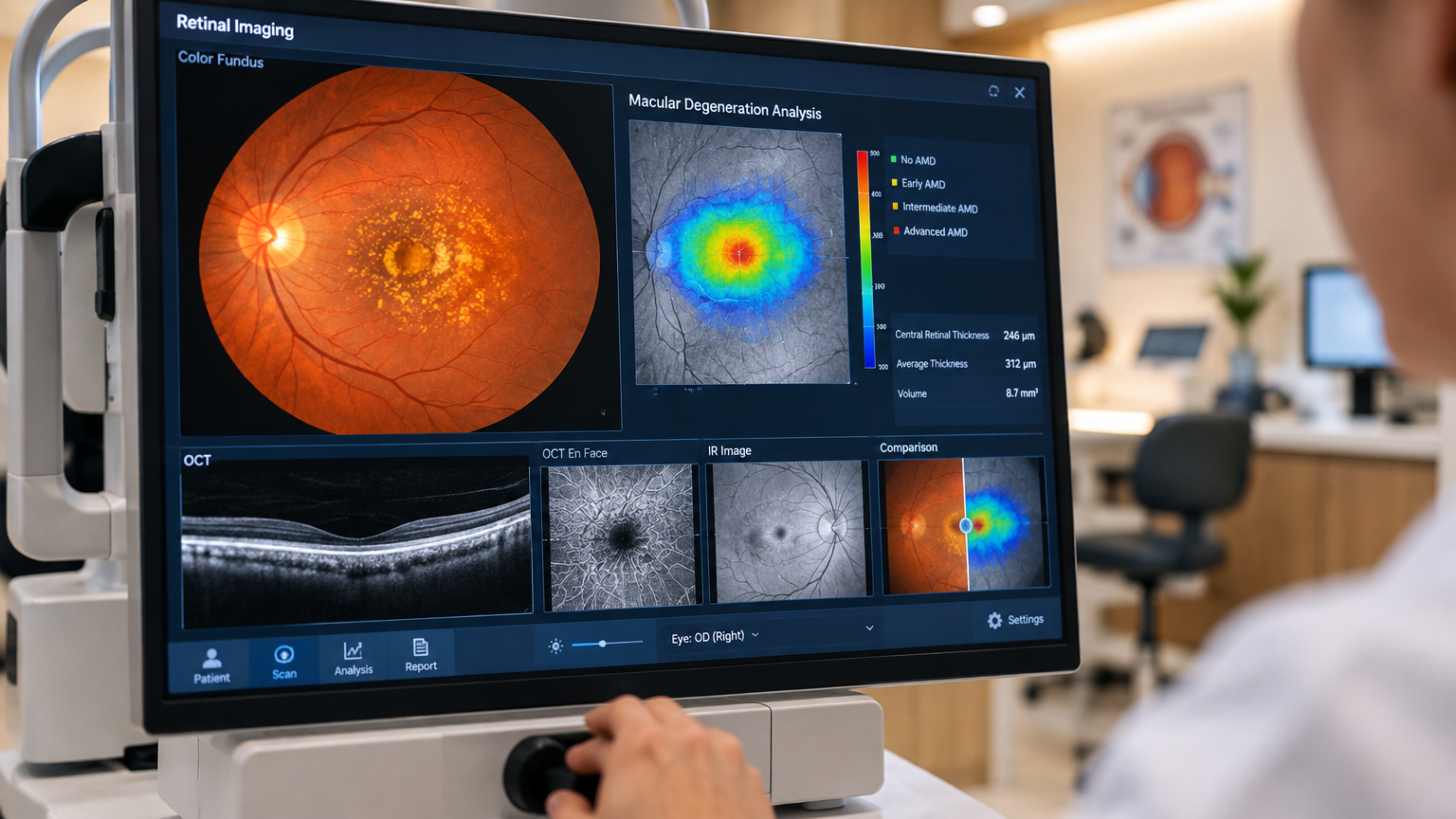
    Early detection is critical for preserving vision. Your retina specialist will use tools like the Amsler grid at home, combined with in-clinic exams, OCT, and fluorescein angiography. Wet AMD responds best when therapy starts soon after symptom onset. Regular monitoring of dry AMD helps catch any transition to wet AMD early, ensuring you receive prompt treatment. (moorfields.ae)


    Macular Degeneration Treatment Options in Dubai

    Anti-VEGF Injections: First-Line Therapy

    Anti-VEGF injections are the gold standard treatment for wet AMD. These medications block vascular endothelial growth factor, stopping abnormal blood vessel growth and reducing fluid leakage. Major agents used in Dubai include:

    Drug Common Use Approximate Drug-Only Price in UAE* Treatment Frequency
    Lucentis (ranibizumab) Licensed treatment for wet AMD ~ AED 5,098 per vial at retail price (farmacoinc.com) Monthly loading, then extended based on response
    Eylea (aflibercept) Wet AMD; sometimes via named-patient import ~ AED 5,434 per vial in UAE, list price (farmacoinc.com). Via named-patient pathway, ~ USD 1,850-1,950 (~ AED 6,800-7,200) per dose (reservemeds.com) Monthly loading, then up to 5 months between doses
    Avastin (bevacizumab) Off-label use for wet AMD; lower cost option Pharmacy price for 100 mg vial ~ AED 2,358 in UAE public list (mohap.gov.ae) Similar to Lucentis or Eylea dosing

    * These costs cover the drug only; clinic fees and administration are additional.

    Other Treatment Options

    • Photodynamic Therapy (PDT): For certain wet AMD presentations when anti-VEGF alone is insufficient. Offered at Moorfields, Imperial, and Emirates Hospitals. (moorfields.ae)
    • Supplements & Lifestyle Changes: For dry AMD or early-stage disease: AREDS2 formula, vitamins, smoking cessation, diet rich in leafy greens and fish, UV protection. While not reversing vision loss, these measures slow progression. (novomed.com)

    Leading Retina Clinics in Dubai

    Dubai offers world-class retina specialist centres equipped with advanced diagnostic imaging. Here are the top facilities for AMD diagnosis and treatment:

    Clinic / Hospital Location(s) Key Retina Capabilities
    Moorfields Eye Hospital UAE Dubai Healthcare City, Abu Dhabi OCT, OCT-A, fluorescein angiography, medical and surgical retina services, retina consultants specialising in wet and dry AMD. (moorfields.ae)
    Mediclinic City Hospital Retina & Vitreous Unit City Walk, Dubai OCT, SLO imaging, fundus photography, fluorescein angiography, intravitreal injections including Avastin and Lucentis. (mediclinic.ae)
    Imperial Healthcare Institute Dubai Healthcare City OCT, ultra-widefield imaging, full medical retina clinic, intravitreal therapies including anti-VEGF and steroids. (imperialhealth.org)
    NMC Healthcare Al Nahda, Al Quoz, DIP, Deira Retina surgeons with advanced imaging (OCT), injections, complex retina treatment options across multiple locations. (nmc.ae)
    Al Zahra Hospital Dubai Al Barsha Full vitreoretinal services: OCT imaging, angiography, intravitreal injections, retina surgeries. (azhd.ae)
    Novomed Multiple Dubai locations Dry AMD-focused services: advanced imaging, lifestyle counselling, supplement guidance, close monitoring protocols. (novomed.com)

    What Does Treatment Cost in Dubai?

    Cost Breakdown: Per-Session Expenses

    Beyond the drug cost, each anti-VEGF injection session includes specialist consultation, pre- and post-treatment OCT imaging, anaesthetic drops, sterile preparation, and clinic administration. Based on current Dubai pricing:

    • Drug-only cost (Eylea or Lucentis): AED 5,000-5,500 per vial. (farmacoinc.com)
    • Total session fee (all-inclusive): USD 1,250 to USD 4,250 (approximately AED 4,600-15,600), with typical fees around USD 2,700 (~ AED 10,000) for Lucentis or Eylea at premium hospitals. (medcasts.com)
    • Budget-friendly alternatives: Clinics using Avastin off-label plus streamlined administration may reduce per-session costs to AED 2,500-5,500 for qualifying patients and insurance plans. (dubaipractical.com)

    Dry AMD patients typically pay only for imaging and supplement costs (~ AED 2,000-4,000 annually for checkups and AREDS supplements) unless progression to wet AMD requires injections.


    Insurance Coverage and Prior Authorisation in Dubai

    Does Your Insurance Cover AMD Treatment?

    Most major health insurance policies in Dubai cover anti-VEGF therapy for wet AMD when medically necessary. Providers like Daman (Abu Dhabi-linked plans) and other national schemes cover intravitreal injections for wet AMD, diabetic macular edema, and retinal vein occlusion. However, Avastin is often classified as off-label or experimental and may not be covered under certain plans. (damanhealth.ae)

    How to Secure Prior Authorisation

    To obtain insurance approval and coverage, prepare the following:

    • Detailed referral letter from your retina specialist with diagnosis confirmation.
    • Complete medical documentation: diagnosis code, OCT or angiography images showing active disease, visual acuity measurements.
    • Completed insurer forms: Intravitreal Injection Form, Anti-VEGF Submission Form (Daman requires “Pre-requisite for Intravitreal Injection” documentation). (damanhealth.ae)
    • ICD and CPT codes specifying medication and indication.
    • If using named-patient pathways for drugs like Eylea, documentation of approval process.

    If Insurance Denies Coverage

    • Discuss Avastin as a cost-effective alternative with your retina specialist (subject to their clinical recommendation).
    • Ask your clinic about Emirates Drug Establishment (EDE) named-patient import pathways for agents like Eylea; this route often involves flexible payment options or partial insurance reimbursement. (reservemeds.com)

    How to Choose Your Retina Specialist and Clinic

    Key Selection Criteria

    1. Retina Sub-Specialist Credentials: Verify “Medical Retina” or “Vitreoretinal Surgeon” qualifications and proven AMD experience. Leading clinics include Moorfields, Mediclinic, and NMC Healthcare.
    2. Advanced Imaging Equipment: Ensure the clinic has OCT, OCT-A, and fluorescein angiography. Premium centres also offer fundus autofluorescence and ultra-widefield imaging for comprehensive monitoring.
    3. Accreditation and Safety Record: Look for DHA, JCI, or ACHSI accreditation. High case volumes and strong patient outcomes indicate experience and expertise.
    4. Convenient Location: Since wet AMD requires frequent follow-ups (monthly or bi-monthly), choose a clinic near your home or workplace. Healthcare City, Marina, Downtown, and Business Bay all have excellent options.
    5. Transparent Pricing and Insurance Support: Request a clear cost breakdown per injection. Ask whether the clinic staff assists with insurance pre-authorisation forms and documentation.

    Frequently Asked Questions About AMD Treatment

    Q: Is there a cure for dry AMD?
    A: No cure exists currently. Treatment focuses on slowing progression through smoking cessation, healthy diet, blood pressure control, AREDS/AREDS2 supplements, and regular monitoring. If signs of wet AMD develop, treatment pivots to anti-VEGF therapy. (novomed.com)

    Q: How often will I need injections for wet AMD?
    A: Typically, a loading phase involves three consecutive monthly injections, followed by maintenance doses every 1-3 months based on OCT imaging and disease activity. Some patients on Eylea may extend to five months between doses once stable. (moorfields.ae)

    Q: Are intravitreal injections painful?
    A: Injections are performed under local ana
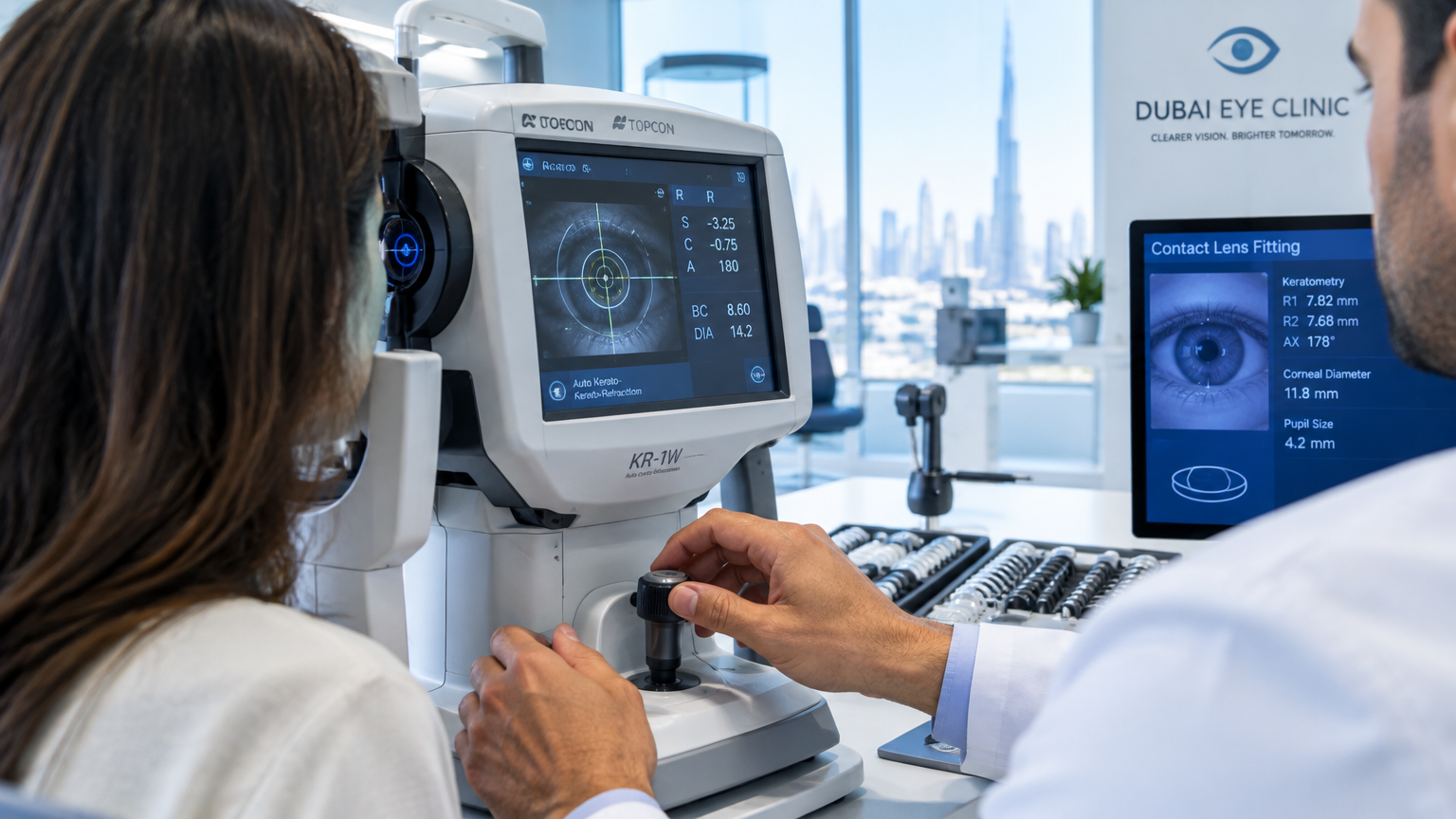
  • Contact Lens Exam Dubai: Best Eye Clinics 2026

    Contact Lens Exam Dubai: Best Eye Clinics 2026

    Quick Summary

    • How a general eye exam differs from a contact lens exam Dubai — including specialist measurements you’ll need.
    • What typical costs in AED look like for soft, toric, and Ortho-K lenses, plus fitting and follow-up fees.
    • Key local regulations: what documents and licences you need, how often fittings must be renewed under DHA guidelines, and how free-zone vs DHA-regulated clinics compare.
    • Which clinics in Dubai offer same-day contact lens fittings, and a comparison of their services.
    • Answers to common questions like “Can I use my glasses prescription?”, “How often do I need new fittings?”, and “Will my insurance cover contact lenses?”

    Understanding Eye Exams vs Contact Lens Consultations

    What a General Eye Exam Covers

    A standard eye exam (optometry) includes:

    • Refractive error check (nearsightedness, farsightedness, astigmatism)
    • Vision clarity and eye health evaluation (retina, cornea, eyelids)
    • Pressure tests for glaucoma screening
    • Glasses prescription if needed

    This assessment does not include fit-measurements for contact lenses.

    What a Contact Lens Exam Dubai Involves

    A contact lens exam Dubai clinics provide includes additional critical assessments:

    • Corneal curvature measurement (via keratometer or corneal topography)
    • Tear film evaluation (especially important in Dubai’s dry, air-conditioned climate)
    • Trial lens fitting to check comfort, movement, and proper orientation for toric or rigid lenses
    • Hands-on insertion and removal training with hygiene and aftercare instruction

    These extra steps ensure safety, comfort, and accurate prescription fit.


    How to Choose Where to Go in Dubai

    Factor What to Check
    Regulation & Licensing Clinics must be licensed by Dubai Health Authority (DHA). Display your clinic’s DHA license before your visit.
    Clinic Type Optical chains (Magrabi, Yateem, Opticlub, Al Jaber Optical) handle soft lenses well. Hospital-affiliated or specialist eye clinics (Moorfields, Mediclinic) manage complex fits and therapeutic lenses.
    Same-Day Fitting Available? Standalone optics often offer same-day soft lens fittings. Specialist Ortho-K or scleral fits may require trial lenses and follow-ups. Nuova Optics and major optical chains frequently do same-day soft and toric fittings.
    Insurance & Co-pay Many insurance plans cover routine exams, but fitting fees and specialty lenses often come with exclusions or partial coverage. Confirm details with your insurer before your appointment.

    Costs You Should Expect (in AED)

    Below are typical price ranges in Dubai for contact lens exams, fittings, and lens supply. Prices vary by location (Downtown, JBR, Business Bay) and clinic type.

    Service / Lens Type What’s Included Typical Cost (Self-Pay)
    Routine eye exam (optometry) Eye test for glasses prescription and basic eye health checks AED 150–300 at optical shops; AED 500–900 at hospital ophthalmology departments
    Contact lens fitting Measurements, trial lenses, and instruction AED 200–450 for standard soft lenses; specialist fits cost more
    Soft lenses (daily disposables) 30-day pack for both eyes AED 190–250 per box of 30
    Soft monthly lenses Monthly reusable soft lenses AED 250–330 for a 6-lens monthly pack
    Toric lenses (for astigmatism) Daily or monthly toric variants AED 140–345 per 30-lens pack, depending on brand
    Ortho-K lenses & specialty fits Overnight shape-retainer, custom rigid fit, and topography Higher cost with multiple visits and trial fits required. Confirm exact pricing with clinic.

    What Documents & Prescription to Bring

    Prepare these items for your contact lens exam appointment:

    1. Valid Emirates ID or Passport with Visa for expats. Clinics need this for legal record-keeping.
    2. Any existing current glasses or contact lens prescription. A glasses prescription alone is not enough for reliable contact lens fitting.
    3. Previous contact lenses if you’ve been using any—including brand and replacement schedule.
    4. Insurance card and policy information if you plan to use coverage.

    Renewal Frequency & DHA Regulations

    • DHA standards require clinics to perform compliant examinations with proper hygiene, equipment cleaning, and trial lens protocols.
    • Reevaluate fittings every 6 to 12 months. More frequent checkups are needed if your vision changes, you develop dry eye, or wear specialty lenses.
    • Contact lens prescriptions in the UAE typically expire after one year unless your practitioner specifies otherwise.
    • Free-zone providers still must adhere to DHA regulations if they serve patients in Dubai. Always verify license displays before proceeding.

    DHA-Regulated Clinics vs Free-Zone Providers

    Feature DHA-Regulated Clinic Free-Zone Optical Shop
    Licensing & Oversight Fully regulated by DHA with required standards and renewals May operate under free zone authority but still need DHA licensing if providing optical services in Dubai
    Specialist Services More likely to offer Ortho-K, RGP, scleral, and therapeutic lenses Mostly soft lenses with referrals for complex cases
    Pricing Higher costs due to regulation and specialist fees Often more affordable, especially in optical chains and mall locations
    Same-Day Turnaround Yes for standard soft lenses; longer for custom or complex fits Often same-day for soft or standard toric lenses in well-stocked shops

    Top Clinics Offering Same-Day Contact Lens Fittings

    These trusted providers can fit you with contact lenses the same day for soft or standard toric lenses:

    Clinic / Optical Shop Location Same-Day Service Key Details
    Nuova Optics The Walk, Dubai Marina Yes Full eye exam, prescription update, and contact lens fitting same day. Walk-in services 9am–midnight.
    Mediclinic City Hospital Contact Lens Clinic City Centre Partial Offers soft, RGP, and hybrid lenses including toric and ortho-K. Complex fits may require follow-up visits.
    EYEFINITY Spectacles & Contact Lenses Trading Al Barsha (Lulu Hypermarket) Yes Comprehensive exams and fittings with walk-in acceptance available.
    Cairns & Co. Multiple locations Yes Specialised optician with detailed assessments, trial lens fitting, and same-day service for standard soft lenses.
    Major Optical Chains (Magrabi, Yateem, Opticlub, Al Jaber Optical, Vision Express) Malls across Dubai Yes Typically same-day soft and toric lens fittings. Refer to hospital-affiliated branches for specialty fits.

    Getting Started: Next Steps

    Ready for your contact lens exam Dubai? Here’s what to expect:

    For standard soft or toric lenses: Visit a mall optical or standalone clinic. Budget AED 200–350 for fitting and your first box of lenses. Bring your ID and any previous prescription. You can walk out with lenses the same day if they’re in stock.

    For toric lenses (astigmatism): Expect slightly higher costs—AED 250–350 for daily packs or AED 300 per box for monthly options. Trial lenses or follow-ups may be needed.

    For specialty lenses (Ortho-K, scleral, RGP): Visit a specialist clinic for custom fitting. The process takes more time and costs significantly more. Your practitioner will discuss custom pricing options.


    Frequently Asked Questions

    Can I use my glasses prescription to buy contact lenses?

    No. Glasses prescriptions lack critical measurements like corneal curvature, tear film quality, and lens fit parameters. A proper contact lens exam Dubai is necessary for safe, comfortable wear.

    How often should I renew my contact lens fitting in Dubai?

    Typically every 6–12 months. If your vision changes, you develop dry eyes, or wear specialty lenses, follow your practitioner’s advice for more frequent checkups.

    Will my health insurance cover contact lens exams and fittings?

    Routine eye exams are often covered. However, fitting fees and specialty lenses frequently come with exclusions or partial coverage only. Check your policy and confirm any co-pay limits before your appointment.

    How much extra do toric lenses cost?

    Toric lenses typically cost AED 20–60 more per pack than equivalent standard soft lenses, depending on brand and replacement schedule.

    Are there DHA-licensed clinics offering same-day fittings?

    Yes. Nuova Optics, optical shops in major malls, and hospital-affiliated clinics offer same-day fittings for standard soft or toric lenses when stock is available. Specialist fits may require extra time.


    Ready to Get Fitted Today?

    Booking your contact lens exam Dubai is simple. A quick consultation will determine whether soft daily lenses suit your needs (even for astigmatism) or if you require specialist fitting like Ortho-K or scleral lenses.

    You’ll gain confidence after reviewing pricing, confirming clinic licensing, and understanding your renewal schedule. When ready, bring your ID and any current prescription. You’ll be fully prepared to make the right choice for your eyes and lifestyle.

    Related Articles

  • Squint Surgery Dubai: Cost & Best Clinics 2026

    Squint Surgery Dubai: Cost & Best Clinics 2026

    Discover everything you need to know about squint surgery Dubai (strabismus correction) for children and adults. This guide covers causes, treatment options, cost ranges in AED, insurance coverage, and the best specialist clinics in Dubai to help you decide if surgery is right for you and your family.


    Quick Summary

    • What causes squint, when glasses or patching work, and when surgery becomes necessary.
    • Clear pricing in AED for private clinics and public hospitals, for both children and adults.
    • How Dubai health insurance treats strabismus surgery—when it’s covered as medically necessary and what to check in your policy.
    • Trusted clinics with specialist paediatric ophthalmologists and strabismus surgeons.
    • Key answer: Is squint surgery affordable and covered by insurance?

    What Causes Squint and Non-Surgical Treatment Options

    Understanding Squint (Strabismus)

    Squint occurs when the eyes don’t align properly. One eye may turn inward, outward, upward, or downward. This misalignment affects more than appearance—it impacts vision development and comfort.

    In children, an uncorrected squint can lead to amblyopia (lazy eye), loss of binocular vision, and developmental problems. In adults, it often causes double vision, eye strain, and discomfort.

    Non-Surgical Treatment Options

    Before considering surgery, doctors explore conservative approaches:

    • Prescription glasses: If squint relates to refractive error (like hypermetropia), proper eyeglasses often reduce or eliminate the deviation.
    • Patching or atropine drops: These encourage the weaker eye to develop and treat amblyopia effectively.
    • Orthoptic exercises and monitoring: For mild or intermittent cases, regular monitoring and eye muscle exercises may be sufficient.

    When Surgery Becomes Necessary

    Your doctor may recommend surgery when:

    • Misalignment remains significant after using glasses or patching for an adequate trial period.
    • The squint causes head tilt, abnormal posture, or functional problems.
    • Double vision or loss of binocular vision is affecting daily life or development.
    • Previous conservative treatments have failed or the case involves complex strabismus requiring surgical expertise.

    Cost of Squint Surgery in Dubai

    Pricing varies based on several factors: patient age, number of eye muscles involved, type of anaesthesia needed, and whether it’s a first surgery or revision. The choice between private and public providers also significantly affects cost.

    Provider Type Typical Cost in AED What’s Included
    Private Clinics & Day-Surgery Centers AED 15,000 (basic paediatric case, one eye) Surgery, operating room, day-room stay, anaesthesia, follow-ups, and consumables included.
    ELEMENTAL Clinic (Jumeirah) Consultation: AED 1,100; surgery quoted after assessment Pricing depends on complexity—number of muscles, repeat surgery, and patient age affect final cost.
    Public & DHA-Linked Hospitals Consultation: ~AED 225; surgical fees subsidised for eligible patients Lower cost but longer wait times; free services for UAE nationals in many cases.

    International benchmarks show strabismus surgery in Dubai averages around USD 3,900 (approximately AED 14,300), with prices ranging from USD 2,800 to USD 5,000 depending on complexity. Most straightforward private clinic surgeries fall between AED 12,000 and AED 20,000, while complex or revision cases cost more.


    Insurance Coverage and Medical Necessity

    Is Squint Surgery Covered by Insurance?

    Most comprehensive health insurance plans in Dubai cover strabismus surgery when it meets medical necessity criteria. Insurers typically approve surgery when there is documented functional impairment: significant angular deviation, double vision, failed conservative treatment, or impact on visual development.

    However, purely cosmetic cases—where alignment is off but vision and function are normal—are often denied.

    What to Check in Your Insurance Policy

    Before proceeding, review these key points:

    1. Coverage categorisation: Confirm whether “strabismus surgery” or “ocular muscle misalignment” falls under reconstructive procedures rather than cosmetic exclusions.
    2. Pre-authorisation requirement: Most insurers require approval before surgery. You’ll need orthoptic reports, vision testing results, and documentation of failed conservative treatment.
    3. Plan type: Standard employer-sponsored plans usually cover it; visitor or tourist plans typically do not.
    4. In-network providers: Check if your preferred clinic is recognised by your insurer to avoid claim denials.

    Best Squint Surgery Clinics in Dubai

    Dubai has several respected facilities offering specialist strabismus care for children and adults:

    Dr. Rami Hamed Centre

    Offers comprehensive paediatric strabismus surgery packages starting around AED 15,000. Multiple locations in Dubai Healthcare City and Wadi Al Safa provide convenient access.

    ELEMENTAL (Jumeirah 1)

    Specialises in both paediatric and adult strabismus, including complex and revision cases. Dr. Hanna Barinova leads their oculoplastic team. Initial consultation costs AED 1,100, with surgery pricing determined after assessment.

    Moorfields Eye Hospitals UAE

    Renowned for paediatric squint expertise with multiple facilities across Dubai and Abu Dhabi. Strong reputation for managing complicated cases and achieving excellent surgical outcomes.

    Mediclinic City Hospital

    Houses a dedicated Paediatric Ophthalmology and Squint Unit with experienced specialists trained in the latest surgical techniques.


    Is Squint Surgery Affordable and Covered?

    Affordability Factors

    Private clinic surgery typically costs AED 12,000 to AED 25,000+ depending on complexity. Public hospitals charge considerably less but involve longer wait times and potentially less flexible scheduling. Many families find the private option more convenient for elective procedures.

    Insurance Coverage Strategy

    If you have standard comprehensive health insurance, you have a strong chance of coverage if your case meets medical necessity criteria. To maximise approval odds:

    • Obtain a formal diagnostic report showing functional impairment or failed conservative treatment.
    • Request pre-authorisation from your insurer before booking surgery.
    • Use an in-network clinic whenever possible.
    • Provide complete documentation of prior treatment attempts.

    Expected Out-of-Pocket Costs

    Even with insurance approval, you may face co-payments, deductibles, or out-of-network charges. Contacting both your clinic and insurer before your initial consultation helps you understand exact financial obligations.


    Frequently Asked Questions

    Can Glasses or Patching Fix Squint Without Surgery?

    Sometimes, especially for inward-turning squint caused by refractive errors. However, if misalignment persists after adequate glasses use or if amblyopia develops, surgery becomes necessary.

    What’s the Ideal Age for Squint Surgery?

    Earlier intervention is generally better in children to protect vision development. However, surgery can be performed at any age. Adult surgery addresses alignment, comfort, appearance, and vision concerns.

    How Does Operating on More Muscles Affect Cost?

    Yes—operating on two or more muscles, vertical muscles, or performing revision surgery increases complexity and cost. General anaesthesia in children also adds to the expense; adults may use local anaesthesia or sedation.

    Is Squint Surgery Permanent?

    Most surgeries provide lasting results. However, some squints may recur or gradually drift over time, particularly in childhood. Your surgeon discusses recurrence risks during your consultation.

    How Do I Prevent Insurance Rejection for “Cosmetic” Surgery?

    Ensure your medical records clearly document functional impact: double vision, head posture problems, or visual development concerns. Provide evidence of failed conservative treatment. Use DHA-licensed clinics that insurers recognise.


    Getting Started With Squint Surgery

    If you or your child has squint and you’re considering surgery, follow these steps:

    1. Book a specialist consultation: Get an accurate assessment including squint angle measurement, vision testing, and review of past treatments.
    2. Gather insurance information: Bring your insurance details and previous medical records. This helps both clinic and insurer determine coverage and expected costs.
    3. Compare your options: Evaluate private vs public providers, surgeon experience, and clinic reputation to find the best fit for your needs and budget.

    Squint surgery in Dubai is accessible and often affordable, especially with insurance assistance for medically necessary cases. Private clinics typically charge AED 12,000–25,000 depending on complexity, while public facilities offer lower costs with longer wait times. Most comprehensive insurance plans cover surgery when functional impairment is documented and conservative treatment has failed. Leading clinics like ELEMENTAL, Moorfields, Dr. Rami Hamed Centre, and Mediclinic City Hospital provide high-quality specialist care. With proper planning and early consultation, you can restore eye alignment and protect vision development or eliminate uncomfortable symptoms in adults.

    Related Articles

  • Eye Emergency Clinic Dubai: 24/7 Care Guide

    Eye Emergency Clinic Dubai: 24/7 Care Guide

    When you’re facing an eye emergency in Dubai, knowing where to go and what to expect can make all the difference. An eye emergency clinic Dubai or hospital offers 24/7 specialist care for sudden vision-threatening conditions. This guide covers what counts as an emergency, which hospitals and clinics to contact, how Dubai Health Authority rules protect you, typical costs without insurance, and exactly where to go based on your situation. Use this to act fast, stay safe, and understand your options as a resident or visitor.


    Quick Summary

    • What an eye emergency means: when to call 998 (ambulance), when to use a taxi, and the difference between hospital and specialist clinic care.
    • Which hospitals in Dubai offer 24-hour ophthalmology and eye emergency coverage, and how emergency services are triaged.
    • How Dubai Health Authority rules apply to uninsured expats and tourists: what care must be given, and who pays.
    • Typical costs without insurance at public hospitals, private hospitals, and specialist clinics.
    • Exact locations to visit based on your emergency type: chemical splash, foreign object, trauma, or sudden vision loss.

    What Counts as an Eye Emergency?

    Eye emergencies require fast specialist ophthalmology attention. Common types include:

    • Chemical splash (acid or alkaline)
    • Foreign body in the eye (metal, dust, glass)
    • Blunt trauma to the eye or surrounding area
    • Sudden vision loss or new floaters
    • Severe pain, bleeding, or suspected corneal damage

    For serious cases, a hospital emergency department is necessary. Minor issues may be handled at a specialist eye clinic with after-hours cover.


    Emergency Hospital vs. Specialist Eye Clinic: Key Differences

    Facility Type What They Handle Advantages Limitations
    Emergency hospital (public or private) with ophthalmology Full trauma, chemical burns, sudden vision loss, surgical emergencies Open 24/7; equipped for imaging and surgery; stabilisation is law-protected; public facilities cost less Longer wait times possible; higher private costs; fewer specialized eye doctors at night
    Specialist eye clinic with emergency cover Foreign-object removal, mild corneal abrasions, trauma follow-up, simpler cases Faster access to eye specialists; better equipment for corneal work; shorter wait Most close at night; may refer severe trauma to hospital; higher costs than public hospitals

    24-Hour Ophthalmology Hospitals in Dubai

    These hospitals provide round-the-clock emergency departments with ophthalmology or full eye emergency stabilisation:

    Hospital Location Eye Emergency Coverage
    Rashid Hospital Umm Hurair, Bur Dubai 24/7 Emergency and Trauma Centre; handles severe eye trauma, chemical burns, and referral cases. Primary trauma centre for Dubai.
    Fakeeh University Hospital Dubai Silicon Oasis Ophthalmology department open 24 hours with dedicated emergency eye care.
    Al Zahra Hospital Dubai Al Barsha 24-hour emergency services with ophthalmology available in the emergency department.
    Al Kuwait (Al Baraha) Hospital Deira Government DHA hospital with 24-hour emergency service and eye emergency cover.
    Moorfields Eye Hospital Dubai Healthcare City area Specialist eye hospital recognised for advanced eye care; check specific emergency hours.

    For severe trauma—especially penetrating injuries, chemical burns, or suspected globe rupture—Rashid Hospital is Dubai’s tertiary trauma centre. Travel time from most areas is 10–20 minutes depending on traffic.


    Call 998 or Take a Taxi? When to Decide

    Call 998 (Dubai Ambulance) if you suspect a life- or vision-threatening emergency:

    • Severe eye pain
    • Sudden or rapid vision loss
    • Chemical or acid splash
    • Uncontrolled bleeding
    • Suspected eye perforation or rupture

    Ambulance staff can stabilise you on-site and reduce further injury during transport.

    Take a taxi or ride-hail if the situation is urgent but not vision-threatening:

    • Foreign body with mild discomfort
    • Gradual vision changes
    • Eye irritation without severe pain

    For less serious cases, reaching a clinic by taxi may be faster than waiting for an ambulance.

    Ambulance costs: Public ambulances are free for genuine emergencies, including uninsured expats and tourists. Non-emergency transfers may incur a fee.


    DHA Emergency Treatment Rules for Uninsured Expats and Tourists

    Dubai Health Authority standards ensure emergency care for everyone:

    • Stabilisation is mandatory. Hospitals must stabilise any emergency patient regardless of insurance, nationality, or residency status.
    • Advanced treatment is charged. After stabilisation, surgery, admission, and specialist follow-ups are billed separately. Uninsured patients pay out of pocket.
    • Employer liability. Employers who failed to provide required insurance may be held responsible for employee treatment costs.
    • Tourists receive emergency care. Post-stabilisation treatment is charged in full unless travel insurance applies.

    Costs Without Insurance: What You’ll Pay

    Eye emergency costs vary widely depending on severity, facility type, and treatment required. Here are typical ranges:

    Scenario Public Hospital (DHA) Private Hospital Premium Specialist Clinic
    Foreign body removal; no admission AED 200–800 AED 800–3,000 AED 1,500–5,000
    Chemical splash; possible minor surgery AED 1,500–3,000 AED 5,000–15,000+ AED 10,000–25,000+
    Sudden vision loss; imaging and possible admission AED 2,000–6,000+ AED 10,000–30,000+ Varies; premium rates apply

    Private hospitals typically require a deposit upfront. Public hospitals may also ask for a guarantee of payment. Be prepared for these costs if uninsured.


    Where to Go: Quick Decision Guide

    Emergency Type Best Location
    Chemical splash (acid or alkali) Rashid Hospital ER or nearest private hospital with 24-hour ophthalmology (Fakeeh, Al Zahra)
    Foreign object (dust, contact lens, small debris) Specialist eye clinic or public hospital ER
    Blunt trauma or suspected rupture Call 998; ambulance to Rashid Hospital Trauma Centre
    Sudden vision loss or new floaters Hospital with 24-hour ophthalmologist: Rashid, Dubai Hospital, or Al Zahra
    Minor irritation or redness Urgent care clinic or specialist eye clinic during business hours

    Frequently Asked Questions

    Will I be refused treatment if I lack insurance?

    No. Under Dubai Health Authority rules and UAE law, emergency stabilisation care must be provided to everyone, regardless of insurance status, nationality, or residency. Post-stabilisation treatments are charged separately.

    How do I decide between calling 998 and taking a taxi?

    Call 998 for severe pain, sudden vision loss, chemical exposure, bleeding, or suspected perforation. These are vision- or life-threatening. For milder symptoms (foreign object, mild redness), a taxi to a clinic or hospital may be faster and more practical.

    What should I bring to an eye emergency clinic?

    Bring your passport (tourists) or Emirates ID (residents), insurance card or policy number, a list of current medications, and known allergies. These speed up admission and treatment.

    What are typical wait times?

    Hospital emergency departments triage by severity—major trauma is seen immediately, but non-urgent cases may wait 30 minutes to several hours. Specialist eye clinics offer faster access to ophthalmologists but may have limited night hours.

    Do specialist eye clinics in Dubai operate 24 hours?

    Some do. Fakeeh University Hospital offers 24-hour ophthalmology, as do many private hospitals. However, purely eye-clinic facilities often close at night and may refer surgical emergencies to hospitals.


    Take Action Now

    If you’re facing an eye emergency in Dubai, follow this checklist:

    1. Assess severity. Is vision threatened? Is there severe pain, chemical exposure, or trauma? Call 998 immediately if yes.
    2. Locate the nearest 24-hour hospital. Rashid Hospital (Umm Hurair) or Fakeeh University Hospital (Dubai Silicon Oasis) are strong options depending on your location.
    3. Gather documents. Bring your ID, insurance information, and medication list—but don’t delay care to collect these.
    4. Prepare for costs. Minor public hospital treatment may cost AED 200–800, but private or surgical care can reach AED 5,000–30,000+. Have a payment method ready if uninsured.

    For personalised guidance on hospital options, costs, and emergency eye care near your location, book a free consultation at a top eye clinic in Dubai today. Quick decisions now protect your vision.


    Related Articles

  • LASIK Dubai Aftercare Mistakes to Avoid in 2026

    LASIK Dubai Aftercare Mistakes to Avoid in 2026

    Avoiding LASIK Dubai aftercare mistakes is crucial for protecting your vision and ensuring smooth recovery. Many patients unknowingly compromise their results by exposing their eyes to Dubai’s harsh climate, returning to screens too quickly, or skipping follow-up appointments. This guide reveals the most common errors—and how to prevent them.


    Quick Summary

    • Common post-operative mistakes in Dubai include exposure to desert dust, swimming in chlorinated pools too early, excessive screen time in air-conditioned offices, and skipping follow-ups due to travel.
    • The recovery timeline for LASIK or SMILE typically stretches from immediate post-op discomfort, through vision fluctuations, to stabilisation over 1–3 months.
    • Dubai’s climate and environmental specifics make certain aftercare steps especially crucial—low humidity, high dust, and indoor air conditioning increase risks like dry eye, infection, and refractive regression.
    • Avoiding regression or complications means following drop schedules, protecting eyes from environmental stressors, keeping all post-op appointments, and easing back into screens, pools, and travel safely.
    • If you want personalised guidance, book a free consultation at a top eye clinic in Dubai to discuss your case, timeline, and clinic-specific instructions.

    Understanding LASIK and SMILE Recovery in Dubai

    What is SMILE vs LASIK, and how does recovery differ?

    • LASIK involves creating a flap in the cornea, reshaping underlying tissue, then replacing the flap. SMILE (Small Incision Lenticule Extraction) uses a smaller incision and no large flap. Both correct vision, but healing differs slightly.
    • Flap healing (LASIK) requires protection early on. SMILE carries less risk of flap-related issues but still involves reshaping corneal tissue and needs proper aftercare.

    Typical realistic recovery timeline

    Based on current data, here’s how most patients progress:

    Timeframe What to Expect Key Care Focus
    Day 0 / first 24 hours Major discomfort, light sensitivity, blurry vision; protective shield and rest are essential. Avoid rubbing, water exposure, and wear dark sunglasses.
    Days 1-7 Rapid improvement in vision; moisture issues and tearing occur; some glare and fluctuations persist. Use prescribed drops, rest eyes, avoid makeup and irritants.
    Weeks 2-4 Fluctuation stabilises; night-vision symptoms like halos and starbursts reduce. Continue lubrication; begin easing into regular indoor activity.
    1-3 months Vision stabilises completely; dryness usually resolves or reduces; prescriptions become final. Long-term follow-ups; manage any residual symptoms.

    Common LASIK Dubai Aftercare Mistakes to Avoid

    Here are the most common errors among patients in Dubai—and how these lead to regression or complications.

    1. Exposure to desert dust and sandstorms too soon

    Dubai’s frequent dusty weather carries fine particulate matter that irritates the eye’s surface, introduces inflammation, and worsens dryness. If dust settles under a LASIK flap or into the SMILE incision, it may trigger infections or slow healing.

    How to protect your recovery:

    • Stay indoors or wear protective wraparound goggles and sunglasses during dust storms.
    • Avoid rubbing eyes even if itchy; instead flush with sterile saline or artificial tears.
    • Keep your eye drop schedule rigorous—use artificial tears, especially after outdoor exposure.

    2. Swimming in chlorinated pools and exposure to water too early

    Chlorine and bacteria in pool water cause interface infections under the LASIK flap or irritate the SMILE incision. Most clinics recommend avoiding pools until the epithelium has fully healed, which typically takes several weeks. Yet many patients return to swimming far too early.

    Your surgeon will confirm when water exposure is safe. Until then, skip pools, hot tubs, beaches, and showers that involve submerging your face.

    3. Extended screen use in dry, air-conditioned environments

    Indoor air conditioning dries the eyes significantly. Combined with focusing on screens 8–10+ hours daily, this exacerbates dry eye, slows healing, causes fluctuating vision, and potentially extends recovery time. The MENA region—including Dubai—has high prevalence of dry eye due to low humidity, heavy AC use, and screen work.

    Better approach:

    • Limit screen time to 2–3 hours daily in the first week.
    • Use the 20-20-20 rule: every 20 minutes, look at something 20 feet away for 20 seconds.
    • Apply lubricating drops before, during, and after screen use.
    • Increase humidity with a humidifier, especially in bedrooms.

    4. Skipping or delaying follow-up appointments, especially when travelling

    Many LASIK and SMILE clinics in Dubai have mandatory postoperative checks at 24 hours, 1 week, 1 month, and 3 months. Skipping these early appointments means small healing problems—such as mis-placed flaps or infection signs—go unnoticed and can cause vision regression or require more complex treatment.

    International patients often fly home too early without confirmation that healing is progressing well, increasing complication risk during travel.

    5. Poor compliance with medication and protective measures

    Aftercare failures include:

    • Missing doses of prescribed antibiotic, steroid, or lubricating eye drops.
    • Removing protective eye shields too early.
    • Rubbing, pressing, or accidentally touching eyes.
    • Skipping guidance on avoiding makeup, sweat, and activities that increase intraocular pressure (heavy lifting, bending, straining).

    These behaviors contribute to flap dislocation, infection, diffuse lamellar keratitis (DLK), epithelial ingrowth, or permanent refractive issues.


    SMILE vs LASIK: Procedure-Specific Aftercare Concerns

    Common Mistake Impact on LASIK Impact on SMILE
    Rubbing eyes Flap can shift or wrinkle, leading to astigmatism or complete dislocation. Incision may open; debris can enter the lenticule site.
    Heavy water exposure early Water under the flap significantly increases infection risk. Even small incisions require protection from water.
    Flying too early without clearance Flap position and healing need confirmation before travel. SMILE incisions seal quickly, but early flight still risks dryness and irritation.
    Ignoring redness or pain Could indicate DLK or infection; early treatment is essential. SMILE patients also need immediate follow-up for any warning signs.

    Dubai-Specific Aftercare Guidance

    Environmental and climate factors

    • Dry air and low humidity: AC in offices, cars, and indoor malls makes dryness worse than in more humid climates. Use humidifiers when possible and blink frequently during screen work.
    • Sandstorms and dust: These occur frequently in Dubai. Follow UAE dust weather advisories closely. Wear eye protection outdoors and avoid outdoor activities during high-PM days.
    • Heat and glare: The intense Dubai sun increases glare sensitivity after surgery. Invest in quality UV-protective wraparound sunglasses and wear them consistently for the first 3 months.

    Chemical and water exposure

    • Chlorinated pool water: Avoid swimming for at least 2–4 weeks or until your surgeon confirms epithelial healing. Chlorine damages healing tissue.
    • Salt water beaches: Salt water is equally problematic; wait for full clearance before beach activities.
    • Tap water: Use only sterile saline or prescribed eye drops for cleaning around the eye area.

    Travel: domestic or international

    • Discuss travel plans before surgery. Schedule follow-ups in Dubai before departure, or arrange care where you’ll be staying.
    • Use preservative-free lubricating drops during flights; cabin air is extremely dry.
    • Carry your clinic’s contact information and any relevant medical records during travel.
    • Avoid rubbing eyes during flights, and wear sunglasses to reduce light exposure.

    Mandatory follow-up schedule in Dubai

    Standard follow-ups at Dubai clinics include:

    1. Within 24 hours post-surgery: Check flap positioning, intraocular pressure, and confirm drop routine.
    2. One week: Assess vision improvement and monitor healing progress.
    3. One month: Check visual stability and address persistent dry eye.
    4. Three months: Final prescription assessment and long-term outcome evaluation.

    Missing even one appointment increases the risk of undetected complications.


    Choosing Your Clinic and Surgeon

    • Ensure the clinic is licensed by Dubai Health Authority (DHA) and the surgeon is certified under Circular #90 for refractive surgery procedures.
    • Ask about the technology used (femtosecond LASIK, SMILE, flap thickness protocols).
    • Clarify the aftercare protocol, follow-up schedule, and emergency services availability.
    • Review cost transparency—procedures and all follow-ups should be included in quoted prices. Typical LASIK in Dubai costs between AED 4,000–8,000 per eye, depending on provider, technology, and prescription complexity.
    • Check surgeon credentials, experience level, and patient reviews.

    Preventing Regression and Long-Term Complications

    To avoid vision regression or serious issues developing:

    • Complete all prescribed drops for the full duration, even if your eye feels completely normal.
    • Watch for warning signs: increasing pain, persistent redness, blurred vision that doesn’t improve with blinking. Contact your surgeon immediately if any appear.
    • Manage environmental stress through sunglasses, eye protection from wind and dust, and avoiding smoke exposure.
    • Avoid heavy lifting, bending, and nose-blowing in early weeks—these activities alter intraocular pressure and affect healing.
    • Maintain good nutrition and hydration; Omega-3 supplementation may support tear film health.
    • Sleep adequately to support natural healing processes.

    Frequently Asked Questions

    Q: How soon after LASIK or SMILE can I fly out of Dubai?
    A: For uncomplicated procedures, many clinics allow travel within a few days after the first post-operative check (within 24-48 hours). Your surgeon will confirm that the flap or incision is healing properly. Longer flights and extremely dry cabin air may require more caution. Always obtain written clearance before booking travel.

    Q: When is it safe to swim in Dubai’s chlorinated pools or visit the beach?
    A: Avoid all swimming and salt or chlorine water exposure for at least 2–4 weeks, until your surgeon confirms complete surface healing. Any water activity before healing increases infection and irritation risk significantly.

    Q: How much screen time is acceptable while working in air-conditioned office environments?
    A: After the first few days, light screen use is usually tolerable with frequent lubricating drops, regular breaks (20-20-20 rule), and adequate humidity. Full-time screen work should taper over 1–2 weeks before returning to normal.

    Q: What’s the realistic timeline for full vision stability after LASIK or SMILE in Dubai?
    A: Major improvement occurs within days 1–7. Weeks 2–4 bring fewer fluctuations and reduced haze and glare. Full stability—especially for night vision and low-light conditions—is usually achieved by 3 months, sometimes extending to 6 months for higher prescriptions.

    Q: Which symptoms are warning signs that something is wrong?
    A: These include sudden increases in pain, redness that doesn’t improve, worsening blurry vision, seeing flashes or shadows, or feeling that the flap or incision has shifted. Don’t delay—contact your clinic or an emergency eye specialist immediately.


    Take Control of Your Recovery

    Understanding common LASIK Dubai aftercare mistakes empowers you to protect your investment in clear vision. By following your surgeon’s instructions, respecting Dubai’s unique environmental challenges, and attending all follow-ups, you’ll achieve the best possible outcome.

    Ready to move forward? Book a free consultation at a top eye clinic in Dubai to discuss your specific situation, recovery plan, and procedure options. We’ll help you navigate the entire journey—from pre-surgery planning through complete healing.

    Related Articles

  • Keratoconus Treatment Dubai: Best Options 2026

    Keratoconus Treatment Dubai: Best Options 2026

    Keratoconus is a progressive eye condition that affects thousands in Dubai, and finding the right keratoconus treatment Dubai can be challenging. This guide compares the leading options—corneal cross-linking, Intacs, scleral lenses, and corneal transplantation—so you can make an informed decision based on your stage, budget, and insurance coverage.


    Quick Summary

    • Explains what keratoconus is and the main treatment options available in Dubai (CXL, Intacs, scleral lenses, transplant).
    • Lists average costs in AED and identifies DHA-licensed clinics that specialise in keratoconus care.
    • Clarifies how UAE health insurance typically covers keratoconus—what’s included, what’s excluded.
    • Provides a severity-stage decision framework to help you choose between non-surgical and surgical options.
    • Compares effectiveness versus affordability so you can select the best long-term pathway for your vision and budget.

    Understanding Keratoconus: What It Is and How We Treat It

    What is Keratoconus?

    Keratoconus occurs when the cornea progressively thins and bulges into a cone shape, distorting your vision. Treatment aims to:

    1. Stop progression and prevent worsening.
    2. Improve or stabilise vision.
    3. Avoid corneal transplant whenever possible.

    Key Treatment Options in Dubai

    Here are the main keratoconus treatment Dubai options, when doctors recommend them, and their advantages and disadvantages:

    Treatment What It Is and When It’s Used Advantages Disadvantages
    Corneal Collagen Cross-Linking (CXL / C3-R) Uses riboflavin (vitamin B₂) and ultraviolet light to strengthen corneal tissue; applied when keratoconus is progressing in early-to-moderate stages. Prevents further deterioration in approximately 90% of cases. Minimally invasive with low complication rates. Does not reverse existing damage. Vision gains are typically moderate. You may still need contact lenses afterward.
    Intracorneal Ring Segments (Intacs / ICRS) Small rings inserted into the mid-cornea to flatten its shape; used when the cornea remains clear and CXL alone won’t restore adequate vision. Reduces dependence on glasses and contact lenses, especially in moderate cases. Can improve visual acuity. Carries surgical risk. Less effective if cornea is severely thinned or scarred. High upfront cost.
    Scleral or Specialty Contact Lenses Custom-made lenses (rigid gas permeable, hybrid, Rose-K, or scleral) that vault over the cornea or reshape vision; suitable at all disease stages when standard glasses are insufficient. Non-surgical and reversible. Often delivers excellent vision. Adjustable as your cornea changes. Can cause initial discomfort. High cost per lens. Requires frequent follow-ups and regular replacements.
    Corneal Transplant (Keratoplasty) Removes damaged corneal tissue and replaces it with donor tissue; reserved for advanced stages or when significant scarring or endothelial damage is present. Can restore vision in severe cases when other treatments have failed. Often considered the last resort option. Expensive procedure. Risk of donor tissue rejection. Long recovery period. Requires frequent follow-up care.

    Matching Treatment to Your Keratoconus Stage

    Your ophthalmologist determines your stage using corneal topography, tomography, pachymetry (thickness measurements), visual acuity, and refraction changes. Use this framework to understand which treatments suit your condition:

    Stage Key Characteristics Recommended Treatment Approach
    Stage I (Mild) Minimal corneal steepening (less than 47–48 diopters), slight thinning, vision correctable with glasses or soft contact lenses. Begin with glasses or mild contact lenses. Monitor with corneal scans every 6–12 months for any progression.
    Stage II (Moderate) Cornea noticeably steeper (48–55 diopters), progressive thinning in the central cornea, vision becomes unstable with glasses alone. Consider CXL to halt progression. Fit rigid gas permeable lenses. Discuss Intacs if vision distortion persists and patient is a suitable candidate.
    Stage III (Advanced) Significant steepening (greater than 55 diopters), notable corneal thinning, early scarring visible, distorted vision even with lenses. CXL remains beneficial if scarring is not advanced. Intacs may help reshape the cornea. Scleral lenses often necessary. Reserve transplant consideration if other treatments fail.
    Stage IV (Severe) Significant corneal scarring, corneal thickness below 200 micrometers or endothelial involvement, extreme distortion unresponsive to lenses. Keratoplasty (partial or full-thickness transplant) becomes the standard option. May be combined with CXL. Must follow DHA regulatory standards.

    Costs in Dubai: What to Expect (AED)

    Treatment costs vary depending on your chosen clinic, disease severity, and whether you use a hospital or private eye centre. Here are typical price ranges as of 2026:

    Treatment Cost per Eye (AED)
    Corneal Cross-Linking (CXL / C3-R) AED 11,000–15,000. Dubai Eye Clinic charges approximately AED 12,000 per eye for this procedure.
    Intracorneal Ring Segments (Intacs) AED 30,000–35,000+, depending on clinic, ring type, and surgeon fees. Limited published pricing in Dubai, but major clinics including Mediclinic and Moorfields offer this procedure.
    Scleral or Specialty Contact Lenses Custom fitting, diagnostic evaluation, and lens cost may total AED 4,000–10,000 per lens. Multiple fittings and annual or bi-annual replacements add to the total cost.
    Corneal Transplant (Keratoplasty) AED 35,000–90,000+ per eye depending on transplant type and facility. Dubai Eye Clinic offers packages starting at approximately AED 35,000 per eye, while premium facilities may charge significantly more.

    Top DHA-Licensed Clinics for Keratoconus Treatment in Dubai

    • Moorfields Eye Hospital UAE (located in Dubai Healthcare City) specialises in cornea and keratoconus management. They offer corneal cross-linking, Intacs insertion, specialty contact lens fitting, and use DHA-approved facilities for all procedures.
    • Mediclinic City Hospital operates a dedicated keratoconus clinic providing rigid gas permeable lenses, Intacs, IntraLase options, and corneal cross-linking. The clinic is DHA-regulated and staffed by experienced corneal specialists.
    • Dubai Eye Clinic (Dr Rami Hamed Center) offers both corneal cross-linking and keratoplasty with transparent pricing. The clinic publishes treatment costs and maintains DHA licensing.

    All licensed facilities follow Dubai Health Authority regulations, including the Permitted Procedures by Day Surgical Centre Classification. Keratoconus procedures such as cross-linking and keratoplasty are listed under category A, meaning these centres must meet rigorous safety, staffing, and equipment standards.


    How UAE Health Insurance Covers Keratoconus

    Understanding your insurance coverage is essential for budgeting. Here’s what you typically encounter:

    • Basic and visitor plans often exclude optical management, including glasses and contact lenses, unless these benefits are specifically added to your policy. Daman Insurance, for example, typically excludes optical management under basic tier plans.
    • Comprehensive employer or family plans may cover diagnostic consultations, corneal imaging, and therapeutic procedures like CXL if your condition shows progression. However, these plans usually require prior authorisation and medical documentation proving that treatment is medically necessary rather than elective.
    • Specialty lenses are covered only if your plan includes optical benefits and the lenses are deemed medically necessary. Standard contact lens coverage often has annual limits.
    • Corneal transplants for advanced keratoconus—especially when scarring or severe vision loss is documented—fall under major medical services. Many comprehensive plans cover this procedure, particularly when other treatments have been attempted first. UAE citizens often receive free or heavily subsidised transplants through government hospitals.

    Choosing the Most Effective and Affordable Pathway

    Effectiveness means stopping disease progression while maintaining your vision with minimal risk. Affordability considers total costs including follow-up visits, lens replacements, and insurance support.

    What Works Best at Each Stage

    Mild to moderate progressive keratoconus: Corneal cross-linking is the most effective first-line treatment. It halts progression in more than 90% of cases. When performed early, CXL often delays or eliminates the need for Intacs or transplant. Cost is approximately AED 12,000–15,000 per eye.

    Moderate keratoconus with vision distortion: If vision remains distorted after CXL, combining cross-linking with Intacs provides both structural stabilisation and visual improvement. The total cost increases significantly (CXL plus ring surgery, surgeon fees, operating room, and follow-ups), but many patients achieve better outcomes.

    Stable keratoconus without progression: Scleral or specialty lenses may prove more cost-effective long-term than surgery if your cornea is not progressing. Lens replacement and refittings occur annually or bi-annually, which can total less over time than a surgical transplant. This approach is particularly suitable if surgical risk is high.

    Severe keratoconus with scarring: Corneal transplant becomes necessary when the cornea is severely scarred, extremely thin (below 200 micrometers), or vision cannot be corrected with lenses. This is the most expensive and highest-risk pathway, but insurance is more likely to provide coverage here.


    Your Treatment Pathway: Step-by-Step

    Here’s how to progress through treatment based on your current stage:

    If you’re newly diagnosed with Stage I or early Stage II with signs of progression: Undergo corneal cross-linking immediately to stop disease worsening. Use rigid gas permeable or hybrid lenses to manage vision while your cornea stabilises. Schedule follow-up topography every 6 months.

    If you’re already at moderate Stage II or early Stage III: Begin with corneal cross-linking. Then assess whether Intacs or other ring segments will adequately reshape your cornea to reduce lens dependence. Discuss this with your specialist after CXL results are evaluated.

    If you’re at advanced Stage III without significant scarring: Consider combined Intacs and CXL therapy for both structural reinforcement and refractive benefit. Emphasise scleral lens fitting post-surgery to maximise achievable vision.

    If you’re at Stage IV or have significant corneal scarring: Keratoplasty (partial or full-thickness transplant) is likely your necessary option. Work with your corneal specialist and insurance company to arrange this procedure at a DHA-licensed facility.


    Summary: Treatment Options and Costs

    Treatment Average Cost per Eye (AED) Leading Clinics Typical Insurance Support
    Corneal Cross-Linking AED 12,000–15,000 Dubai Eye Clinic, Moorfields Eye Hospital, Mediclinic City Hospital Diagnostic and surgical coverage often included if plan allows; prior authorisation typically required.
    Intacs / ICRS Rings AED 30,000–40,000+ Mediclinic, Moorfields, DRHC May be covered as surgical intervention; often partial coverage; highly dependent on your specific policy.
    Specialty or Scleral Lenses AED 4,000–10,000 per lens plus fittings Hospital eye clinics and specialty optical labs via Moorfields and Mediclinic Only if optical benefits are included in your plan; often partial; requires medically necessary documentation.
    Corneal Transplant AED 35,000–90,000+ Dubai Eye Clinic, Saudi German Hospital, and others Higher likelihood of insurance acceptance for advanced stages; always verify coverage before proceeding.

    Selecting the Right Clinic and Surgeon

    Make sure your chosen provider meets these essential criteria:

    • The clinic must hold valid DHA (Dubai Health Authority) licensing and be authorised to perform keratoconus procedures listed under “Permitted Procedures.”
    • Your surgeon should specialise in corneal, refractive, or keratoconus surgery. Ask about their annual volume of CXL procedures, Intacs insertions, and corneal transplants.
    • The facility must have advanced diagnostic equipment including corneal topography, tomography, pachymetry (thickness measurement), and epithelial mapping.
    • The clinic should offer comprehensive post-operative support including specialty lens fitting (rigid gas permeable, hybrid, and scleral lenses).
    • Request written cost estimates that itemise surgeon fees, operating room charges, anaesthesia, donor tissue (for transplants), lens costs, and follow-up care.

    Navigating Insurance and Managing Costs

    • Review your insurance policy carefully. Identify whether it includes optical benefits, surgical benefits, and how keratoco
  • Eye Clinic Near Me Dubai: Best Options 2026

    Eye Clinic Near Me Dubai: Best Options 2026

    Eye Clinic Near Me Dubai: Best Options 2026

    Finding a quality eye clinic near me Dubai doesn’t have to be difficult. This guide maps reputable eye clinics across seven major Dubai neighbourhoods—JLT, Downtown, Deira, Mirdif, Al Barsha, Business Bay, and Dubai Hills. You’ll discover how to choose the right clinic, understand pricing in AED, and use our decision matrix to match your specific eye care need with the closest provider.


    Quick Summary

    • We map trusted eye clinics in seven major areas of Dubai (JLT, Downtown, Deira, Mirdif, Al Barsha, Business Bay, Dubai Hills) by operating hours, parking, public transport, and specialisms.
    • Learn how to choose an ophthalmologist or optometrist near where you live or work—including what to check regarding licensing, technology, and reputation.
    • Understand typical costs for eye exams, LASIK, cataract surgery, and specialist consultations in Dubai (figures in AED).
    • Use the decision matrix to match your location and eye needs—quickly identify which clinic near you is best for routine tests, specialist care, or surgical treatment.
    • Take action with confidence: book a free consultation at a top eye clinic in Dubai—we show you how.

    Why an Eye Clinic Near Me Dubai Matters

    For expats and residents, travelling across Dubai for eye care costs time and money—parking fees, long commutes, and traffic delays add up. An eye clinic close to your home or workplace means faster access to follow-ups, easier emergency support, and more convenient patient experiences.

    Look for clinics licensed by the Dubai Health Authority (DHA). This ensures medical safety standards. Many clinics also partner with insurers for direct billing, which reduces your out-of-pocket costs significantly.


    Eye Clinics by Neighbourhood

    Here’s what’s available locally in each area: clinic names, hours, parking options, specialities, and services.

    Neighbourhood Clinic / Specialist Operating Hours* Parking & Public Transport Specialisms & Services
    JLT (Jumeirah Lake Towers) Gulf Family Clinic, One Lake Plaza, Cluster T Mon-Sat 8:00-18:00, Closed Sunday Parking in Lake Plaza; close to DMCC / Sobha Realty Metro Station; rideshare and taxi convenient Routine eye tests, LASIK, paediatric ophthalmology, glaucoma, squint correction, dry eye treatments
    Deira Mediclinic Deira, adjacent to Deira City Centre 7:00 AM-11:00 PM daily (ophthalmology unit) Parking at Deira City Centre Mall; metro access via Green Line (Al Rigga / Deira City Centre); bus routes and pick-up zones available Full ophthalmology services: cataract surgeries, YAG laser, refractive surgeries (LASIK / PRK), corneal treatments, glaucoma management, retinal disease
    Al Barsha Marina Optics, Al Barsha 2, Behind Mall of the Emirates Daily 10:00-22:00 Ample mall parking; Metro Red Line access (Mall of the Emirates); taxi access excellent Ophthalmologist consultations, spectacle dispensing, contact lens fittings, retina and cataract follow-ups
    Dubai Hills / Al Barsha Area Mediclinic Dubai Hills, Dubai Hills Mall; American Hospital Dubai Hills Clinic 9:00-22:00 daily Parking inside Dubai Hills Mall; mall entrances; strong ride-share coverage; public bus access General eye examinations, optical shop services, multispeciality care; minor surgical procedures available
    Business Bay AAMC Polyclinic, Elite Business Bay Residence Mon-Fri 10:00-20:00; closed weekends Parking in Business Bay Residences; metro access via Business Bay station; bus and ride-share available Routine eye checks, specialist referrals; limited on-site surgical services
    Downtown Dubai Downtown Clinic, Old Town Island Mon-Sat 8:00-18:00, Closed Sundays Parking in Old Town Island / Emaar structures (paid); metro access via Burj Khalifa / Dubai Mall station; taxis and ride-share convenient Routine eye and vision tests; optical stores; referrals for advanced retinal or surgical work
    Mirdif Mirdif City Centre Clinics 9:00-21:00 hours; weekend availability common Neighbourhood malls like Mirdif City Centre offer clinic-mall combos; generous parking; frequent bus routes; taxi access good General ophthalmology, glasses and contact lens services, paediatric care; specialist surgery available at larger clinics

    *Always call or check the website to confirm hours; many clinics observe Friday half-day schedules or weekend shifts.


    What to Look For When Choosing an Eye Clinic Near Me Dubai

    Compare clinics using these key criteria to find the best fit for your needs:

    1. Licensing & Accreditation

    The clinic must be DHA-licensed. Ask to see the physician’s name and license number before booking. If the clinic is linked to a hospital, check for Joint Commission International (JCI) accreditation—this is a strong quality indicator.

    2. Specialists vs. Optometrists

    Optometrists manage routine eye exams, glasses, and contact lenses. Ophthalmologists are medical doctors trained in eye surgery, retinal disease, cataract removal, and other complex conditions. For specialist care—glaucoma, cataracts, or retinal problems—choose clinics listing “ophthalmology services,” not just optical shops.

    3. Technology & Equipment

    Look for clinics offering femtosecond LASIK, femto phaco cataract surgery, collagen cross-linking, diagnostic OCT, and angiography for retina work. Larger clinics like Mediclinic Deira provide full surgical units and retinal services, reducing the need for external referrals.

    4. Insurance & Cost Transparency

    Choose clinics that accept your insurance and provide clear cost estimates upfront. Many clinics in Al Barsha, Deira, and Business Bay offer direct insurer billing. Use platforms like Practo, Doctify, or Zavis to compare fees and coverage beforehand.

    5. Accessibility & Operating Times

    If you work late, select clinics open until 10 PM. Check weekend and Friday hours too. For emergencies, hospitals like Dubai Hospital (Deira) provide 24-hour eye care. Easy parking and public transport access reduce visit stress.


    Typical Costs & Pricing in Dubai (2026 Estimates)

    Service Expected Price Range (AED) What Impacts Price
    Routine eye exam (optometrist) AED 150–400 Location, dilation needs, additional imaging costs
    Spectacles frames + lenses AED 300–1,500+ Lens type (progressive, high index, transition), frame brand
    Contact lens fitting AED 200–600+ Type (soft, toric, scleral), trial lenses included
    Specialist consultation (ophthalmologist) AED 400–700+ Doctor’s seniority, clinic reputation, included tests or imaging
    LASIK / refractive surgery AED 5,000–15,000 per eye Technology (bladeless femto LASIK, ICL/Phakic), surgeon experience
    Cataract surgery AED 8,000–20,000+ per eye Premium IOLs (multifocal, toric), femtosecond assistance, hospital fees, post-op care

    Decision Matrix: Match Your Need to the Nearest Clinic

    Use this table to select the right clinic based on where you are and what you need.

    Your Situation Best Neighbourhood(s) What To Prioritise Example Clinics
    Need routine eye check, glasses, or contact lenses near home Anywhere (JLT, Al Barsha, Downtown, Dubai Hills) Clinic with optical shop; relaxed hours; insurance accepted Marina Optics (Al Barsha); Gulf Family Clinic (JLT); optical branches in Deira malls
    Need specialist consultation or surgery (cataract, retina, glaucoma) Deira (Mediclinic Deira), Dubai Healthcare City, or large hospital-linked clinic Ophthalmologist; full surgical unit; advanced diagnostic tools; weekend availability Mediclinic Deira; Moorfields Eye Hospital Dubai (Healthcare City)
    Work late / weekends; urgent non-emergency eye issue Business Bay; Dubai Hills; Al Barsha Late-hours clinics; close to your work journey; walk-in or easy appointment booking Dubai Hills Mall clinics; Al Barsha clinics open until 10 PM; Deira clinics open late
    Insurance constraints / budget-conscious Deira / neighbourhood clinics + some in Al Barsha Clinics in open directory providers; cost transparency; insurer-approved options Deira clinics; Al Barsha polyclinics with insurance network coverage

    Frequently Asked Questions

    Q: What’s the difference between LASIK, PRK, and femtosecond LASIK in Dubai?

    LASIK involves creating a flap in the cornea; PRK (or LASEK) removes surface tissue without a flap; femtosecond LASIK uses a laser to create the flap more precisely. Clinics like Mediclinic Deira offer femto-assisted LASIK, making recovery faster and outcomes more predictable.

    Q: Will insurance cover eye surgery, or just consultations and exams?

    Coverage depends on your insurer and plan. Most plans cover diagnostic tests and consultations. Surgical vision correction like LASIK may not be fully covered. Always check with the clinic and your insurer in advance. Al Barsha and Deira clinics commonly publish accepted insurance networks.

    Q: How long do I need to wait for specialist appointments for cataracts or retina issues?

    Larger clinics or hospitals typically schedule initial consultations within 1–2 weeks. Urgent retinal problems—such as sudden vision loss—are treated faster. Using Deira clinics or large hospital settings reduces waiting times. Booking platforms and direct contact speed up the process.

    Q: Are eye clinics open on Fridays and weekends?

    Yes. Many clinics in Deira, Al Barsha, and Dubai Hills stay open late and operate on Fridays (usually half-day in the morning or midday). Optical shops especially have extended weekend hours. Hospitals like Dubai Hospital operate 24-hour emergency services. Always verify the specific clinic’s schedule.

    Q: Can I get an RTA (Road & Transport Authority) approved eye test in my neighbourhood?

    Yes. Clinics offering optometry services and refractive screening often provide RTA-approved eye tests. Armada Medical Centre in JLT, for example, offers RTA eye tests. Confirm the clinic provides the specific certificate you need.


    Ready to Get Started?

    If you’re ready to find the right eye clinic near me Dubai for your needs, follow these simple steps:

    • Identify your neighbourhood in the table above.
    • Determine what you need: routine exam, specialist care, or surgery.
    • Check clinic hours, technology, and insurance coverage using our clinic information.
    • Book a free consultation at a top eye clinic in Dubai to meet the doctor, understand costs, and feel confident moving forward.

    Your vision deserves great care without unnecessary travel or hidden fees. Choose a clinic close to you, ask the questions in this guide, and schedule that consultation today. Your eyes will thank you.


    Related Articles

  • SMILE Eye Surgery Dubai Cost 2026: Complete Guide

    SMILE Eye Surgery Dubai Cost 2026: Complete Guide

    Looking for information about SMILE eye surgery Dubai cost? This comprehensive guide covers pricing, what affects the cost, DHA-approved clinics, insurance coverage, and how SMILE compares with LASIK and PRK. Bookmark this post to make an informed decision.


    Quick Summary

    • SMILE cost per eye in Dubai: Expect around AED 6,000–AED 10,000 per eye. Premium clinics with experienced surgeons charge AED 10,000–12,000+. (eyeclinicdubai.com)
    • What affects pricing: Prescription strength, laser technology generation, surgeon experience, facility classification, and location (Downtown, Marina, Dubai Healthcare City).
    • DHA regulation: SMILE is an approved procedure under DHA’s Day Surgical Centre classification. Many licensed clinics and eye hospitals in DHA and Dubai Healthcare City zones offer SMILE. (dha.gov.ae)
    • Insurance coverage: SMILE is considered elective refractive surgery. Standard insurance plans typically exclude it. Some enhanced employer plans may include benefits, but you must verify and get pre-authorization. (gulfnews.com)
    • Value compared to LASIK/PRK: SMILE offers flap-free surgery, lower dry-eye risk, and faster recovery. For suitable candidates, the premium cost is often justified. It’s ideal for those with thin corneas, high prescriptions, or those wanting quicker comfort.

    What Is SMILE and Why Choose It?

    SMILE (Small Incision Lenticule Extraction) is a modern laser refractive procedure. It’s flap-free, uses a minimal incision, and causes less nerve disturbance than traditional methods. People researching LASIK or PRK often choose SMILE when they want similar safety with faster recovery and improved comfort. Cost remains one of the biggest factors in your decision.


    SMILE Eye Surgery Dubai Cost: What to Expect

    Here’s what you’ll pay per eye, for both eyes combined, and what typical packages include.

    Cost Factor Range per Eye (SMILE/SMILE Pro) What’s Included Clinic Examples & Notes
    Base price AED 6,000 – AED 10,000 Surgeon’s fee, laser use Zavis reports AED 6,000–10,000 as typical. (zavis.ai)
    Premium platform AED 10,000 – AED 12,000+ Advanced laser models, enhanced technology, experienced surgeon premium Emirates Hospitals quotes AED 8,000–12,000 for SMILE, depending on surgeon and laser platform. (emirateshospitals.ae)
    Both eyes package AED 12,000 – AED 20,000+ Assessment, medications, follow-ups sometimes included EyeClinicDubai lists AED 12,000–AED 20,000+ for both eyes. (eyeclinicdubai.com)

    What Drives Price Differences

    Prescription strength and eye condition

    High myopia, astigmatism, or thin or irregular corneas require more advanced planning and longer laser time.

    Laser technology and platform generation

    Newer SMILE Pro platforms cost more. Clinics investing in the latest Zeiss machines typically charge premium prices. (smilepro.ae)

    Surgeon’s experience and reputation

    Consultants with strong track records, international affiliations, and high demand command higher fees.

    Facility location and classification

    Clinics in Dubai Healthcare City, Business Bay, Downtown, and Marina cost more than fringe areas. Licensing category also matters—SMILE is explicitly listed as an approved procedure for Day Surgical Centre classification (Class A). (dha.gov.ae)

    What’s included in the package

    Some clinics include pre-operative assessment, follow-ups, medicines, and enhancements. Others charge these separately. Always compare the full package price, not just the headline cost.


    DHA-Approved Clinics Offering SMILE

    Under Dubai Health Authority (DHA), SMILE is an approved procedure. It appears in the Permitted Procedures by Day Surgical Centre Classification as a Class A procedure. This means licensed Day Surgical Centres can legally offer it. (dha.gov.ae)

    Ensure your safety and legal compliance by following these steps:

    • Use the Dubai Medical Registry (Sheryan) to verify your clinic’s DHA license and check the surgeon’s credentials. (dha.gov.ae)
    • Many top SMILE providers operate in Dubai Healthcare City (DHCC), which has strict regulatory oversight. (zavis.ai)
    • Established providers include Emirates Hospitals Group (offers SMILE and SMILE Pro) (emirateshospitals.ae) and clinics with published pricing and track records. (medifinder.ae)

    Does UAE Health Insurance Cover SMILE?

    Standard Coverage Rules

    Most standard health insurance plans (Essential Benefits Plans, Basic Plans, and similar) do not cover elective refractive surgery such as SMILE or LASIK. These fall under cosmetic or elective procedures and are explicitly excluded. (gulfnews.com)

    The 2025 mandatory worker insurance laws require basic cover for healthcare. However, the exclusions section clearly lists vision correction surgeries and laser treatments as non-covered. (gulfnews.com)

    Possible Exceptions

    Employer-sponsored enhanced plans

    Some companies offer refractive surgery benefits or elective surgery budgets. These are uncommon. Check your policy documents for any refractive surgery allowance. Clinics can help you submit the procedure and diagnosis codes to your insurer. (smilepro.ae)

    Medical necessity cases

    Rare exceptions exist for pathological or functional problems (not simple refractive error). These require documentation and pre-authorization from your insurer.

    How to Check Your Coverage

    • Request a written quote with procedure codes from your chosen clinic.
    • Review your insurance policy for “laser vision correction,” “refractive surgery,” or “elective-cosmetic exclusion” clauses.
    • If your plan has premium or extended benefits, ask whether your employer or insurer can make an exception.

    Is SMILE Worth More Than LASIK or PRK?

    Here’s a direct comparison to help you decide whether the additional cost justifies SMILE:

    Feature SMILE FemtoLASIK / LASIK PRK / TransPRK
    Flap surgery No flap; keyhole incision. Lower risk of flap complications. Creates a flap. More established but higher flap-related risk than SMILE. Surface treatment; no flap.
    Dry eye risk Generally lower due to fewer nerves cut. Higher risk, especially early recovery. Moderate to high in early recovery.
    Recovery timeline Faster comfort; many read comfortably the next day. Return to routine in 1–2 days; vision improves over several days. Slower healing; discomfort lasts longer.
    Prescription range treated Excellent for myopia and moderate astigmatism. Limited for hyperopia (farsightedness). Good range including hyperopia. Good option for thin corneas or other contraindications.
    Cost Higher — AED 6,000–10,000+ per eye. LASIK ranges AED 3,000–7,000 depending on type. Usually lower than SMILE but with longer downtime and more discomfort.

    Choose SMILE if comfort, fewer side-effects, and fast recovery are your priorities and you’re willing to pay more. For thin corneas or budget concerns, LASIK or PRK may be better options. Your eye examination will determine which procedure suits you best.


    Key Factors When Comparing SMILE Clinics

    Use this checklist to ensure you get value and safety:

    • DHA or DHCC licensing: Verify through Sheryan registry.
    • Surgeon experience: How many SMILE procedures completed and success rates.
    • Laser technology: Which SMILE platform (e.g., SMILE Pro, latest Zeiss model).
    • Complete package inclusions: Pre-operative assessment, medications, post-operative follow-ups, and enhancement policy.
    • Enhancement guarantee: Check if one free enhancement is included within a specific period.
    • Recovery support: Protective eyewear, overnight care instructions, emergency availability.
    • Facility classification: Hospital theatre versus Day Surgical Centre.

    Frequently Asked Questions

    Q: What does “AED 6,000–AED 10,000 per eye” include?

    A: This range typically covers the laser procedure and surgeon’s fee. However, pre-operative scans (corneal topography, imaging), medications, follow-ups, and enhancements may be extra. Always request a full package quote. (smilepro.ae)

    Q: Will a less experienced surgeon cost significantly less?

    A: Possibly. Prices vary by thousands of dirhams depending on reputation and demand. However, lower cost sometimes means less published data on outcomes. Balance price against verified results.

    Q: Does SMILE treat farsightedness?

    A: No. SMILE currently treats myopia (short-sightedness) and moderate astigmatism only. For hyperopia, LASIK or PRK may be more suitable.

    Q: Is payment financing available?

    A: Yes. Many clinics offer payment plans spreading costs over 6–12 months. Check whether financing includes interest charges. (smilepro.ae)

    Q: How many follow-up visits are included?

    A: Visual stabilization takes 3–6 months. Basic follow-ups (day 1, week 1, month 1) are usually included. Follow-ups beyond this or enhancements may cost extra. Clarify what’s covered upfront.


    Ready to Explore Your Options?

    Book a free consultation at a leading Dubai eye clinic to get a personalised assessment. You’ll receive your prescription details, corneal measurements, and a written quote with all inclusions listed.

    SMILE eye surgery Dubai cost may seem higher than basic LASIK, but many people find the benefits justify the investment. Faster healing, fewer flap complications, and improved comfort make it worthwhile. Once you’ve had your eyes examined and seen your measurements, you’ll know whether SMILE is the right choice for you.

    Contact any leading

  • PRK vs LASIK Dubai: Which is Best for You?

    PRK vs LASIK Dubai: Which is Best for You?

    Choosing between PRK vs LASIK Dubai depends on your corneal thickness, lifestyle, recovery time, and career requirements. Both procedures correct vision effectively, but each suits different candidates. This guide explains the key differences, helps you decide, and shows you where to get treatment from Dubai’s top eye clinics.


    Quick Summary

    • You’ll learn how PRK and LASIK compare in recovery time, suitability (corneal thickness, careers with impact, vision standards), and costs in AED, specifically in Dubai.
    • We explain key decision factors, including what the Civil Aviation Authority (GCAA) expects, thin corneas, contact sports, and more.
    • Real-world candidate examples (expat pilots, athletes) illustrate which procedure might suit you better.
    • A checklist you can use in your consultation to ask the right questions.
    • A curated list of top clinics in Dubai that specialise in LASIK, PRK, or both—so you can book a free consultation at a top eye clinic in Dubai with confidence.

    PRK vs LASIK: Overview

    Feature LASIK PRK (and variants like TransPRK)
    What happens A flap is created in the corneal stroma, laser reshapes inner layers, flap replaced. Outer layer (epithelium) is removed or ablated, laser reshapes surface, outer layer regrows.
    Recovery time Rapid—most vision corrected within 1–2 days; full stability in ~1 week. Slower—first days are more uncomfortable; vision improves over weeks; full stability may take several weeks to a couple months.
    Discomfort Minimal; temporary flap-related risks like dislodgement. More discomfort initially; no risk of flap complications.
    Suitability: Thin corneas Often requires minimum thickness because of flap. If cornea is thin, LASIK may not be safe. Better option for thin or irregular corneas; ideal when flap is not advisable.
    Suitability: Contact sports / High impact / Pilot or military careers Potential risk: flap dislodgement even years later after impact; GCAA regulations flag LASIK complications. Preferred for impact sports or professions where eyes may be hit; no flap means less risk.

    Decision Factors: How to Choose Between PRK and LASIK

    When comparing PRK vs LASIK in Dubai, focus on these most important factors:

    Corneal Thickness & Topography

    LASIK requires sufficient residual stromal bed and thickness after flap creation. PRK works even with thinner corneas or mild surface irregularities.

    Lifestyle & Job Requirements

    Impact sports, military, police, or professions with face and eye risk favour PRK. Expat pilots and GCAA-licensed aviators should check flap healing and potential late complications. The GCAA medical provisions flag LASIK flap displacement and dislodgement as concerns.

    Vision Prescription & Stability

    High myopia (greater than –8D) or high astigmatism may push toward PRK, SMILE, or phakic IOLs. A stable prescription—no major change for ~12 months—is usually required before either procedure.

    Recovery Time & Comfort Preferences

    LASIK offers faster return to work and less pain. PRK has longer downtime (3–7 days for basic recovery) plus more follow-up visits.

    Costs & Insurance

    LASIK typically costs more upfront in Dubai due to flap creation technology. PRK often starts cheaper for standard cases, but recovery costs (time off work, drops, additional visits) may narrow the gap. Most insurance, including Dubai’s Essential Benefits Plan, excludes elective procedures unless medically necessary.


    Local Costs in Dubai (AED) & Pricing Examples

    Here’s what current pricing looks like in Dubai (as of late 2026) for both eyes unless stated:

    Procedure Starting Price (Both Eyes) What May Increase Cost
    LASIK (standard flap-based) ~ AED 3,500 and up Technology used (femtosecond laser for flap, wavefront custom treatment), surgeon’s reputation, strength of prescription, follow-ups, pre/post care.
    Ultra LASIK / Custom LASIK AED 4,000–6,000 and more Advanced flap creation, premium excimer laser, post-op care bundle.
    PRK / Surface LASIK (both eyes) AED 3,000–4,500 depending on clinic and technology TransPRK, healing helpers like Mitomycin-C, complexity of correction.

    Mediclinic Dubai Mall offers both LASIK and PRK. PRK is noted as a “surface treatment and great option for patients with thin corneas,” though prices are individually quoted. Mediclinic’s premium ophthalmology package quotes LASIK for both eyes at AED 9,000 in international-patient packages, which includes premium service, follow-ups, and comprehensive care.


    Dubai-Specific Clinics Specialising in PRK and LASIK

    Here are some reputable eye clinics in Dubai and their specialisations:

    Clinic Location(s) Procedures Offered Why Choose Them
    Mediclinic Dubai Mall The Dubai Mall LASIK, PRK, SMILE, PRESBYOND Full-spectrum, latest technology; very accessible; strong reputation.
    North American LASIK & Eye Surgery Centre Jumeirah 1 LASIK, PRK, SMILE (standard and custom options) Excellent reviews; ideal for comparing both options side by side.
    Moorfields Eye Hospital (Dubai) Al Razi Hospital complex (Dubai Healthcare City) LASIK, PRK, and speciality options Internationally recognised standards; strong outcomes; ideal for complex cases.
    Barraquer Eye Hospital Dubai Healthcare City LASIK, PRK, and speciality refractive surgery Renowned in the region for laser vision correction.
    Vasan Eye & Multispeciality DSC Al Karama, Dubai LASIK and PRK (Surface LASIK) Affordable starting points (from AED 3,000–3,500); good quality option if cost is a concern.

    Real-World Scenarios

    Expat Airline Pilot

    Moderate myopia, thin corneas (~480 μm), wants stable long-term results with low risk of flap issues. PRK is likely better because it avoids flap complications and offers more stability once healed. However, expect longer downtime and plan time off work accordingly.

    Contact Sports Athlete

    Martial artist or rugby player with regular sharp impacts to the face. PRK or TransPRK is clearly safer because flap dislodgement could occur with LASIK. PRK eliminates that risk entirely.

    Corporate Professional

    Works in Downtown or Business Bay and needs quick return to work for meetings, presentations, and light travel. LASIK may suit better because recovery is faster and discomfort is minimal.

    High Myopia Prescription

    –8D to –10D prescription and prefers minimal risks. Both PRK and LASIK might be possible depending on residual stromal bed thickness. PRK might involve more discomfort but is safer in edge cases. Consider lens-based options if cornea is too thin.


    Decision-Making Checklist

    Before your free consultation, use this checklist. Your answers will help guide whether PRK or LASIK is better for you:

    Corneal Measurements

    Get pachymetry (corneal thickness), tomography (shape), and residual stromal bed calculation if LASIK flap is being considered.

    Prescription Details

    Document your level of myopia, hyperopia, or astigmatism, plus any changes over the past year.

    Lifestyle & Occupation

    Do you have high risk of eye impact? Military? Sports? Pilot? Frequent travel?

    Recovery Expectations

    How much downtime can you afford? When do you need clear vision for work or activities?

    Eye Health

    Do you have dry eyes, inflammation, existing corneal scars, or keratoconus?

    GCAA & Professional Licensing

    For pilots and airline employees, ensure the procedure meets GCAA requirements. The GCAA medical provisions emphasise caution over flap risks.

    Technology & Surgeon Credentials

    Is the clinic DHA-licensed? Is the surgeon experienced in both LASIK and PRK? What lasers are used (femtosecond, excimer, custom wavefront)?

    Cost & Inclusions

    Ask what’s included: medical exams, pre-op tests, follow-ups, drops, and complication cover.


    Frequently Asked Questions

    How long until I can return to work after LASIK vs PRK?

    With LASIK, many people see clearly within a day or two and can return to non-strenuous work in 2–3 days. Full return (including eye strain-heavy tasks) takes about a week. With PRK, expect 5–7 days of downtime for basic tasks. Full functional vision may take several weeks.

    I have a thin cornea—am I disqualified from LASIK?

    Not automatically. If your corneal thickness after accounting for flap and reshaping would leave too little tissue (residual stromal bed less than 250 microns), LASIK may be unsafe. PRK may still be viable. Your surgeon will map your cornea and measure carefully.

    Can pilots choose LASIK without issues?

    It depends on aviation authority regulations. In the UAE, the General Civil Aviation Authority (GCAA) requires full flap healing, no complications, and stable refraction. GCAA may view LASIK flap risks as problematic. PRK may meet those requirements more cleanly.

    Which procedure costs more in Dubai—PRK or LASIK?

    LASIK typically costs more upfront due to flap creation (especially femtosecond flap) and faster results. PRK might be cheaper initially, but with more follow-ups and recovery time, the cost difference narrows. Vasan shows PRK starting at ~AED 3,000–3,500, while LASIK typically starts higher.

    What are the long-term outcomes and risks?

    Both procedures have excellent long-term success, with many patients achieving 20/20 vision or better. LASIK risks include flap complications, dry eye, and night glare. PRK risks include delayed healing, more initial discomfort, and haze (mitigated by modern technique and medication). Choosing the right candidate for each procedure reduces risks significantly.


    Am I a Better Candidate for PRK or LASIK, and Where in Dubai Should I Have It Done?

    If you have thin corneas, high risk of eye trauma (sports, face impact), or your job (pilot, military, police) demands maximum safety—PRK (or TransPRK) is likely better.

    If your prescription is moderate, corneal thickness is good, and you want fast vision recovery with minimal discomfort—LASIK may be the right choice.

    Where in Dubai to Have It Done

    Choose a clinic that is DHA-licensed with surgeons experienced in both PRK and LASIK, using up-to-date technologies (femtosecond laser for LASIK flaps, modern excimer lasers, TransPRK options):

    • Mediclinic Dubai Mall — full range (LASIK, PRK, SMILE), strong reputation.
    • North American LASIK & Eye Surgery Centre (Jumeirah 1) — excellent for comparing options side by side.
    • Moorfields Eye Hospital Dubai and Barraquer Eye Hospital — ideal for complex or risk-averse cases.
    • Vasan Eye — lower starting price with high-quality care.

    Ready to Get Started?

    If you’re weighing PRK vs LASIK in Dubai, book a free consultation at a top eye clinic you trust. Bring your checklist, get corneal maps, discuss your job and lifestyle, compare cost inclusions, and ask about GCAA or professional licensing implications.

    Being well-informed helps you walk into your appointment knowing not just what procedure is possible, but what makes sense for your situation. When you’re ready, reach out to book a clinic appointment, compare surgeon reviews, or get a cost estimate.

    Related Articles

  • Diabetic Eye Exam Dubai: Complete Guide 2026

    Diabetic Eye Exam Dubai: Complete Guide 2026

    Living with diabetes in Dubai means understanding the importance of regular eye care. A diabetic eye exam in Dubai is your best defence against diabetic retinopathy—a serious condition that can silently damage your vision. This guide explains what to expect, where to go, how often to get screened, and what costs you’ll face in 2026.


    Quick Summary

    • Dubai has one of the highest adult diabetes rates globally (around 12.9–16.3%). Diabetic eye exams are essential for early detection and preventing vision loss. (mohap.gov.ae)
    • DHA guidelines require that people with diabetes undergo a dilated fundoscopic exam at least once a year unless there are complications. (dha.gov.ae)
    • Exam costs vary widely: from ~AED 250 for basic exams in public clinics, up to AED 800–1,300+ for comprehensive specialist screening with imaging in private clinics. (med7clinic.ae)
    • Top clinics include Dubai Diabetes Centre, Moorfields Eye Hospital Dubai, JTS Medical Centre, Emirates Hospital Day Surgery, and MED7 Clinic. Choose based on DHA licensing, imaging equipment (OCT, fundus camera), insurance acceptance, and location.
    • Book a free consultation at a top eye clinic in Dubai to compare options and feel confident about your care.

    Why Diabetic Eye Screening Matters in Dubai

    High Prevalence of Diabetes

    The prevalence of diabetes among Dubai’s adult population is estimated at 12.9% in 2024, down slightly from 13.7% in 2019—yet still significantly above the global average. (mohap.gov.ae)

    Understanding Diabetic Retinopathy

    Diabetic retinopathy (DR) often develops without symptoms. Damage to blood vessels in the retina can progress silently until vision is already compromised. Regular screening detects early changes—such as leaky vessels and swelling—before permanent vision loss occurs.

    The good news: early treatment through laser therapy, injections, and lifestyle modifications can slow or halt vision damage entirely.

    What DHA Requires

    The Dubai Health Authority’s guidelines for virtual management of Type 2 diabetes (2024) specify that patients without an eye screening in the past year must be referred for a dilated fundoscopic eye exam by an ophthalmologist or therapeutic optometrist. (dha.gov.ae)

    The Gulf Diabetic Retinopathy Guidelines recommend that all people with Type 1 or Type 2 diabetes—including those in remission—should be screened annually. Less frequent visits are only possible if there is no evidence of retinopathy and stable glycemic control. (emiratesdiabetessociety.org)


    What Happens During Your Diabetic Eye Exam

    Step What the Clinic Does Why It Matters
    Visual Acuity Test Reading an eye chart or digital equivalent Establishes a baseline for vision clarity
    Fundus Photography Pictures of the retina (non-mydriatic or 7-field) Detects microaneurysms, haemorrhages, and early retinopathy signs (dha.gov.ae)
    Optical Coherence Tomography (OCT) Cross-sectional imaging of retinal layers and macula Identifies macular oedema, thickening, or fluid accumulation
    Eye Pressure Screening Tonometry test for glaucoma risk Diabetes increases glaucoma risk; early detection prevents damage
    Colour and Peripheral Vision Tests Additional functional assessments Sensitive early indicators of retinal changes
    Ophthalmologist Consultation Review findings, grade retinopathy severity, plan follow-up Determines if laser treatment or injections are needed

    How Often Should You Get Screened?

    Annual screening is the standard for most people with Type 1 or Type 2 diabetes. The DHA mandates this in its virtual management guidelines. (dha.gov.ae)

    More frequent visits—every 3 to 6 months—are necessary if you have:

    • Any signs of existing retinopathy
    • Macular oedema
    • Uncontrolled hypertension
    • Poor glycemic control

    If your diabetes is well-controlled and shows no signs of retinopathy, your ophthalmologist may recommend screening every 2 years. However, always confirm the recommended interval with your eye care specialist in Dubai.


    Choosing the Right Clinic in Dubai

    Finding the right clinic for your diabetic eye exam in Dubai requires checking several key factors:

    Essential Criteria

    • DHA licensure and insurance network: Ensures the clinic meets regulatory standards and your insurance will accept the provider.
    • Specialist qualifications: Look for a retina specialist or ophthalmologist experienced in diabetic eye disease.
    • Diagnostic equipment: OCT, high-quality fundus photography, and sometimes fluorescein angiography capabilities.
    • Convenient location: Areas like Dubai Healthcare City, Business Bay, Jumeirah, Downtown, and Marina typically have more advanced clinics.
    • Transparent pricing: Request itemised quotes and clarify co-pay amounts under your insurance plan.

    Cost in AED: What to Expect in 2026

    Here’s what you’ll typically pay for a diabetic eye exam in Dubai, whether self-paying or using insurance:

    Service Private Hospital / Specialist Clinic Public Clinic / Mid-Range Provider
    Visual acuity or basic refraction AED 150–300 AED 150–250 (eyetestrta.com)
    Diabetic eye package (retina exam, OCT, consultation) AED 800–1,300+ AED 299–800 at clinics like MED7 or Emirates Hospitals Group (med7clinic.ae)
    Specialist retina visit (full imaging, expert consultation) AED 1,200–1,500+ Subsidised options available for nationals and certain insurance plans (jtsmedicalcentre.com)
    Government/DHA facility exam (nationals and GCC residents) Often free or heavily subsidised Dubai Diabetes Centre: AED 412.50 per visit for residents (dha.gov.ae)

    Insurance and DHA Coverage

    Under Dubai’s Essential Benefits Plan (EBP), most residents must have health insurance. However, optical coverage varies significantly. Basic vision tests may be included, but specialist exams and imaging often involve co-pays or may not be covered unless your policy explicitly includes “Optical Services” or “Eye Diseases” benefits. (ae-profile.com)

    When the exam is medically necessary—such as diagnosing diabetic retinopathy—coverage is more likely than for elective eye care.

    Ask your insurer directly: “Does my plan cover dilated fundus exams, OCT for diabetic retinopathy, and retina specialist visits? What is my co-pay?”


    Top Clinics for Diabetic Eye Exams in Dubai

    These trusted clinics and hospitals offer specialist diabetic eye services:

    Dubai Diabetes Centre

    Offers optometry services including non-mydriatic retinal imaging, colour fundus photography, and OCT when necessary. Charges AED 412.50 for residents or certain insurance holders. (dha.gov.ae)

    MED7 Clinic (Al Qusais)

    Provides a diabetic eye package at approximately AED 299, including full retina and fundus exam, eye pressure test, and blood work. (med7clinic.ae)

    Emirates Hospital Day Surgery (Motor City)

    Complete eye screening package with retina imaging, optic nerve checks, and OCT for around AED 800. (emirateshospitals.ae)

    JTS Medical Centre

    Features a dedicated Diabetic Eye Clinic with retina specialist Dr Chidamber Srinivas. Full diabetic eye exam fees are approximately AED 1,300, with occasional discounts available. (jtsmedicalcentre.com)

    Moorfields, American Hospital, and Mediclinic

    Moorfields Eye Hospital Dubai, American Hospital Dubai, and Mediclinic City Hospital are known for their retina and vitreoretinal specialists and advanced imaging technology. Prices are typically at the premium end of the private scale. (ae-profile.com)


    Understanding Your Exam Results

    After your exam, your ophthalmologist will classify your retinopathy status. Here’s what each result means:

    No or Minimal Diabetic Retinopathy

    You may have small microaneurysms but no concerning changes. Continue annual screening, maintain tight blood sugar control, and manage blood pressure carefully.

    Moderate Non-Proliferative Diabetic Retinopathy

    More haemorrhages and possible swelling appear. You’ll likely need follow-up appointments every 6 to 12 months.

    Severe Non-Proliferative or Proliferative Diabetic Retinopathy

    New blood vessels are forming, and bleeding risk increases. Treatment with laser therapy or anti-VEGF injections is often necessary. Monitoring becomes more frequent—every 3 to 6 months or sooner if symptoms develop.

    Macular Oedema

    Swelling in the macula threatens your central vision. OCT imaging measures the degree of swelling. Anti-VEGF injections are typically recommended.

    Always request a written report including your retinopathy grade, recommended follow-up interval, and any treatment suggestions.


    Frequently Asked Questions

    How much does a diabetic eye exam cost with insurance?

    This depends on your insurance plan’s optical benefits. Many Essential Benefits Plan policies cover routine vision screening but may not include OCT or specialist retina consultations. With coverage, you might pay a co-payment (AED 50–200) or meet a deductible, depending on your policy. Contact your provider to ask specifically about “diabetic retinopathy screening coverage.”

    Does DHA require eye checks as part of diabetes management?

    Yes. Under the DHA Virtual Management Guidelines for Type 2 Diabetes (2024), patients without diabetic eye screening in the past year must be referred for a dilated fund