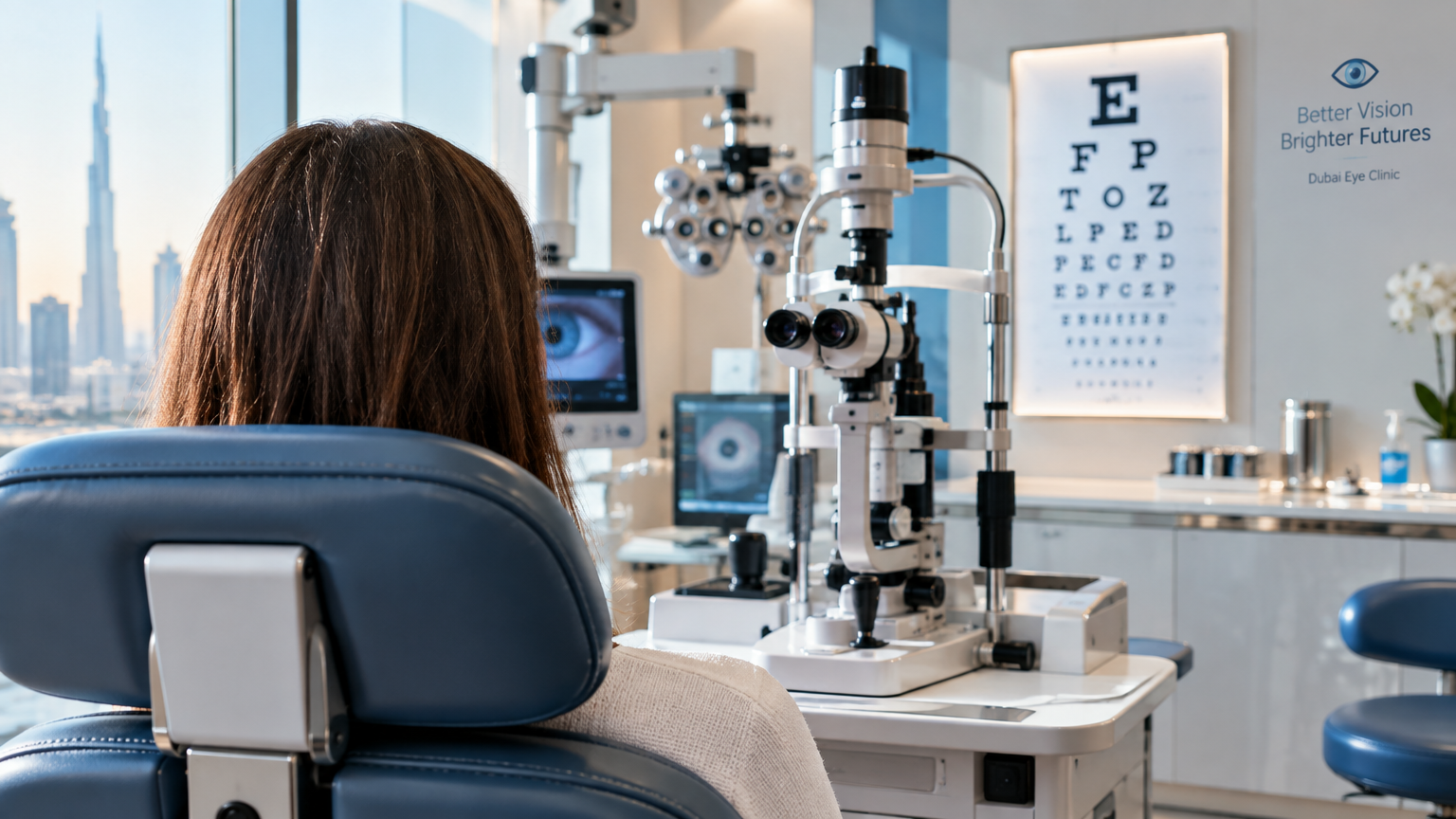
Finding the right eye clinic in Dubai for expats requires knowing what to look for: DHA licensing, insurance coverage, language support, and transparent pricing. This guide walks you through every step to choose a trustworthy, affordable eye specialist—whether you need a routine check, LASIK, or cataract surgery.
Quick Summary
- Learn how to shortlist an eye clinic in Dubai for expats by checking accreditation, insurance acceptance, language availability, and location.
- Understand typical costs for routine exams, LASIK, cataract surgery, and other treatments—with and without insurance coverage.
- Use a step-by-step checklist to compare clinics systematically and make an informed choice.
- Know what documents and information to bring on your first appointment.
- Understand Dubai-specific regulations like DHA licensing, facility tiers, and how they affect safety and cost.
Eye Care for Expats in Dubai: What You Need to Know
How Dubai’s Healthcare System Works
Dubai operates a regulated healthcare system split between government and private facilities. Every eye clinic—whether offering optometry or ophthalmology services—must hold a valid facility license from the Dubai Health Authority (DHA). Each doctor must also be individually licensed through DHA. (dha.gov.ae)
Clinics are classified into tiers (Tier 1, 2, 3) based on their equipment, staffing, and service level. Specialist care—including LASIK, cataract surgery, and glaucoma treatment—typically happens at private hospitals or dedicated eye centres. Public facilities are cheaper but often have longer wait times for expats paying out-of-pocket. (uaeinform.com)
Understanding Clinic Tiers in Dubai
DHA tier classification directly impacts cost and capability. Higher-tier facilities have advanced equipment, more specialists, and better amenities—but charge accordingly. Tier 1 clinics offer basic optometry. Tier 2 and 3 facilities handle complex surgeries and rare conditions. If you need routine care, Tier 1 or 2 suffices. For specialised procedures, confirm your chosen clinic has the right tier and technology.
Eye Care Costs in Dubai: What to Budget
Costs vary by clinic, treatment type, insurance status, and location. Here’s a breakdown of typical 2026 pricing:
| Service | Private Clinic (No Insurance) | With Insurance / Public Rate |
|---|---|---|
| Routine optometrist exam | AED 150–300 | AED 0–50 co-pay; public option AED 200–300 (ae-profile.com) |
| Ophthalmologist consultation | AED 350–600 | AED 50–100 co-pay (in-network) |
| LASIK (both eyes) | AED 6,000–12,000+ (zavis.ai) | Rarely covered; check for optional riders |
| Cataract surgery per eye (monofocal lens) | AED 14,000; multifocal ~AED 18,000 (magrabihealth.ae) | Often covered if medically necessary; partial or full depending on plan |
Note: Insurance co-pays and coverage depend entirely on your plan. Some policies cover optics; others exclude them. Always confirm with your insurer before booking.
How to Choose the Right Eye Clinic: Key Factors
Selecting an eye clinic involves more than just price. Use these criteria to narrow your options:
DHA Licensing and Professional Credentials
- Verify the facility holds a valid DHA license via the Sheryan portal. All optical centres and ophthalmology clinics must be registered. (dha.gov.ae)
- Confirm each doctor is individually licensed with DHA. Ophthalmologists, optometrists, and surgeons must all have personal registration.
- Check for international accreditation (JCI, ISO 45001). These certifications indicate higher safety and quality standards, particularly for surgical procedures.
Insurance Network Status
- Determine whether the clinic is in-network with your insurer. Major providers like AXA, Cigna, and Bupa list partner clinics online. (uaeinform.com)
- Ask about co-payments, pre-authorisation requirements, deductibles, and coverage limits. Elective procedures like LASIK or premium lens implants are often excluded.
- Request a written estimate before treatment begins.
Language and Communication
- Choose clinics where staff speak fluent English. Many facilities employ multilingual teams to serve expats. (uaeinform.com)
- Assess how clearly staff explain procedures, costs, and risks. Avoid clinics that use excessive jargon or rush through consultations.
- Confirm that follow-up appointments and post-operative care are included in quoted prices.
Location and Convenience
- Consider clinics near your home or workplace. Options include Downtown, Business Bay, JLT, Jumeirah, and Deira—each has multiple facilities.
- Check operating hours. Some private hospitals offer late-evening or weekend appointments to suit expat schedules.
- Proximity matters for follow-up visits and emergencies.
Technology and Specialisation
- Verify the clinic has equipment relevant to your needs: optical coherence tomography (OCT), wavefront-guided LASIK, SMILE technology, or premium intraocular lens options.
- Ask about surgeon experience. How many procedures has your chosen surgeon performed?
- Request before-and-after photos or testimonials for specific treatments.
Clinic Comparison Checklist
Use this checklist to evaluate and compare your top options:
- Licensing: Facility is DHA licensed; doctors are individually registered.
- Insurance: Clinic accepts your insurance plan; co-pays and coverage clear.
- Price Transparency: Written estimates for exams, procedures, follow-ups, and medications.
- Technology: Clinic has equipment and specialists for your specific needs.
- Language: Staff communicate clearly in English or your preferred language.
- Location: Convenient hours and neighbourhood fit your routine.
- Reviews: Check online ratings and ask for referrals from friends or colleagues.
- Communication Style: Staff answer questions patiently and provide written information.
What to Bring to Your First Appointment
Prepare these documents and information before your visit:
- Passport and Emirates ID (or visa copy).
- Insurance card and policy number (and referral letter if required by your plan).
- Current glasses or contact lens prescription, if you wear them.
- Complete medical history: family eye disease (glaucoma, cataracts, macular degeneration), previous eye surgeries, and chronic conditions (diabetes, hypertension).
- List of current medications.
- Description of symptoms: when vision problems started, whether they’re constant or intermittent, and any pain or discomfort.
- Your budget and preferences: do you want the most advanced option or the most cost-effective solution?
Arriving prepared reduces appointment time and helps the doctor provide accurate recommendations.
Dubai-Specific Regulations and Requirements
DHA Licensing Requirements
According to DHA’s Executive Council Resolution No. 49 (2024), no healthcare facility or professional may practice without a valid DHA licence. Facilities must meet staffing, equipment, and hygiene standards. (dlp.dubai.gov.ae)
Optical Shops vs. Ophthalmology Clinics
Optical shops dispense glasses and contact lenses and perform basic refractive error testing. Serious medical or surgical conditions—glaucoma, retinal disease, cataracts—require an ophthalmologist. Both types require proper facility and staff licences from DHA. (pcfc.ae)
Public vs. Private Care
Public hospitals offer specialist eye care at subsidised rates for UAE nationals. Expats can access public facilities but typically pay fixed non-citizen rates. Private clinics are faster and often more comfortable but significantly more expensive. Choose based on your budget, timeline, and insurance coverage.
Emergency Access and Referrals
For sudden vision loss, eye trauma, or severe pain, visit a hospital emergency department with ophthalmology coverage. Routine and elective procedures don’t require referrals, though some insurance plans demand one for coverage. Confirm your insurance requirements beforehand.
Frequently Asked Questions
Can I choose any clinic as an expat, or must I use my employer’s network?
You can select any DHA-licensed clinic. However, using an in-network provider minimises your out-of-pocket costs. Out-of-network clinics may require full upfront payment. Check your insurance card or provider website for network status before booking.
What’s the typical cost of LASIK without insurance coverage?
LASIK for both eyes in Dubai private clinics ranges from AED 6,000 to AED 12,000+. The price depends on the technique (standard, femtosecond, SMILE) and clinic reputation. (zavis.ai) Request itemised quotes from multiple clinics to compare.
What does cataract surgery pricing include?
Typically, the quoted price covers pre-operative tests, the surgeon’s fee, operating theatre costs, the intraocular lens (monofocal or multifocal), post-operative medications, and follow-up appointments. Premium lens options (multifocal, toric) add AED 2,000–4,000. (magrabihealth.ae) Always ask for a complete breakdown.
Does clinic location affect pricing?
Yes. Clinics in central or premium neighbourhoods (Downtown Dubai, Jumeirah) tend to charge more than suburban locations. Higher rents, doctor prestige, and patient demand drive costs. Choose based on value and convenience, not just location prestige.
How long does it take to schedule surgery after a consultation?
Private eye clinics typically schedule consultations within 1–2 weeks. Surgery dates follow depending on the surgeon’s calendar and any pre-operative tests required. Public facilities may have longer waits. Emergency procedures are prioritised.
Take Action: Choose Your Eye Clinic Today
Finding the right eye care in Dubai doesn’t require guesswork. Start by verifying DHA licensing, checking insurance network status, comparing prices across 2–3 clinics, and reviewing their technology and specialist credentials. Use the checklist above to systematically evaluate your options.
Ready to move forward? Contact your top-choice clinic, request a written cost estimate, and schedule a consultation. Come prepared with the documents listed above, and don’t hesitate to ask questions. Your vision and health deserve a provider you trust.