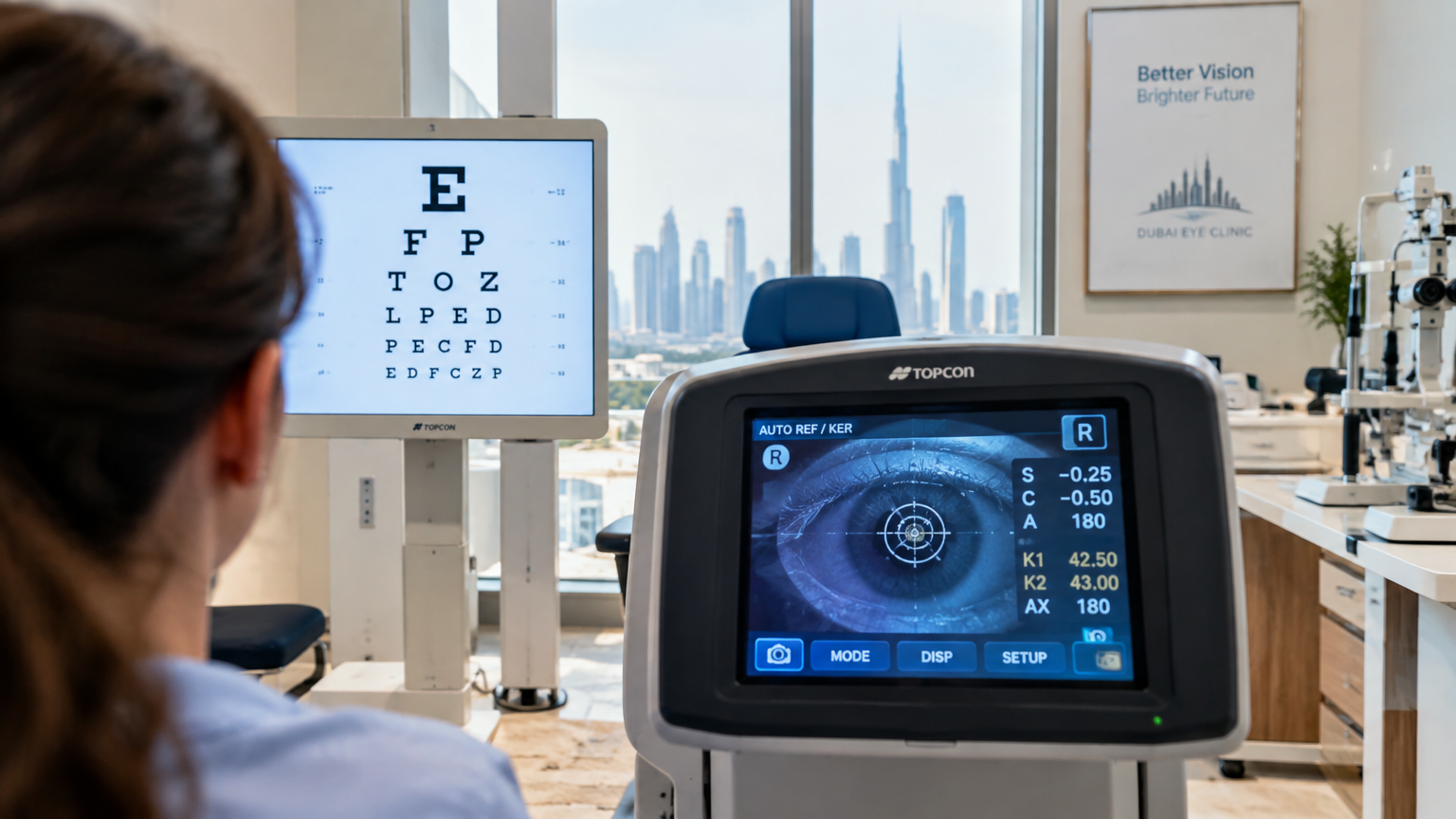
Here’s a detailed guide on eye treatment health insurance Dubai—designed for anyone living here who wants to avoid surprise costs for LASIK, cataracts, glasses, or specialist consultations. Read on to understand how Essential Benefits Plans or enhanced corporate plans work, what’s usually excluded, and how to check your policy and pre-authorise treatments so you can book a free consultation at a top eye clinic in Dubai with confidence.
Quick Summary
- How Essential Benefits Plans (EBP) differ from enhanced and corporate plans regarding consultation, eyewear, LASIK, and cataract surgery coverage.
- List of common exclusions: elective refractive surgery, luxury frames, and non-medically necessary treatments.
- Local rules: DHA law, ENAYA scheme, EBP, pre-authorization steps, co-payments, and waiting periods.
- How to check your health insurance documents and insurer portals before booking, to avoid surprises.
- Actionable tips so you can book a free consultation at a top eye clinic in Dubai with full clarity about costs.
Overview: Eye Treatment and Health Insurance in Dubai
Health insurance is mandatory in Dubai under Law No. 11 of 2013. Employers and sponsors must provide coverage at least equivalent to the Basic or Essential Benefits Plan (EBP) as defined by the Dubai Health Authority (DHA). Enhanced corporate plans often build on this minimum.
For eye health, insurance policies cover different levels of ophthalmology—including medical eye disease, surgery, and emergencies. However, coverage often varies for elective or cosmetic procedures like LASIK and items like frames or lenses. Depending on your plan, you may pay full price for what seems like routine eye care. If you want to compare options, bring your policy documents when you book a free consultation at a top eye clinic in Dubai.
Essential Benefits Plan vs Enhanced Corporate Plans
| Feature | Essential Benefits Plan (EBP) / Basic Plan | Enhanced / Corporate Plan |
|---|---|---|
| Annual benefit limit | AED 150,000 total limit per person per year under EBP. | Often much higher; sometimes unlimited for ophthalmology in top-tier plans. |
| Ophthalmologist consultations | Covered for medical reasons; GP referral usually required. Out-patient specialist fees may be subject to co-pays. | Often lower or no co-pays for specialists; broader network; diagnostic tests sometimes included. |
| Cataract surgery | Considered medically necessary and included under medical/surgical benefits. Minimum facility classification (“A”) required. | Usually covered; often including premium intraocular lenses, hospital stay, and follow-ups. More clinic and hospital choices available. |
| LASIK and refractive surgery | Usually excluded in EBP and basic plans. If covered, it’s only under enhanced plans with restrictions (waiting periods, co-insurance). | May be included as optional benefit or rider. Cost sharing usually applies. Check if your plan explicitly includes refractive error correction. |
| Eyewear (frames, prescription lenses, contact lenses) | Often not covered under EBP; minimal optical allowances in enhanced plans. ENAYA scheme includes optical benefit with annual limits and sometimes a waiting period after LASIK. | Better coverage: higher limits, branded frames or designer options might be allowed; sometimes multiple pairs per year; contact lenses if prescribed. |
Common Exclusions to Watch For
Even in corporate or enhanced plans, many policies explicitly exclude certain eye-related benefits. Here are typical exclusions under Dubai and UAE policies:
- Elective refractive surgeries such as LASIK, PRK, and radial keratotomy unless clearly specified otherwise.
- Non-prescription or high-fashion frames; “luxury” or branded eyewear usually isn’t fully covered or only up to a modest limit.
- Regular vision screening and routine refraction tests, unless related to disease or immediate medical need.
- Cosmetic eye treatments, including aesthetic eyelid surgery, tinted lens fashion wear, or cosmetic contact lenses.
- Waiting periods or lock-out periods after certain treatments like LASIK. Members who undergo LASIK may become ineligible for optical benefits for up to 12 years under certain conditions.
Local Rules, Co-pays, and Pre-Authorization
Pre-authorization requirements: Under EBP, prior approval is generally required for all in-patient treatments or surgery—this includes eye surgeries like cataract operations. For elective (non-emergency) procedures, approval must be obtained before booking. Emergency admissions do not require prior authorization immediately but must be reported to your insurer or Third Party Administrator (TPA) within 24 hours.
Co-payments and deductibles: These vary by plan. For example, under the DNI EBP plan, co-insurance of approximately 20% applies to many interventions. Caps (such as AED 500 per inpatient visit or AED 1,000 per year) may apply, beyond which the insurer covers 100%.
Policy waiting periods: Chronic and pre-existing conditions sometimes have 6-month waiting periods unless you’re transferring from an existing plan.
What to Check in Your Policy Before Booking
To ensure eye treatment doesn’t lead to unexpected bills, review these key areas before booking any appointment:
1. Table of Benefits (TOB)
Always read the exact wording. Look for keywords like “optical benefit,” “equipment,” “frames and lenses,” “elective refractive surgery,” and “ophthalmology specialist.”
2. Inclusions vs Exclusions
Confirm whether LASIK or other refractive surgeries are “excluded” or “opted in as optional benefit.”
3. Optical Sub-limits
If eyewear is covered, how much can you claim annually? Is there a separate limit for frames versus lenses versus contacts? Is it full reimbursement or a fixed benefit?
4. Pre-authorization Requirements
Does eye surgery require prior approval? Are there special referral routes (GP to ophthalmologist)? Do emergency and elective procedures differ?
5. Waiting Periods and Lock-out Periods
After certain treatments like LASIK, is optical coverage suspended? Are there delays on coverage for pre-existing eye conditions?
6. Network and Facility Classification
Ensure your clinic or hospital is in a DHA-licensed facility (class A, B, or C), is in your insurer’s network for direct billing, and understand whether you must pay out-of-pocket first.
7. Co-payments, Deductibles, and Annual Caps
Know what you may need to pay yourself per consultation, surgery, and eyewear item.
Estimated Out-of-Pocket Costs in Dubai
Here’s a sample comparison in Dubai to help you understand what to expect out of pocket under different policy types. All amounts are approximate as of mid-2026.
| Procedure or Item | Estimated Cost (Private Clinic / Hospital) | Under EBP / Basic Plan (if covered) | Under Enhanced Corporate Plan* |
|---|---|---|---|
| Ophthalmologist consultation | AED 500–800 | 20-30% co-pay or fixed fee; may include full cost if GP referral required | Lower co-pay or waived for direct specialist access |
| Cataract surgery with standard IOL (private hospital, 1-night stay) | AED 10,000–15,000+ | Covered if medically necessary, but expect co-insurance and facility charges | Covered; upgraded lenses may cost extra |
| LASIK or refractive error surgery | AED 6,000–12,000+ | Usually excluded—must be explicitly included; expect co-pay if so | May be covered as rider; cost sharing likely |
| Prescription glasses (frames and lenses) | AED 700–2,500 depending on brand | Often only basic frames and lenses up to limit (e.g. AED 1,000/year under some plans) | Higher limits; designer frames possibly reimbursed |
| Contact lenses | AED 300–1,200/year | Usually only if medically required (e.g. after surgery) or in enhanced plan | Broader coverage including cosmetic or convenience lenses |
* Enhanced plans vary widely; some may cover more or less depending on insurer, employer contract, and any riders added.
Frequently Asked Questions
Q: Is LASIK ever covered under an Essential Benefits Plan?
A: Very rarely. Under standard EBP and basic plans, elective refractive surgeries such as LASIK, PRK, and radial keratotomy are generally excluded unless the policy explicitly includes an optical or vision rider.
Q: If I buy high-end glasses or branded frames, will insurance pay for them?
A: Usually not in full. Most EBP and basic plans set an optical limit (if optical is included at all), covering basic frames and lenses. If you choose luxury or designer brands, you’ll likely pay the difference out of your own pocket. Enhanced plans may offer better allowance. Check your Table of Benefits.
Q: Do I need a GP referral before seeing an eye specialist?
A: In many corporate, basic, and essential plans, yes. The insurer may require a GP referral before a specialist ophthalmologist consultation. If not followed, the insurer may deny or limit reimbursement.
Q: How do I avoid surprise out-of-pocket costs for cataract surgery?
A: Follow these steps:
- Get a surgical plan cost estimate (clinic, hospital, and post-op care).
- Check that the hospital and surgeon are in your insurer’s network and meet DHA facility classification.
- Confirm pre-authorization is granted.
- Know your co-insurance and deductible rates.
Q: How do I check my policy coverage and whether my ophthalmology treatment will be pre-authorised?
A: Follow these steps:
- Use DHA’s Insurance Verification service with your Emirates ID to check your insurer, policy number, and coverage period.
- Log in to your insurer or TPA app (such as Neuron or NextCare) to view your Table of Benefits, network clinics, and optical riders.
- Call your insurance provider helpline and request written confirmation about specific procedure or item coverage.
- Ask your eye clinic to initiate pre-authorization once they have your policy details.
Get Clarity Before Your Eye Treatment
Whether you’re preparing for LASIK, a cataract procedure, or new prescription glasses, getting clarity now can save you thousands later. Review your policy documents (Table of Benefits, optical inclusion, exclusions), check your insurer’s network, and obtain any required pre-authorization.
If you’re uncertain whether your policy covers what you need, we’re here to help. Book a free consultation at a top eye clinic in Dubai. Bring your insurance policy, and we’ll walk you through what’s covered, show you estimates, and ensure you enter your appointment 100-percent prepared.