Keratoconus is a progressive eye condition that affects thousands in Dubai, and finding the right keratoconus treatment Dubai can be challenging. This guide compares the leading options—corneal cross-linking, Intacs, scleral lenses, and corneal transplantation—so you can make an informed decision based on your stage, budget, and insurance coverage.
Quick Summary
- Explains what keratoconus is and the main treatment options available in Dubai (CXL, Intacs, scleral lenses, transplant).
- Lists average costs in AED and identifies DHA-licensed clinics that specialise in keratoconus care.
- Clarifies how UAE health insurance typically covers keratoconus—what’s included, what’s excluded.
- Provides a severity-stage decision framework to help you choose between non-surgical and surgical options.
- Compares effectiveness versus affordability so you can select the best long-term pathway for your vision and budget.
Understanding Keratoconus: What It Is and How We Treat It
What is Keratoconus?
Keratoconus occurs when the cornea progressively thins and bulges into a cone shape, distorting your vision. Treatment aims to:
- Stop progression and prevent worsening.
- Improve or stabilise vision.
- Avoid corneal transplant whenever possible.
Key Treatment Options in Dubai
Here are the main keratoconus treatment Dubai options, when doctors recommend them, and their advantages and disadvantages:
| Treatment | What It Is and When It’s Used | Advantages | Disadvantages |
|---|---|---|---|
| Corneal Collagen Cross-Linking (CXL / C3-R) | Uses riboflavin (vitamin B₂) and ultraviolet light to strengthen corneal tissue; applied when keratoconus is progressing in early-to-moderate stages. | Prevents further deterioration in approximately 90% of cases. Minimally invasive with low complication rates. | Does not reverse existing damage. Vision gains are typically moderate. You may still need contact lenses afterward. |
| Intracorneal Ring Segments (Intacs / ICRS) | Small rings inserted into the mid-cornea to flatten its shape; used when the cornea remains clear and CXL alone won’t restore adequate vision. | Reduces dependence on glasses and contact lenses, especially in moderate cases. Can improve visual acuity. | Carries surgical risk. Less effective if cornea is severely thinned or scarred. High upfront cost. |
| Scleral or Specialty Contact Lenses | Custom-made lenses (rigid gas permeable, hybrid, Rose-K, or scleral) that vault over the cornea or reshape vision; suitable at all disease stages when standard glasses are insufficient. | Non-surgical and reversible. Often delivers excellent vision. Adjustable as your cornea changes. | Can cause initial discomfort. High cost per lens. Requires frequent follow-ups and regular replacements. |
| Corneal Transplant (Keratoplasty) | Removes damaged corneal tissue and replaces it with donor tissue; reserved for advanced stages or when significant scarring or endothelial damage is present. | Can restore vision in severe cases when other treatments have failed. Often considered the last resort option. | Expensive procedure. Risk of donor tissue rejection. Long recovery period. Requires frequent follow-up care. |
Matching Treatment to Your Keratoconus Stage
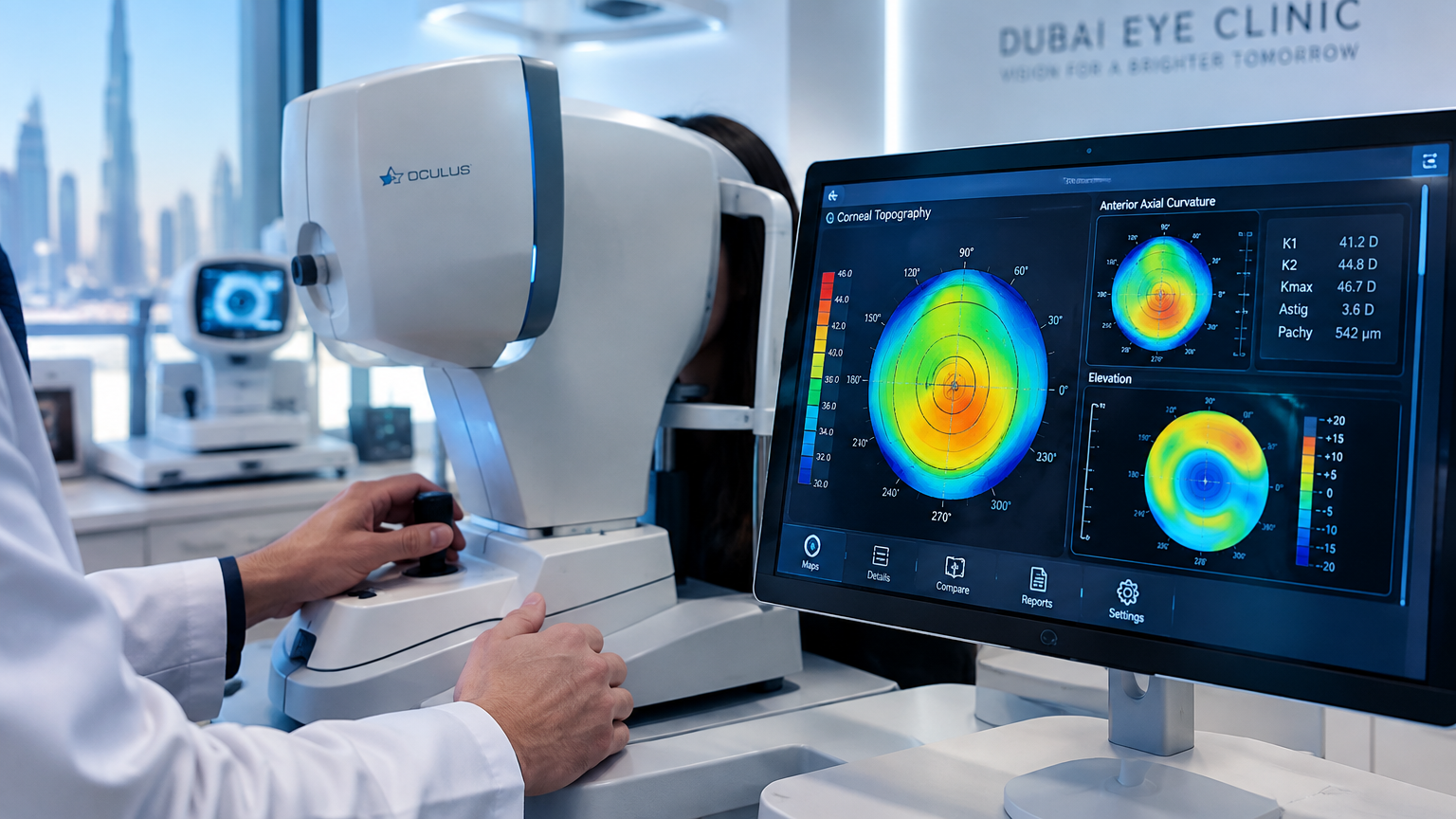
Your ophthalmologist determines your stage using corneal topography, tomography, pachymetry (thickness measurements), visual acuity, and refraction changes. Use this framework to understand which treatments suit your condition:
| Stage | Key Characteristics | Recommended Treatment Approach |
|---|---|---|
| Stage I (Mild) | Minimal corneal steepening (less than 47–48 diopters), slight thinning, vision correctable with glasses or soft contact lenses. | Begin with glasses or mild contact lenses. Monitor with corneal scans every 6–12 months for any progression. |
| Stage II (Moderate) | Cornea noticeably steeper (48–55 diopters), progressive thinning in the central cornea, vision becomes unstable with glasses alone. | Consider CXL to halt progression. Fit rigid gas permeable lenses. Discuss Intacs if vision distortion persists and patient is a suitable candidate. |
| Stage III (Advanced) | Significant steepening (greater than 55 diopters), notable corneal thinning, early scarring visible, distorted vision even with lenses. | CXL remains beneficial if scarring is not advanced. Intacs may help reshape the cornea. Scleral lenses often necessary. Reserve transplant consideration if other treatments fail. |
| Stage IV (Severe) | Significant corneal scarring, corneal thickness below 200 micrometers or endothelial involvement, extreme distortion unresponsive to lenses. | Keratoplasty (partial or full-thickness transplant) becomes the standard option. May be combined with CXL. Must follow DHA regulatory standards. |
Costs in Dubai: What to Expect (AED)
Treatment costs vary depending on your chosen clinic, disease severity, and whether you use a hospital or private eye centre. Here are typical price ranges as of 2026:
| Treatment | Cost per Eye (AED) |
|---|---|
| Corneal Cross-Linking (CXL / C3-R) | AED 11,000–15,000. Dubai Eye Clinic charges approximately AED 12,000 per eye for this procedure. |
| Intracorneal Ring Segments (Intacs) | AED 30,000–35,000+, depending on clinic, ring type, and surgeon fees. Limited published pricing in Dubai, but major clinics including Mediclinic and Moorfields offer this procedure. |
| Scleral or Specialty Contact Lenses | Custom fitting, diagnostic evaluation, and lens cost may total AED 4,000–10,000 per lens. Multiple fittings and annual or bi-annual replacements add to the total cost. |
| Corneal Transplant (Keratoplasty) | AED 35,000–90,000+ per eye depending on transplant type and facility. Dubai Eye Clinic offers packages starting at approximately AED 35,000 per eye, while premium facilities may charge significantly more. |
Top DHA-Licensed Clinics for Keratoconus Treatment in Dubai
- Moorfields Eye Hospital UAE (located in Dubai Healthcare City) specialises in cornea and keratoconus management. They offer corneal cross-linking, Intacs insertion, specialty contact lens fitting, and use DHA-approved facilities for all procedures.
- Mediclinic City Hospital operates a dedicated keratoconus clinic providing rigid gas permeable lenses, Intacs, IntraLase options, and corneal cross-linking. The clinic is DHA-regulated and staffed by experienced corneal specialists.
- Dubai Eye Clinic (Dr Rami Hamed Center) offers both corneal cross-linking and keratoplasty with transparent pricing. The clinic publishes treatment costs and maintains DHA licensing.
All licensed facilities follow Dubai Health Authority regulations, including the Permitted Procedures by Day Surgical Centre Classification. Keratoconus procedures such as cross-linking and keratoplasty are listed under category A, meaning these centres must meet rigorous safety, staffing, and equipment standards.
How UAE Health Insurance Covers Keratoconus
Understanding your insurance coverage is essential for budgeting. Here’s what you typically encounter:
- Basic and visitor plans often exclude optical management, including glasses and contact lenses, unless these benefits are specifically added to your policy. Daman Insurance, for example, typically excludes optical management under basic tier plans.
- Comprehensive employer or family plans may cover diagnostic consultations, corneal imaging, and therapeutic procedures like CXL if your condition shows progression. However, these plans usually require prior authorisation and medical documentation proving that treatment is medically necessary rather than elective.
- Specialty lenses are covered only if your plan includes optical benefits and the lenses are deemed medically necessary. Standard contact lens coverage often has annual limits.
- Corneal transplants for advanced keratoconus—especially when scarring or severe vision loss is documented—fall under major medical services. Many comprehensive plans cover this procedure, particularly when other treatments have been attempted first. UAE citizens often receive free or heavily subsidised transplants through government hospitals.
Choosing the Most Effective and Affordable Pathway
Effectiveness means stopping disease progression while maintaining your vision with minimal risk. Affordability considers total costs including follow-up visits, lens replacements, and insurance support.
What Works Best at Each Stage
Mild to moderate progressive keratoconus: Corneal cross-linking is the most effective first-line treatment. It halts progression in more than 90% of cases. When performed early, CXL often delays or eliminates the need for Intacs or transplant. Cost is approximately AED 12,000–15,000 per eye.
Moderate keratoconus with vision distortion: If vision remains distorted after CXL, combining cross-linking with Intacs provides both structural stabilisation and visual improvement. The total cost increases significantly (CXL plus ring surgery, surgeon fees, operating room, and follow-ups), but many patients achieve better outcomes.
Stable keratoconus without progression: Scleral or specialty lenses may prove more cost-effective long-term than surgery if your cornea is not progressing. Lens replacement and refittings occur annually or bi-annually, which can total less over time than a surgical transplant. This approach is particularly suitable if surgical risk is high.
Severe keratoconus with scarring: Corneal transplant becomes necessary when the cornea is severely scarred, extremely thin (below 200 micrometers), or vision cannot be corrected with lenses. This is the most expensive and highest-risk pathway, but insurance is more likely to provide coverage here.
Your Treatment Pathway: Step-by-Step
Here’s how to progress through treatment based on your current stage:
If you’re newly diagnosed with Stage I or early Stage II with signs of progression: Undergo corneal cross-linking immediately to stop disease worsening. Use rigid gas permeable or hybrid lenses to manage vision while your cornea stabilises. Schedule follow-up topography every 6 months.
If you’re already at moderate Stage II or early Stage III: Begin with corneal cross-linking. Then assess whether Intacs or other ring segments will adequately reshape your cornea to reduce lens dependence. Discuss this with your specialist after CXL results are evaluated.
If you’re at advanced Stage III without significant scarring: Consider combined Intacs and CXL therapy for both structural reinforcement and refractive benefit. Emphasise scleral lens fitting post-surgery to maximise achievable vision.
If you’re at Stage IV or have significant corneal scarring: Keratoplasty (partial or full-thickness transplant) is likely your necessary option. Work with your corneal specialist and insurance company to arrange this procedure at a DHA-licensed facility.
Summary: Treatment Options and Costs
| Treatment | Average Cost per Eye (AED) | Leading Clinics | Typical Insurance Support |
|---|---|---|---|
| Corneal Cross-Linking | AED 12,000–15,000 | Dubai Eye Clinic, Moorfields Eye Hospital, Mediclinic City Hospital | Diagnostic and surgical coverage often included if plan allows; prior authorisation typically required. |
| Intacs / ICRS Rings | AED 30,000–40,000+ | Mediclinic, Moorfields, DRHC | May be covered as surgical intervention; often partial coverage; highly dependent on your specific policy. |
| Specialty or Scleral Lenses | AED 4,000–10,000 per lens plus fittings | Hospital eye clinics and specialty optical labs via Moorfields and Mediclinic | Only if optical benefits are included in your plan; often partial; requires medically necessary documentation. |
| Corneal Transplant | AED 35,000–90,000+ | Dubai Eye Clinic, Saudi German Hospital, and others | Higher likelihood of insurance acceptance for advanced stages; always verify coverage before proceeding. |
Selecting the Right Clinic and Surgeon
Make sure your chosen provider meets these essential criteria:
- The clinic must hold valid DHA (Dubai Health Authority) licensing and be authorised to perform keratoconus procedures listed under “Permitted Procedures.”
- Your surgeon should specialise in corneal, refractive, or keratoconus surgery. Ask about their annual volume of CXL procedures, Intacs insertions, and corneal transplants.
- The facility must have advanced diagnostic equipment including corneal topography, tomography, pachymetry (thickness measurement), and epithelial mapping.
- The clinic should offer comprehensive post-operative support including specialty lens fitting (rigid gas permeable, hybrid, and scleral lenses).
- Request written cost estimates that itemise surgeon fees, operating room charges, anaesthesia, donor tissue (for transplants), lens costs, and follow-up care.
Navigating Insurance and Managing Costs
- Review your insurance policy carefully. Identify whether it includes optical benefits, surgical benefits, and how keratoco